
India said the Hague-based Court of Arbitration has no jurisdiction over its sovereign decisions on the Indus Waters Treaty.
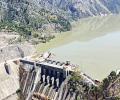
India rejects this so-called "supplemental award", the ministry of external affairs said, referring to the ruling in the case related to Pakistan's objections to Kishenganga and Ratle hydropower projects.

A Pakistani senator has warned that India's approval of a hydel power project on the Chenab River will further inflame tensions between the two countries, particularly in light of the suspended Indus Waters Treaty.

'India's letter to Pakistan on April 24 (2025; two days after the Pahalgam terrorist attack) didn't tear up the treaty -- but it did put it on ice.'
The Indus system of rivers comprises the main river -- the Indus -- along with its five left bank tributaries, namely, the Ravi, the Beas, the Sutlej, the Jhelum and the Chenab. The right bank tributary, the Kabul, does not flow through India.

'The government has to explain (to the army, air force and navy chiefs) whether they want a punitive strike, a deep punitive strike, or whether they want limited war or an all-out war, will it be a circumscribed war or will it be a shallow attack along the border.'

India has served a formal notice to Pakistan seeking a review of the Indus Water Treaty, arguing that 'fundamental and unforeseen' changes in the circumstances require a reassessment of the pact.

"I do not think they (World Bank) are in a position to interpret the treaty for us. It is a treaty between our two countries and our assessment of the treaty is that there is a provision of graded approach," External Affairs Ministry Spokesperson Arindam Bagchi said.

India on Thursday said it cannot be compelled to participate in "illegal" proceedings at the Permanent Court of Arbitration over the Kishenganga and Ratle hydropower projects in Kashmir after The Hague-based tribunal ruled that it has the "competence" to consider the dispute between New Delhi and Islamabad on the matter.

The statement of the Minister of State in the Prime Minister's office comes on the heels of India issuing a notice to Pakistan seeking a review and modification of the IWT in view of Islamabad's "intransigence" in complying with the dispute redressal mechanism of the pact that was inked over six decades ago for sharing of waters of cross-border rivers.
The sources said India has always been a steadfast supporter and a responsible partner in implementing the IWT in letter and spirit.

Amid multi-tier security, Prime Minister Narendra Modi on Sunday will dedicate India's first 'carbon neutral panchayat' to the nation apart from inaugurating and laying foundation stone of development projects worth over Rs 20,000 crore to give fillip to speedy development of Jammu and Kashmir.

Seeking to develop and rejuvenate 75 water bodies in every district of the country, the prime minister will launch a new initiative named 'Amrit Sarovar', it said.
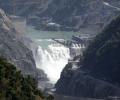
Pakistan has raised objections to four power projects being built by India on the Chenab river on the ground that they allegedly violate the Indus Waters Treaty.

Pausing the process for now, the bank would hold off from appointing the Chairman for the Court of Arbitration or the neutral expert -- appointments that had been expected on December 12 as earlier communicated by the bank.
The tour of the Pakistani side was originally scheduled in October 2018 but was postponed because of local bodies elections in Jammu and Kashmir.
The government has finalised the details of a task force on Indus Water Treaty, which will be formed within one week, with the aim to stop river waters going waste in Pakistan.
Surprised at the World Bank's decision to appoint a neutral expert, as sought by the Indian government, and at the same time establish a Court of Arbitration as wanted by Pakistan, India said proceeding with both the steps simultaneously "legally untenable".

Kartarpur Sahib in Pakistan is located across the river Ravi, about four kilometres from the Dera Baba Nanak shrine in Punjab's Gurdaspur district.

The World Bank's move came as it told the two countries that it was responding to their separate proceedings initiated under the Indus Waters Treaty 1960.
During the meeting, Pakistan was expected to highlight concerns about the three Indian hydro projects being built on the rivers flowing to Pakistan.
"Pakistan will not accept any modifications or changes to the provisions of the Indus Waters Treaty. Our position is based on the principles enshrined in the treaty. And the treaty must be honoured in... letter and spirit," Special Assistant to Prime Minister Tariq Fatemi told Dawn News.
The Pakistani delegation, in its meetings with World Bank officials, insisted on early appointment of the judges and setting up the court.
