
Of the 1.32 trillion capex target for FY26, State-run oil firms have already spent 1.07 trillion in the first 10 months.

The Confederation of Indian Industry (CII) has urged the Indian government to gradually restore the Rs 10-per-litre cut in special additional excise duty on petrol and diesel over six to nine months. This move aims to relieve pressure on government finances as crude oil prices stabilise, without significantly impacting consumer sentiment.

Private investment projects constitute well over 70 per cent of the nearly Rs 34 trillion of fresh investments announced in H1 this year.

Capex, infrastructure development, and prudent fiscal management are the key focus areas in the Budget, says Nilesh Shah.

The Indian banking sector is projected to experience a steady 9-13 per cent industrial credit growth in the first half of 2026, driven by capital expenditure, infrastructure development, and sectoral demand recovery, according to a Ficci-IBA survey.

JPMorgan has downgraded Indian equities to 'neutral' from 'overweight', citing elevated valuations, rising earnings risks, and limited exposure to next-generation technology like AI. The brokerage believes other emerging markets offer more attractive risk/reward propositions despite India's strong structural growth story.

India's new manufacturing project announcements more than halved in the fourth quarter of FY26, falling 60 per cent sequentially and 78 per cent year-on-year to approximately 1.7 trillion, driven by global uncertainties, geopolitical conflicts in West Asia, and existing unutilised manufacturing capacity.

Despite recent share price dips, Bharti Airtel is strategically positioned for growth, driven by investments in data centres via Nxtra, a potential tariff hike, and strong performance in Africa, alongside efforts to deleverage and expand its subscriber base in underpenetrated rural markets.

The ministries of Road Transport & Highways and Railways have exceeded the national average capital expenditure (capex) by spending 63 per cent and 57 per cent of Budget estimates (BE), respectively, in the first half of 2025-26 (FY26). The total capital expenditure for April-September of FY26 stood at 52 per cent of the BE, according to the latest data by the Controller General of Accounts (CGA).
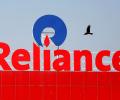
The Iran conflict led to a sharp correction in Reliance Industries Ltd's (RIL's) share price, which has been partially reversed by a rebound.
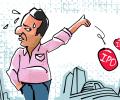
Companies are primarily using funds raised through fresh equity issuance to repay existing debt, followed by allocation for capital expenditure, according to a study by Bank of Baroda of over 200 filings with the market regulator between April and October 2025. The report stated that of these filings with the Securities and Exchange Board of India (Sebi) - covering both funds already raised in FY26 and future intent - 189 companies provided clear data on the purpose of the fund-raising.

Trade deals ease risks for Indian equities, but weak demand and stretched valuations raise questions over whether optimism -- especially in smallcaps -- can turn into a sustained bull run, points out Debashis Basu.

The fiscal tilt towards capex benefits companies in investment-related sectors like capital goods, defence equipment, engineering & construction and metal & mining. The planned cut in revenue expenditure will weigh on companies in consumption sectors like FMCG, consumer durables and retail.
After years of rapid expansion, the Centre's capital spending growth eases as private investment shows early signs of revival, points out A K Bhattacharya.

West Asia conflict triggers sharp sell-off in Indian markets, with realty, banking and auto stocks leading losses amid energy shock fears.

'Credit growth in India remains in double digits, even though corporate borrowing is subdued.' 'Corporate credit is weak because companies are cash-rich and cautious amid global uncertainty.'

There are hopes of a turnaround in overall corporate earnings after six quarters of single digit growth.

India is growing fast, but to keep growing strong, the government must make more things at home, create jobs, and spend money wisely, suggests Rajiv Memani, regional managing partner, Africa-India Region, EY.

Supported by strong buoyancy in public sector capital expenditure (capex), growth in infrastructure investment is expected to accelerate in 2025-26 (FY26) compared to 2024-25 (FY25), according to the First Advance Estimates of gross domestic product (GDP) for FY26 released by the National Statistics Office (NSO) on Wednesday.

Siemens Energy India on Tuesday posted an over 31 per cent year-on-year increase in its net profit to Rs 360 crore during July-September quarter, mainly on the back of higher revenues. Its net profit stood at Rs 274 crore in the quarter ended September 2024, a company statement said.

'We believe the truth is in the middle, and that India is at an important crossroads.'

The Indian banking sector could be due for a rise in profitability after several quarters of net interest margin (NIM) compression. The Q2FY26 results suggest NIMs have bottomed out.

India has managed high government debt-to-GDP, a slowing domestic revenue engine, lower household savings and a more hostile geopolitical environment separately in the past. But together, they threaten to undo the growth narrative on which today's optimism rests, warns Debashis Basu.

After a year of modest returns, equity investors may anticipate gains of 10-15 per cent in Samvat 2082, which began on October 21. Although valuations have moderated from their peaks a year earlier, they remain above long-term averages, potentially limiting sharp upsides.

'I don't see how a company like OpenAI can honestly expect to generate revenue significant enough to maintain its spending habits via John and Jane Q. Public,' points out Sree Sreenivasan.

Securities and Exchange Board of India (Sebi) Chairman Tuhin Kanta Pandey on Thursday called for sharper disclosures in IPO (initial public offering) offer documents, particularly around risk factors, valuation rationale, objects of the issue, and utilisation of proceeds.

'Given that India underperformed emerging markets by 28 per cent in 2025, the worst performance in over 30 years, the timing of the sharp STT hike could have been better.'

India's top cement producers delivered a solid July-September quarter (Q2) in 2025-26 (FY26), lifted by firmer prices, higher sales volumes, and a favourable base. Seasonal weakness and maintenance outages did dent sequential performance, but the overall picture remained positive - and the road ahead looks steady.

'Global uncertainty is something which definitely occupies the minds of officials when we are preparing for the Budget.'
'Corporates now have multiple funding sources beyond banks, and many are sitting on large cash reserves.'

Siemens on Tuesday reported over 37 per cent decline in its net profit to Rs 408 crore in March quarter, compared to the same period year ago, mainly due to under-absorption of fixed costs and higher material costs in the Digital Industries business. The company follows an October to September fiscal year.
Post-election capital expenditure (capex) has been weak at 2 per cent year-on-year (Y-o-Y) in M9FY25. The FY25 revised estimates (RE) indicate 7 per cent growth in FY25 against FY24, implying 21 per cent Y-o-Y growth in Q4FY25 government capex.

Jio Platforms Limited is likely to have a valuation of $148 billion by the time it goes public on the back of strong free cash flow and potential deleveraging, ICICI Securities said.

CAG warns most states of fiscal imprudence as March spending overshoots limits, with key departments exhausting large portions of budgets in the last month of FY24.

The cost of any flight from Delhi and Mumbai could rise by up to Rs 3,000 soon unless the airport regulator is able to reverse a court order.

Capital expenditure (capex) by 54 large central public sector enterprises (CPSEs) and five departmental arms with an annual capex target of Rs 100 crore and above has reached around 42.5 per cent of their annual target of about Rs 7.33 trillion in this financial year so far, a senior official from the Ministry of Finance told Business Standard. "The Centre is pushing the big public undertakings in the infrastructure and refinery sector to achieve 90 per cent of their target by the end of the third quarter," he said. The capex by this group of CPSEs stands at around Rs 3.1 trillion in the April-August period so far.

Market experts say India's IPO ecosystem has matured to support both primary and secondary issuance, rendering the mix less consequential.
At a time when the government is nudging the private sector to ramp up its capital expenditure (capex), the Ministry of Statistics and Programme Implementation (MoSPI) is poised to kick-start the first-of-its-kind annual survey on the status of private sector capex from next month. "The inaugural edition of the annual exercise will start in October and will be completed by December. "The results will be made public by February next year," said Geeta Singh Rathore, director general, National Sample Survey Office (NSSO), at a data users' conference on Thursday.

India's economic growth is expected to be lower at 6.3 per cent this fiscal compared to the RBI's projection of 6.5 per cent, a SBI Research Report said on Thursday. The report pegged the first quarter GDP estimate at around 6.8-7 per cent, mainly due to muted private capex.

'A balanced portfolio mix of domestic and international equity, fixed income, and precious metals is recommended.'
 © 2026 Rediff.com - Advertise with us - Disclaimer - Privacy Policy - Sitemap - Feedback - About us - Terms of use - Grievances