
The government on Monday said that multinational companies (MNCs) are campaigning against domestic pharmaceuticals industry as their interests were getting impacted due to increasing global presence of Indian firms in the generic segment.

Indian Pharma majors are looking at different strategies to boost their global business.

Top 5 losers include Lupin, Cipla, Sun Pharma, Dr Reddy's Lab and GAIL down 1.6%-11%.
Japan's Daiichi Sankyo makes Ranbaxy Laboratories an offer it can't refuse -- $4.6 billion for a 50.1% stake in India's largest drugmaker.

Rediff reader Rashmi Pillai, a pharma professional from Mumbai suggests how to stay positive and make the most of the lockdown.

Sun Pharma stated the company wanted shareholders' approval to "issue, offer and allot equity shares or non-convertible securities, other than warrants, up to an amount of Rs 12,000 crore ($2 billion), to qualified institutional buyers pursuant to a QIP."
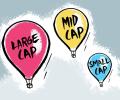
The rally in the equity markets in the second half of 2023 has led to a sharp surge in the cutoff for stocks to qualify as largecaps and midcaps. On the latest list put out by the Association of Mutual Funds in India (Amfi), the smallest largecap stock now has a market capitalisation (m-cap) of Rs 67,000 crore, 35 per cent higher than in July 2023. In the case of midcaps, the cutoff has surged 26 per cent to Rs 22,000 crore.
Among the Sensex firms, NTPC, Power Grid, Mahindra & Mahindra, Larsen & Toubro, Sun Pharma, State Bank of India, Titan and Tata Steel were the major gainers. Tata Consultancy Services, Infosys, Axis Bank, Bajaj Finserv, UltraTech Cement and Bajaj Finance were the major laggards.
Defining "modern medicine" for the first time, the National Medical Commission (NMC), in its code of conduct, has introduced a major change, proposing the use of "Med Dr" as a prefix for those registered under the NMC Act, 2019, as practitioners of modern medicine.

Among the Sensex firms, Larsen & Toubro, Bharti Airtel, HCL Tech, Tata Motors, Sun Pharma and Tata Steel were the major gainers. On the other hand, Nestle, Asian Paints, Bajaj Finserv, HDFC Bank and Axis Bank were among the laggards.

The Delhi high court on Tuesday rebuked Chief Minister Arvind Kejriwal for 'casting aspersions' on the judicial process with his claim about an approver in the money laundering case against him making donations to the Bharatiya Janata Party through electoral bonds, saying the law relating to approvers was over 100 years old and not enacted to falsely implicate the Aam Aadmi Party leader.
Trade deficit during the month narrowed to USD 14.54 billion from USD 15.3 billion in January 2020. It was USD 15.44 billion in December 2020.
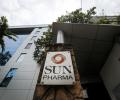
Sun Pharma's market capitalisation stood at Rs 100,050 crore on December 5, with its share price closing at Rs 417 a piece - lowest since March 2013.

The number of small units has come down drastically, as large companies have expanded their manufacturing capacity.
Indian pharma company Lupin has acquired 80 per cent stake in Kyowa Pharmaceutical Industry (Kyowa), one of the top 10 generic pharmaceutical companies in Japan, for an undisclosed amount.

Both the units were under the scanner of FDA since 2011.

A higher-than-expected consumer price inflation (CPI) print for March in the US has dashed hopes of an interest rate cut by the US Federal Reserve (US Fed) in June. Analysts now expect the US central bank to start cutting rates in September, provided inflation remains in check and oil prices remain supportive. The markets, analysts believe, partially factored in this possibility.

'Like every Budget, this time, too, there is chatter around tinkering with the long-term capital gains tax.' 'Investors may not want to jump into the markets until there is clarity on this front.'

Drug shortages in the US are at an all-time high, and price erosion has stabilised, which could benefit Indian pharmaceutical (pharma) companies with a US focus, according to analysts. Nuvama Research analysts said that US price erosion seems to have normalised to its old levels of 6-8 per cent and volumes are picking up with easing of inventory. Similarly, an ICICIdirect analyst noted: "Price erosion intensity has now moderated to a single digit and is expected to tone down a
The report of the January 25 meeting was placed before the high court last week.

Equity fundraising through initial public offerings (IPOs) rose 20 per cent during the financial year 2023-24 (FY24). During the period, 76 Indian corporates raised Rs 61,915 crore through main board IPOs, compared to Rs 52,116 crore mobilised by 37 IPOs in 2022-23, as disclosed by PRIME Database. However, if one excludes the mega Life Insurance Corporation (LIC) IPO, which came out in 2022-23, IPO mobilisation increased by 58 per cent from last year.

The recall was initiated by the company on January 21

Nearly 40 per cent of IITians sitting for placements in 2024 are yet to receive job offers, showing a doubling of the 'unplaced' in the last three years from 19 per cent in 2021-2022 to 38 per cent in 2023-2024.

Companies run till now by mostly their promoters are increasingly inducting professionals to head their teams.
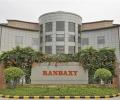
Last month, the high court had ordered an interim status quo on the $4-billion deal, after a suit from some individual investors alleged insider trading in Ranbaxy's shares by Silverstreet Developers, Sun's wholly owned arm, before the deal was announced on April 6.
Senior advocate Prashant Bhushan, who appeared for the petitioners in the court, said at least 30 shell companies purchased electoral bonds worth over Rs 143 crore.

Ranbaxy drugs sold in the United States will be gradually rebranded as Sun Pharma treatments
Telangana chief minister K Chandrasekhar Rao on Wednesday announced the establishment of a massive industrial park dedicated to pharmaceutical manufacturing activities.
Dabur Pharma, a leading player in the domestic oncology segment, is busy finalising its marketing strategies for EU, the US and Australia.

rediffGURU Chandu Nair advises entrepreneurs and enterprises about how to create and build their business.
Leading job portal Naukri.com said on Tuesday that hiring was happening in selective sectors.

Last week, the Department of Pharmaceuticals had notified the Drugs (Prices Control) Order 2013 under which prices of 348 medicines in the National List of Essential Medicines (NLEM) have been brought.
