
The GST Council has approved a proposal allowing pharmaceutical companies to claim Input Tax Credit (ITC) on free samples and goods destroyed or written off due to expiry, effective from the next fiscal year. This move aims to support manufacturing, liquidity, and exports within the sector.

India's 10 largest pharmaceutical companies have consistently maintained positive average volume growth throughout 2026, while smaller rivals have experienced more erratic performance, driven by a market shift towards chronic and sub-chronic therapies.


Telangana IT Minister D Sridhar Babu stated that Gen Z will be the driving force behind the next wave of AI and green innovation. He urged young innovators to use their skills to solve real-world challenges, particularly in sustainability. The launch of the Green Skills and Applied AI Centre of Excellence in Hyderabad, a partnership between Telangana's IT Ministry, Microsoft, 1M1B, and MeitY Startup Hub, aims to equip graduates with industry-relevant skills in AI, green pharma, solar energy, EVs, and wind energy, with 100 job offers already announced.

Indian benchmark indices, Sensex and Nifty, recovered early losses on Wednesday, driven by strong buying in IT stocks and HDFC Bank, sustaining the previous session's recovery despite FII outflows. Track Sensex, Nifty on October 14.
Companies are investing heavily in complex injectables, respiratory therapies and biosimilars to improve margins and diversify portfolios.

Police in Bengaluru have arrested Balasubramanian, a partner in DM Pharma, in connection with an interstate counterfeit drug racket. This arrest follows the apprehension of alleged kingpin Prashanth Rajan Babu. The Special Investigation Team is probing the supply chain, financial transactions, and distribution channels of fake medicines worth nearly Rs 5 crore, which were being relabelled as premium brands.

The Supreme Court has strongly criticised the exorbitant markup on cancer drugs by hospitals, calling it "carnage" and "broad daylight dacoity." The court highlighted a case where a cancer drug was marked up ten times its retail price and urged the Centre to implement a uniform 16% margin on all medicines. It also raised concerns about hospitals forcing patients to buy medicines from their in-house chemists.

More patients can now afford semaglutide, but the early excitement around the drug is fading.

Torrent Pharma has emerged as a top sectoral pick for brokerages, driven by healthy growth in India revenues and improved gross margins, leading to a 44 per cent stock return over the past year.

Indian IT stocks have experienced their most significant weekly surge in 18 years, with the Nifty IT index climbing 11.72 per cent, as a global sell-off in AI-linked equities redirected investor attention towards India's IT services sector. This shift aligns with a JP Morgan report identifying India as a 'natural AI hedge' due to its large, liquid market and strong domestic institutional investor base.

Sun Pharmaceutical Industries reported a 27 per cent year-on-year increase in consolidated net profit to 2,894.7 crore for Q1FY27, with revenue growing 10 per cent to 15,299.8 crore, driven by strong performance in India and innovative medicines.

Indian benchmark indices, Sensex and Nifty, closed lower on Tuesday, with the Sensex declining 329.91 points to 74,529.08 and the Nifty dipping 85.30 points to 23,329, primarily dragged by underperformance in IT, financial, and capital goods stocks despite positive global market trends and easing crude oil prices.

They had bought Rs 29,631 crore worth of shares in August.
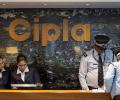
The Maharashtra Food and Drug Administration (FDA) has cancelled the drug sale and distribution licences of Cipla Pharma & Life Sciences Ltd's carrying and forwarding (C&F) warehouse in Pune. This action follows alleged violations related to packaging, storage, documentation, and recall of Reactin Plus Tablets, a Schedule H drug. The FDA cited issues like misbranding, inadequate storage conditions, and deficiencies in record-keeping, reiterating its commitment to ensuring medicine safety and compliance.

HSBC has emerged as the leading international bank in facilitating fundraising for Indian companies through bonds, syndicated loans, and IPOs during January-September 2026, according to Hitendra Dave, CEO of HSBC India.

Pharma major Lupin is significantly increasing its focus on biosimilars, aiming for a turnover of nearly $500 million from this segment over the next five years, driven by new product launches and expanded presence in key global markets like the US, Europe, and Japan.

Indian benchmark indices Sensex and Nifty saw a significant rebound in early trade, with the Sensex surging over 700 points, driven by a decline in crude oil prices, easing concerns over Federal Reserve tightening, and the appointment of Anup Bagchi as the new MD and CEO of HDFC Bank.

Indian benchmark indices Sensex and Nifty rebounded in early trade after two days of losses, driven by easing crude oil prices and strong buying in blue-chip IT stocks, despite continued global uncertainties. Track Sensex, Nifty on September 30.
Indian benchmark equity indices, Sensex and Nifty, closed higher on Monday, driven by softer-than-expected US jobs data which reduced expectations of aggressive monetary tightening by the US Federal Reserve, boosting risk appetite across emerging markets.

Indian equity benchmark indices, Sensex and Nifty, extended their losses for a second consecutive day, driven by elevated crude oil prices, persistent foreign institutional investor (FII) outflows, and high US Treasury yields.
Indian equity benchmark indices Sensex and Nifty experienced a significant tumble in early trade, primarily driven by elevated crude oil prices due to ongoing West Asia uncertainty and substantial foreign fund outflows. Track Sensex, Nifty on September 29.

The Indian stock market experienced a significant downturn, with the Sensex crashing over 1,000 points and the Nifty hitting a fresh 52-week low, driven by sustained selling from foreign institutional investors, the RBI's monetary policy tightening, and elevated Brent crude prices.

Indian benchmark indices Sensex and Nifty extended their losses for a third consecutive day, driven by firm crude oil prices, elevated global bond yields, and significant foreign fund outflows, making investors cautious.
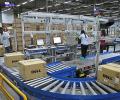
India's manufacturing sector activity surged to a seven-month high in September, driven by a significant acceleration in new orders and output, leading to solid expansion in factory hiring and a four-month peak in business optimism.
Sun Pharmaceutical Industries reported strong consolidated numbers for Q4 FY26, with net profit rising 26 per cent year-on-year to 2,714 crore, despite continued weakness in its US generics business. Growth in innovative medicines and increased R&D investments are helping to offset these pressures.

Indian benchmark indices, Sensex and Nifty, ended marginally lower after recovering from sharp intraday losses, driven by cooling crude oil prices and buying interest in HDFC Bank and IT sector stocks.
Indian benchmark indices, Sensex and Nifty, saw gains in early trade, driven by a notable drop in crude oil prices and renewed buying interest from Foreign Institutional Investors (FIIs).
Indian benchmark indices Sensex and Nifty opened higher, extending gains from the previous session, driven by a rally in global markets and a slight cooling in crude oil prices. Optimism around a potential meeting between US and Iranian presidents also contributed to positive sentiment.Later both indices pared gains and were trading in red. Track Sensex, Nifty on September 22.

Indian benchmark indices, Sensex and Nifty, experienced a significant drop in early trade, with the Sensex falling over 600 points, primarily due to crude oil prices surging past the USD 100 per barrel mark and weak global market trends. Track Sensex, Nifty on September 24.

Indian pharmaceutical companies are strategically increasing investments in the US market, focusing on specialty drugs, complex generics, respiratory products, and local manufacturing, despite a nearly 10 per cent fall in exports to the US in FY26 due to pricing pressure and competition in traditional generics.

The National Stock Exchange marked its stock market debut at the Bombay Stock Exchange on September 24, 2026, with a traditional gong-ringing ceremony.

Piramal Pharma anticipates a significant turnaround in financial year 2026-27 (FY27), projecting early-to-mid teens revenue expansion and a sharp improvement in profitability, driven by improved business momentum, new product acquisitions, and structural tailwinds.
The Bombay High Court severely criticised the Maharashtra FDA for its "undue haste" and "high-handed" actions, forcing the regulator to withdraw orders against Cipla Pharma and five restaurants at the Mumbai Cricket Association premises. The court admonished the FDA for violating principles of natural justice and taking a "pedantic instead of pragmatic view," even threatening contempt action against officials.

Shares of Symbiotec Pharmalab Ltd, a pharma and biotech company, made a muted market debut, listing nearly 1 per cent lower on the BSE against its issue price of Rs 988, but later recovered to trade higher.

The World Health Organization has requested information from the Indian government regarding the alleged supply of spurious oxytocin injections linked to the deaths of five women in Kota hospitals. This comes after regulatory action, including the cancellation of manufacturing licenses for Jackson Laboratories units, following joint inspections by drug control bodies. The government is investigating the matter, emphasising a zero-tolerance approach to quality violations.

CDSCO has warned consumers against using two unauthorised Pakistani whitening creams after finding excessive heavy metals and regulatory violations.

Indian benchmark indices, Sensex and Nifty, traded flat in early deals due to elevated crude oil prices exceeding USD 100 per barrel and persistent geopolitical tensions, which subdued investor risk appetite.
Sun Pharmaceutical Industries Ltd has announced its acquisition of US-based Organon & Co in an all-cash deal valued at an enterprise valuation of USD 11.75 billion, aiming to become a top 25 global pharmaceutical company.

Indian benchmark indices, Sensex and Nifty, saw declines in early trade due to escalating crude oil prices and ongoing US-Iran hostilities, which subdued investor risk appetite.
