
Anil Rego, CEO, Right Horizons, answers your personal income tax queries.

'Historically, the markets tend to perform well during election years as governments aim to increase spending and call attention to growth.'
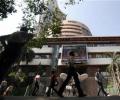
Putting money in key PSUs a better option
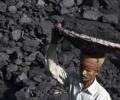
Institutional investors lapped up Coal India shares in this fiscal's maiden government stake-sale, with Rs 6,500 crore bids pouring in on the first day of the offer-for-sale. The government had offered over 8.31 crore shares to institutional investors on Thursday under the offer-for-sale (OFS), but received bids for 28.76 crore shares or 3.46 times. At the indicative price of Rs 226.12 a share, the bids of institutional buyers are worth Rs 6,500 crore.

The annual pay of a PSU employee on an average increased by 13.7 per cent to Rs 6.6 lakh in 2010-11, the Public Enterprises Survey for 2010-11 has revealed.

PSU bank stocks held the market's attention in morning trades on Tuesday as there's much anticipation that the Union Budget for 2003-04 may bring about the raising of foreign holding ceiling in these banks.

There's a straightforward relationship between economic activity and power consumption. If economic activity increases, so does power consumption. Since the latest GDP (gross domestic product) data indicates India's growth rates exceeded expectations in the second half if the 2022-23 financial year (H2FY23) and GDP estimates of FY24 are strong, we would expect power consumption to rise as indeed it has. There is also a direct relationship between power consumption and National Thermal Power Corporation or NTPC's results since the public sector undertaking (PSU) is the largest power generator in India.

The government will press ahead with the sale of public sector companies that have been approved by the Cabinet, Finance Minister Nirmala Sitharaman said on Thursday. Highlighting that FDI flow into India is much higher compared to other emerging economies, she said India's strong macroeconomic fundamentals, ability to do reforms and a stable government help attract long-term foreign funds into Indian businesses.

The Reserve Bank of India's (RBI's) latest order on unsecured loans is set to hit the banking sector's growth in the near-term, cautioned analysts, as they see banks slowing down on aggressive retail lending. Besides, cost of funds for non-banking finance companies (NBFC) is expected to inch up as banks will pass on higher capital charge to NBFCs. "We believe the fallout of the RBI action will be mainly on growth, given the rising dependence on unsecured retail loans and lending to NBFCs for growth.
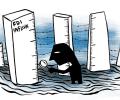
The Union Cabinet on Thursday approved a proposal to allow 100 per cent foreign direct investment (FDI) in public sector refiners, expanding the scope for FDI in the privatisation of Bharat Petroleum Corporation Ltd (BPCL). The approval by the Cabinet will enable the sale of the government's 52.98 per cent stake in BPCL to a foreign buyer, and, at the same time, will open the door for FDI in other public sector companies in the oil sector put up for privatisation.

Most of the lenders had informed their customers in advance about the strike call given by All India Bank Employees Association (AIBEA), All India Bank Officers' Association (AIBOA), BEFI, INBEF, INBOC and Bank Karmachari Sena Mahasangh (BKSM), and its impact on banking services.

The Rs 12,450 crore capital infusion will enable the three public sector general insurance companies to improve their financial and solvency position, meet the insurance needs of the economy, absorb changes and enhance the capacity to raise resources and improve risk management.

These firms offer job security and lucrative salries.

Among the Sensex firms, Axis Bank, Power Grid, Maruti, State Bank of India, Tata Motors, ITC, Nestle and Mahindra & Mahindra were the major gainers. Bajaj Finance and Larsen & Toubro were the laggards.

'This is not just the IREDA's IPO. It is the success of the ministry of new and renewable energy and of the renewable energy industry.'

During his visit to the Bastar district headquarters in the poll-bound state, the prime minister is scheduled to address a Bharatiya Janata Party rally.

As India's first solar exploration satellite reached space, four Kerala public sector undertakings, including Keltron, have reason to be delighted as they too have contributed to this achievement by the country. Various products indigenously developed and manufactured by the four PSUs - Keltron, Steel and Industrial Forgings Limited (SIFL), Travancore Cochin Chemicals (TCC) and Kerala Automobiles Ltd (KAL) - have been used in the Aditya L1 mission. This milestone achieved by the PSUs was highlighted by state Industries Minister P Rajeev in a Facebook post.

RBI Governor Raghuram Rajan on Tuesday said the Finance Ministry's decision to provide more capital to PSU banks will lower the borrowing cost and increase their capacity to lend, besides promoting investments.

Govt renews search for five PSU bank chiefs; norms relaxed.

Constituencies that are going to the polls in the first phase, slated for April 19, have just 19 days for campaigning. Contrast that with those going to polls in the 7th phase, notes N Sathiya Moorthy.
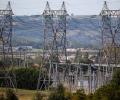
At around 3 pm on Wednesday, India's daily peak power demand touched 220 gigawatts (Gw)-the highest daily peak ever in the history of the country. The ministry of power in its estimates had projected country's power demand to cross touch 220 Gw during the months of April-June. With a cooler April due to unseasonal rains, the peak shifted to May.

Finance Minister Arun Jaitley on Sunday said the government is planning to bring down its stake in public sector banks to 52 per cent so as to meet Rs 3 lakh crore capital requirement.

Smaller stocks have emerged as Dalal Street's favourites in 2023 that has turned out to be a "great year" for equities, rewarding investors with big gains, driven by optimism over the country's macroeconomic fundamentals and heavy retail investors participation. Experts said equity markets are experiencing a prolonged bull run and it is during this time that the midcap and smallcap segments tend to outshine their larger counterparts. Till December 22 this year, the BSE smallcap gauge has jumped 13,074.96 points or 45.20 per cent while the midcap index has surged 10,568.18 points or 41.74 per cent.
As many as 267 of 453 companies from the BSE500 index are trading above their consensus price targets, according to the data compiled by Bloomberg. Not all companies in the BSE500 index are tracked by analysts.

Fiscal pressure for the Indian economy is gradually rising, suggested analysts at Jefferies in a recent note, as oil prices (Brent) - which are close to the $100 a barrel mark - continue to climb ahead of a busy election calendar. They added that the sharp rally in the equity markets during the last few months has made valuations costly. As a result, Jefferies expects the Indian markets to remain choppy in the near term.

Ask rediffGURU and tax expert Mihir Tanna your income tax-related questions.

P17A ships are guided-missile frigates.

Dwaipayan Bose on how index funds play a key role in the diversification of portfolios and help manage risks

India's trade account could come under pressure and there could be an inflation push if crude oil prices remain above the $90 per barrel (Brent) for a prolonged period since India imports over 85 per cent of its oil and roughly 50 per cent of its gas. A rebound in economic activity is bound to lead to higher fuel demand. While India is the third-largest importer of crude, it is a net exporter of refined products, which helps to compensate to some degree.

RBML - the joint venture of Reliance Industries Ltd and supermajor BP - has told the government that fuel retailing for the private sector in India has become unsustainable after market-controlling public sector firms frequently froze petrol and diesel prices at rates way below the cost, sources said. Despite a surge in oil prices, state-owned Indian Oil Corporation (IOC), Hindustan Petroleum Corporation Ltd (HPCL) and Bharat Petroleum Corporation Ltd (BPCL) first froze petrol and diesel rates for a record 137 days beginning early November 2021 when five states including Uttar Pradesh went to the polls, and last month again went into a hiatus that is now 47 days old. "They (Reliance BP Mobility Ltd) has written to the petroleum ministry over the fuel pricing issue," a highly placed source in the government, who didn't want to be quoted, told reporters.
As per the budget document presented in Parliament, public sector enterprises, including banks, are expected to contribute Rs 88,188 crore in the form of dividend and profit to the government in the current financial year.
Private sector banks are way behind their PSU peers when it comes to opening financial inclusion accounts under the Prime Minister's Jan Dhan Yojana
The power sector is always strongly correlated to economic activity and is receiving its share of investor attention as India's post-Covid-19 recovery continues. India's leading integrated power producer, the public sector undertaking (PSU) NTPC controls around 25 per cent of India's power capacity. It continues to increase installed capacity, in thermal as well as renewables (solar, wind, green hydrogen) and hydropower and pumped hydro, and also has backward integration into coal mining, and explored nuclear.

"The experience was incredibly enriching, significantly bolstering my confidence in our country's indigenous capabilities, and leaving me with a renewed sense of pride and optimism about our national potential," he said.

The Centre is looking to improve disclosures made by public sector undertakings (PSUs), and has asked such companies to share monthly progress made on capital expenditure targets and corporate social responsibility (CSR) initiatives undertaken by them. New details such as gender-wise reporting of contractual workers, unused land, and profit share in joint venture companies have also been added in the list of disclosures. The Department of Public Enterprises (DPE), which publishes the Public Enterprises Survey and collects information for Memorandums of Understanding (MoUs) signed with PSUs, is looking to integrate data collected from government-owned companies.

The Reserve Bank India's (RBI's) decision to ban the onboarding of new accounts on the "bob World" mobile digital platform led to a selloff in the Bank of Baroda (BoB) stock. The stock of the public sector bank dropped by around 3 per cent. The central bank cited "material supervisory concerns"; news reports claimed mobile numbers were randomly linked to accounts to purportedly inflate registrations on bob World.

A fresh PIL was filed on Thursday in the Supreme Court seeking a probe by multiple central government agencies under the supervision of a panel or a former apex court judge against the Adani Group of companies following allegations of fraud and share price manipulation made by the US-based Hindenburg Research.

Corporate India's net profit as a percentage of gross domestic product (GDP) dipped in the 2022-23 financial year (FY23) -- after rebounding sharply in FY22 -- amid a decline in global commodity prices. Top 500 companies' combined net profit stood at 4.1 per cent of the GDP for FY23, down from 4.3 per cent in the previous financial year when it had gone up from just 3.5 per cent in FY21. "The year-on-year (YoY) decline was led by global commodities, which contributed adversely to the ratio, while the financial sector contributed positively.

Anil Rego, CEO, Right Horizons, answers your personal income tax queries.

The Sensex jumped nearly 900 points and the Nifty rallied over 272 points on Friday, bouncing back from the previous day's fall, following a positive trend in global equities and fresh foreign fund inflows. The BSE Sensex rallied 899.62 points or 1.53 per cent to end at 59,808.97 after starting the trade on a positive note. During the day, it jumped 1,057.69 points or 1.79 per cent to 59,967.04.
