
Bullion imports are expected to fall by about 29 per cent this fiscal to USD 44 billion, the Prime Minister Economic Advisory Council said in a report released on Friday.
Among possible new members, former chief economic advisor Arvind Virmani's name is doing the rounds.

The dismal factory output growth was on the back of a poor performance by manufacturing, mining and capital goods segments.

Prime Minister's economic advisory panel has said there was no need for any stimulas package to help the industry tide over the impact of the crisis following downgrade of the US credit rating by Standard and Poor's.

Inflation, as measured by the Wholesale Price Index, stood at 8.66 per cent in April.
Rangarajan's reaction came after the release of the latest data, which showed headline inflation going up to 9.06 per cent in May from 8.66 per cent in April on the back of rising prices of manufactured products and petrol.

Prime Minister Manmohan Singh last month had said inflation would moderate to 5-6 per cent by the end of the calender year.
The Prime Minister's Economic Advisory Council said on Monday that India's GDP growth will slow down to 8.2 per cent in the current fiscal. Its earlier growth projection was at 9 per cent.
The main worry is that the inflation rate is expected to remain high at 9 per cent till October, the Prime Minister's Economic Advisory Council said.

The government will have a tough time correcting its financial course from the current high level of fiscal deficit, unless it decides to raise taxes or cut spending, said Prime Minister's Economic Advisory Council (PMEAC) member Govinda Rao.
A meeting of a ministerial panel headed by Finance Minister Pranab Mukherjee, to consider raising diesel price by at least Rs 2 a litre, was deferred twice last month and no new date has been notified yet.

To rein in prices, the RBI could tweak in policy rates to either suck out money supply or make borrowings costlier.

Regarding the impact of drought on economy, he said, the growth rate could slip to 6-6.5 per cent from 6.7 per cent in the previous fiscal. Stressing that the government should ensure that imported pulses reach the targeted people, Rangarajan said, there is a need to strengthen the public distribution system.
Going by its past experience of differences between the central bank and the finance ministry, the government might prefer a person who could bridge this gap.
It forecast a growth of 9 per cent for 2011-12.

The Prime Minister's Economic Advisory Council on Friday said the economy will grow by 8.5 per cent, up from a projected 8.2 per cent, and inflation will come down from double digits to 6.5 per cent by the end of 2010-11.

Rangarajan, 77, who will replace Suresh Tendulkar, gave his resignation to Rajya Sabha chairman Hamid Ansari, who has accepted it.

Amid projections that inflation could touch the double-digit mark, the Prime Minister's advisory panel on Thursday said it could fall to 7 per cent by fiscal-end.
Although the economy did well during the second quarter (July-September) recording a growth of 7.9 per cent, the output of agriculture and allied sector slipped to below 1 per cent.
Projecting 34 per cent decline in foreign capital inflows due to uncertain external environment, the PM's Economic Advisory Council (PMEAC) on Wednesday made a strong case for easing the External Commercial Borrowing guidelines to help corporates borrow funds from overseas debt market.

Food inflation is expected to cool off in the next two months from the current high of about 18 per cent on expectation of better Rabi (winter) crop, Prime Minister's economic panel member said.
"For some more time inflation can increase. It could touch 13 per cent, but by December it will start declining and is likely to moderate to 8-9 per cent by March 2009," said outgoing chairman of the PMEAC C Rangarajan while releasing the Economic Outlook for 2008-09.

Sajjid Chenoy, India economist at JP Morgan is the new part-time member.

The GDP growth for 2013-14 has been lowered to 5.3%, from 6.4% in April.

Prime Minister's Economic Advisory Council (PMEAC) Chairman C Rangarajan may have found the Reserve Bank of India (RBI)'s inflation projections on the higher side, but independent experts agree with the central bank and expect both wholesale and retail prices to remain high.

The recent rupee depreciation and capital outflows could adversely impact the country's economy.
Since end-May there has been volatility in the foreign exchange market.

Rejecting IMF and World Bank's "unduly" pessimistic projections, Prime Minister's key economic advisory council chairman C Rangarajan on Thursday exuded confidence that the growth would be around 5.5 per cent in the current fiscal.
.jpg)
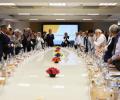
Business leaders met Manmohan Singh to discuss the problems facing the country.
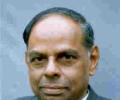
The Prime Minister's Economic Advisory Council Chief further said that 'inflation is showing signs of coming down and therefore attraction of financial products will be greater'.

Economists have cautioned that any deferment of the government's fiscal goals would prove counter-productive and raise the interest payment burden.
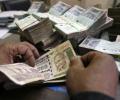
The Reserve Bank on Friday said the economy would grow by 5 to 5.5 per cent in the current fiscal, pinning its hopes on good farm output and improved exports.
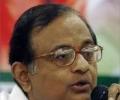
Addressing bankers and economists at Bancon 2013, a flagship event of the Indian Banks' Association, Chidambaram told the lenders to deal firmly with wilful defaulters, but handhold those who are reeling under the impact of the economic slowdown.
