
'By investing in a basket of funds, FoFs can help minimise the impact of underperforming funds, thus reducing overall investment risk.'
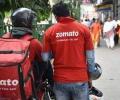
Food delivery platform Zomato has laid the foundation for its third vertical of growth by agreeing to acquire Paytm's entertainment and ticketing business, said analysts on Thursday (August 22). Zomato, which also runs a quick commerce business called Blinkit, will strengthen its 'going out' offering but the acquisition may take time to yield results, they said. "Paytm's entertainment and ticketing arm will be part of Zomato's District app, which is due to be launched in the coming weeks.

Shares of brokerages and market infrastructure institutions (MIIs) witnessed heavy selling pressure following the Securities and Exchange Board of India's (Sebi's) pivot to a uniform fee structure, which analysts fear could dent revenues. Discount brokerages, which currently benefit from a spread between client charges and exchange fees, are expected to be most affected. Shares of Angel One, the third-largest brokerage by active clients, fell 8.7 per cent. Groww and Zerodha, the largest brokerages, are not publicly listed.

Quarterly earnings from corporates, the US Fed interest rate decision and other global trends will be the major driving factors for determining movement in the domestic equity market in a holiday-shortened week ahead, analysts said. Besides, factors like trading activity of foreign investors, global oil benchmark Brent crude and rupee-dollar trend would also influence trading.

Equity markets may witness a gradual up-move this week with some volatility as both election and earnings season are nearing their end, analysts said, adding that global trends and trading activity of foreign investors would hold significance in dictating investors' sentiment. Benchmark indices, which had a record-breaking rally last week, would also track global oil benchmark Brent crude and the rupee-dollar trend. The monthly derivatives expiry on Thursday may also fuel volatility in markets.

Among the 30 Sensex companies, Hindustan Unilever, Nestle, Asian Paints, HCL Technologies, HDFC Bank, Kotak Mahindra Bank and ITC were the biggest gainers. Larsen & Toubro, Power Grid, NTPC and State Bank of India were among the laggards.

The ongoing fourth quarter earnings season, global factors and macroeconomic data would guide the trends in the equity markets this week, analysts said. Markets would also take cues from trading activity of foreign investors, rupee-dollar trend and movement of global oil benchmark Brent crude. "Domestically, the next batch of Q4 earnings reports will drive stock-specific movements, Hero MotoCorp, Larsen & Toubro, BPCL, State Bank of India, Eicher Motors and Tata Motors are some of the big names in the list and the next phase of voting," said Pravesh Gour, senior technical analyst, Swastika Investmart Ltd.

Operating margins have been the primary driver of corporate earnings in India in recent quarters, despite revenue growth suffering from weak consumer demand. Companies across sectors have reported a sharp improvement in earnings before interest, tax, depreciation, and amortisation (Ebitda) margins over the past two years, benefiting from lower commodity and energy prices. Higher margins more than compensated for slower revenue growth, resulting in double-digit growth in net profit for five consecutive quarters.

'If the majority falls short of expectations, it may prompt initial adjustments in investor sentiment.'

Despite steady loan growth, the banking sector is expected to report subdued margins in the quarter ending June 2024 (Q1FY25), driven by high demand for deposits amidst tight liquidity conditions. However, according to Bloomberg analysts, listed banks are forecasted to see a 14.5 per cent year-on-year (Y-o-Y) increase in net profit. Estimates showed that banks' net interest income (NII), and revenues from interest minus interest expenses might grow 11.9 per cent Y-o-Y.
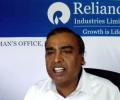
Shares of Mukesh Ambani-owned Reliance Industries Limited (RIL) rose nearly 1 per cent on Tuesday, hitting an intraday high of Rs 2,986.05 per share, after most brokerages reacted positively to the company's March quarter (Q4FY24) results. The bullish outlook stems from Reliance Jio's potential tariff hikes, given the competitive landscape, along with slow but steady improvement in the oil-to-chemical (O2C) vertical.

India's financial sector is dominated by large government-owned and private-sector banks.

Make minimum payments on all debts, then use extra funds to tackle the smallest debt first.

New Delhi-based pharmaceutical major Mankind Pharma is poised to take pole position in women's health portfolio in the India Pharma Market (IPM) after completing the Rs 13,630 crore deal to acquire Bharat Serums and Vaccines (BSV), senior company officials said. The deal potentially opens doors for Mankind Pharma to the overseas markets, which currently draws 92 per cent of its revenues from India. The combined entity will draw around 13 per cent revenues from the international market, with the remaining coming from the domestic market.
Domestic macroeconomic data announcements, global trends and trading activity of foreign investors would guide market sentiments this week, analysts said. After a record rally, markets may face volatile trends this week amid elevated valuations and investors would also keep a track of global oil benchmark Brent crude and rupee-dollar movement for further cues. "Potential volatility in the stock market is anticipated this week. Elevated valuations remain a concern, with investors now focusing on monsoon progress and its impact on the rural economy.

The brokerage earnings estimate for the January-March 2024 quarter (Q4FY24) for Nifty 50 companies hints at a slowdown in corporate profit growth while revenue increase is likely to be in low single digits as in the previous two quarters. According to various brokerage estimates, the companies' combined net profits are expected to grow 3.1 per cent year-on-year (Y-o-Y) in Q4FY24, the slowest in the last five quarters. For comparison, the index companies' combined net profits were up 8.2 per cent Y-o-Y in Q3FY24 and 3.4 per cent Y-o-Y in Q4FY23.

Bull run in the markets is likely to continue for next 5 years, says Motilal Oswal MD.
Worries related to the Iran-Israel conflict, quarterly earnings and foreign investors' trading activity are the key factors that would dictate stock markets this week, analysts said. Besides, trends in Brent crude oil and movement of the rupee against the dollar will also be crucial factors. This week will be crucial for the market amid ongoing worries about the conflict between Iran and Israel, said Pravesh Gour, Senior Technical Analyst, Swastika Investmart Ltd.

For over a decade, HDFC Bank consistently outperformed industry growth rates in both deposits and advances, maintaining impeccable asset quality. Amid a landscape where other banks struggled with soaring non-performing assets (NPAs), HDFC Bank thrived, eventually surpassing ICICI Bank to become the largest private sector lender in India. Its net interest margin (NIM) remained stable in the range of 4.1-4.4 per cent.

From its recent lows, the stock of consumer major Marico is up 7 per cent on the back of a better-than-expected June quarter performance and robust outlook. In a pre-quarter update, the management indicated that domestic volume growth should witness an improvement in FY25, while other segments (growth portfolio, international business) too would see traction going ahead. The near-term trigger is strong sales and operating performance for Q1FY25.

Investors keen on mid and smallcap stocks but wary of volatility should consider multicap equity schemes over standalone midcap or smallcap schemes.

Stock markets will be driven by domestic inflation data, ongoing quarterly earnings from corporates and global trends this week, analysts said. News flows around the general election would also be tracked by investors, market experts said.

Most investors should have a 5% to 10% allocation to gold for diversification. They should stagger their investments to mitigate timing risk.

rediffGURU Sunil Lala answers your personal finance-related queries.

IndiGo share price today: IndiGo share price fell as much as 4.8 per cent to a low of Rs 4,275 per share on the BSE in Monday's intraday trade as investors booked profit in the stock post a its April-June quarter (Q1) results for financial year 2024-25 (FY25). The stock ended 1.36 per cent lower at Rs 4,430 as against a 23-points gain in the benchmark BSE Sensex. The selling also got exacerbated as the management commentary, post Q1FY25 results, highlighted that inflationary pressure could likely dent July-September (Q2FY25) performance.

All the four listed private life insurance companies recorded a drop in value of new business (VNB) margin in the financial year 2023-24 (FY24) as compared to FY23. This is because of a higher share of unit-linked insurance plans (Ulips) in the product mix. VNB is a measure of the economic value of profits expected to emerge from a new business.

From its lows over the past month, the stock of footwear major Campus Activewear gained 13 per cent to Rs 280.4 a share. The gains came on the back of better than expected operating profit margins in Q4, reduction of debt and expectations of market share improvement. The company expects volume growth, which has thus far missed expectations, to recover going ahead on the back of multiple triggers.

The froth in the small and midcap (SMID) space is limited to a few pockets, but regulatory scrutiny could lead to sustained volatility, observe India's top-drawer wealth managers. They add that they have been advising clients to reduce their exposure to smallcaps. Anand Rathi Wealth, which manages investor wealth through mutual funds (MFs), reports that its exposure to smallcap stocks, both through MFs and directly, has decreased by nearly 7 percentage points in the past few months, now standing at 23 per cent.
Trading in the equity market will largely depend on two major events this week - general elections result and the RBI interest rate decision - analysts said, adding that the benchmark indices may rally on Monday on exit polls' prediction of a massive win for the BJP-led NDA and strong GDP data. Exit polls on Saturday predicted that Prime Minister Narendra Modi will retain power for a third straight term, with the NDA expected to win a big majority in the polls. Counting of votes will take place on June 4.
Global trends, macroeconomic data announcements and the start of the earnings season would be the major drivers for the equity markets in a holiday-shortened week, analysts said. Equity markets will remain closed on Thursday for Eid-Ul-Fitr. Trading activity of foreign investors, rupee-dollar trends and crude oil prices would also guide trends in markets.

While the central bank had publicly cited only Rs 15.55 trillion of high value notes were cancelled, in an RTI reply to PTI, it had said the actual quantum of bills cancelled was much higher at Rs 20.51 trillion.

"We are seeing the feel-good factor is back. It's only a matter of time before the entire economic engine starts working seamlessly," says Motilal Oswal.
ICICI Bank share price hits record high, ICICI Bank m-cap tops $100 billion: Shares of ICICI Bank have been on a steady uptrend, rising 30 per cent over the past one year; not far behind Axis Bank stock that surged over 34 per cent during the period. The BSE Sensex, meanwhile, is up 25 per cent, and the BSE BANKEX 22 per cent in the last one year, ACE Equity data shows. On Wednesday, June 26, ICICI Bank shares hit a fresh record high for the third consecutive day, rising 2 per cent on the BSE in the intraday trade.

The Mumbai-based real estate developer Oberoi Realty has been one of the top-performing companies in its segment and most brokerage remains bullish on the stock. The company's stock price is 52 per cent in the last 12 months beating the broader market by a huge margin. The benchmark BSE Sensex is up just 6.5 per cent during the period.

The first quarter results (Q1FY25) of Indian IT services hint towards better fiscal growth than the preceding year, but as the management commentary said, "there is still some time for the industry to be firing on all cylinders." Among the majors-Tata Consultancy Services (TCS), Infosys, HCLTech, and Wipro-it is the Bengaluru-based Infosys that has performed better, which was also evident in its full-year revenue guidance.

The June quarter is usually considered as a seasonally strong period for the IT sector.
Stock markets would be driven by global trends and foreign investors' trading activity in the holiday-shortened week, analysts said adding that key equity indices may face volatile trends amid the monthly derivatives expiry on Thursday. This week markets will have just three trading sessions. Equity markets will remain closed on Monday for Holi and on Friday for Good Friday. "This week will be shorter due to market closure on both Monday for Holi and Friday for Good Friday.

The stock of United Spirits, the country's largest liquor company by market capitalisation (mcap), has gained 11 per cent over the past week on double-digit growth guidance, rising premiumisation trend, operationally in-line performance in the March (Q4FY24) quarter and a rally in consumer stocks. The revenue growth of the company came in at 7 per cent year-on-year (Y-o-Y) mirroring the growth of the prestige and above (P&A) segment. This segment comprising premium brands accounts for 88 per cent of the revenues.

'We expect market consolidation and recommend buying during market dips.'

rediffGURU Ulhas Joshi answers your personal finance and mutual fund queries
