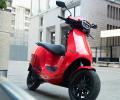
It takes a while to get used to the constant and instant supply of power that is the case with EVs, and handling the S1 Pro when it takes a corner or makes a turn can be tricky, says Pavan Lall.

The government on Wednesday asked e-commerce platforms to conduct annual internal audits to make sure that they are not resorting to manipulative tactics to mislead consumers and prevent them from making right choices -- a technique commonly referred to as dark pattern -- and submit reports to the Department of Consumer Affairs (DoCA). It comes just a week after Uber was issued a notice by the Central Consumer Protection Authority (CCPA) over its "advance tip" feature.
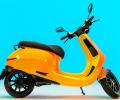
Ride-hailing major Ola on Wednesday said it will launch its electric two-wheeler range in New Zealand. This will help support the New Zealand government's goal of bringing on road 64,000 new electric vehicles by the end of 2021, while also helping the public sector become carbon neutral by 2025, Ola said in a statement. According to the industry sources, the company plans to launch the range in New Zealand over the next 6-9 months.

CCPA said the primary issues raised in the notices included 'deficiency in service'. This includes lack of proper response from customer support, driver refusing to take payment by online mode and insisting for cash only.

In many states, aggregators operate without a licence; in others, with the risk of the licence being revoked by any regional transport office on the slightest pretext.

Ola commits to invest $100 mn in Vogo, to bring scooter-sharing to its app, reports Alnoor Peermohamed.

Ola's factory will create 10,000 jobs and serve as the company's global manufacturing hub for India and international markets.

Rising inflation and stagnant wages are forcing a number of salaried professionals to venture into the bike taxi service as part-time riders.

Ola Electric on Monday said it will foray into the electric car segment with plans to launch its first model by 2024. The company, which struggled with deliveries for its electric scooters after it announced entry into the segment exactly a year ago, has set an ambitious target of selling 10 lakh electric cars by 2026-2027. In a press conference, Ola founder and CEO Bhavish Aggarwal said Ola Electric aims to provide a range of electric two-wheelers to electric cars which are priced in the range of Rs 1 lakh to Rs 50 lakh.

With its foray into self-drive, Ola will go head-to-head with early entrants Zoomcar, Revv and a few other.

Players like Ola Electric, Ather Energy, Kinetic Green and BGauss are introducing premium services and infrastructure enhancements.

Mobility company Ola's chief financial officer Swayam Saurabh and chief operating officer Gaurav Porwal are leaving the company. These developments come at a time when the SoftBank-backed company's core ride-hailing unit is planning to go public and for which it raised $500 million from Warburg Pincus and Temasek in July this year. These investment firms had partnered with the company founder Bhavish Aggarwal for this round.

An ex-employee claimed that team members were routinely subjected to verbal abuse, even for basic clarifications or suggesting improvements.

Ola co-founder Bhavish Aggarwal on Thursday said Ola Electric sold scooters worth over Rs 600 crore on the first day of the sale of its model S1. The executive noted that the company will shut the purchasing process from Thursday midnight. Ola Electric had on Wednesday commenced the sale process of its electric scooter, which comes in two trims - Ola S1 and S1 Pro.
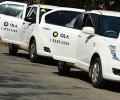
The suspension was lifted after the executives of Ola Cabs had a detailed discussion with state chief secretary.

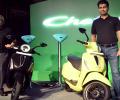
SoftBank-backed Ola Electric took the wraps off its maiden e-scooter offerings -- Ola S1 and S1 Pro -- for a commercial launch on Sunday. With prices starting from Rs 99,999 (excluding state government incentives, registration fee, and insurance cost), the Bhavesh Aggarwal-founded firm said the e-scooters are designed and engineered in India for the world and will deliver the best scooter experience to the consumer. He suggested that after 2025, sale of petrol-powered two-wheelers should not be allowed.

Bhavish Aggarwal, the founder of ride-hailing firm Ola who disrupted the electric scooters market in the country, is planning to launch an electric sports car in 2024. The plan will put it in competition with Indian players, such as the Tata group and Mahindra & Mahindra, and global giants like Tesla and Hyundai. Aggarwal, recently, took a group of reporters to the firm's design studio at the Ola campus in Bengaluru where his teams are working on several EVs, including scooters, motorcycles, sedans, and SUVs - and even robotaxis.
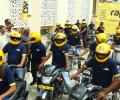
'Today, we have 2 million active drivers earning through our platform every month.'

In the hottest sector of AI, where most global VC funding is going currently, the country's record has not been anything to write home about.

Ridlr will become a wholly-owned subsidiary of ANI Technologies, which owns Ola brand. Ridlr's team of 64 employees will now become a part of Ola.

Customers in Coventry and Warwick will also enjoy competitive pricing -- with new users receiving 50 per cent off on all rides for the first two weeks, according to the company.
The two-wheeler giant had only 14 per cent of the electric two-wheeler market in May this year, but its 26.8 per cent in December

Ola Electric has finalised its second phase of expansion, under which it will increase its plant capacity fourfold - from 1 million two-wheelers per annum to 4 million. This will also include motorcycles, said a top executive of the company. It will also build a plant with a 5 Gwh of advanced chemistry cell battery storage capacity in the same super factory located on the outskirts of Bengaluru.

Over 50,000 licenced drivers will now be assured that they can continue to provide mobility services in London. Drivers can initiate their registration on the Ola app.

More than 30 technology startups, collectively valued at $100 billion, are poised to go public by 2027, signalling a potential rebound in India's stock market activity, according to a report by investment bank The Rainmaker Group. Walmart-owned Flipkart, financial technology (fintech) leader PhonePe, SoftBank-backed Lenskart, Razorpay, Zetwerk, and Meesho are among the top companies preparing to go public in India.

Ola and Uber said they have resumed services in areas within orange and green zones, and have introduced requirements like wearing masks to ensure safety of riders and driver partners.
Fairwork focuses on five principles of fair gig work: Fair pay, fair conditions, fair contracts, fair management, and fair representation.

While Ola will be restarting services in over 60 cities across the country from Tuesday, Uber, on the other hand, will restart services in 13 more cities from Tuesday, increasing coverage to over 35 cities.

Ola was supposed to expand to the Netherlands, Kenya, Dubai, Israel, and Brazil.

RIL subsidiary Reliance New Energy Solar, Ola Electric, Hyundai Global Motors Company and Rajesh Exports have been approved for receiving incentives under the Rs 18,100 crore Production Linked Incentive (PLI) scheme for battery manufacturing in India, sources said on Thursday. "The ministry had received bids from 10 companies with a capacity of 130 GWh. Reliance, Ola Electric, Hyundai and Rajesh Exports have qualified for ACC batteries," a source said. Other companies which had applied for the PLI scheme for Advanced Chemistry Cell (ACC) batteries were Lucas-TVS, Mahindra & Mahindra, Amara Raja Batteries, Exide Industries, Larsen & Toubro and India Power Corporation Limited.

The deal brings the two start-up stalwarts - Bansal and Ola co-founder and chief executive officer Bhavish Aggarwal - together in the backdrop of growing foreign control in this space.

Ola, which is now present in seven cities in the UK, said its easy-to-use app would transform commuting experiences in these areas providing the community with greater travel choice as well as quicker and easier access to cabs.
Ola has reported its first operating profit of Rs 89.82 crore for 2020-21, even as the ride-hailing company's revenue declined 65 per cent to Rs 689.61 crore amid COVID-19 induced lockdowns. As per regulatory documents filed by ANI Technologies - the parent company of Ola - it had logged standalone operating profit (profit before finance cost, depreciation, amortisation and tax (EBITDA)) of Rs 89.82 crore in FY21 on a standalone basis, while it had registered a loss of Rs 610.18 crore in the preceding fiscal year.

While mobility aggregators such as Rapido and Uber have welcomed the decision, gig workers associations and unions remain concerned.
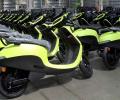
From premium electric motorcycles to mass-market scooters, manufacturers are rapidly expanding their portfolios to capture a larger share of the booming market.

Startups that became unicorns in 2024 took an average of nine years and six months to reach $1 billion valuation, reflecting the impact of a prolonged funding squeeze from PE/VC firms over the past few years.
Ola Electric's technology team is working hard to iron out the technical kinks that marred the electric vehicle company's hyped online sale of its electric scooters (e-scooters) - the S1 and the S1 Pro - on Wednesday, said company sources. The SoftBank-backed firm is facing technical difficulties in making the website live for the purchase of its e-scooters. According to company sources, the website couldn't go live as there were integration issues.

With Ola Corporate, aims to provide services to 10,000 firms by next year

'Son believes India has a significant opportunity in chip design, especially in creating IP that will be uniquely Indian.'

Ola's rival Uber is trying to set up a local engineering centre in Bengaluru.
