
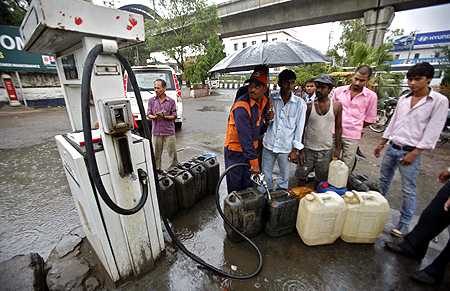
Diesel price on Monday was hiked by 25 paise per litre -- the third increase since last week -- and more rate hikes for both diesel and petrol are in the offing in the coming days as international oil prices have soared to a three-year high. The price of diesel was hiked to Rs 89.32 per litre in Delhi and to Rs 96.94 in Mumbai, according to a price notification of state-owned fuel retailers. This is the second straight day of increase in diesel prices and the third since September 24 when the state-owned oil firms ended a three-week hiatus in rates.
Global supply is staying in excess of demand.

The rupee depreciated 39 paise to an all-time low of 82.69 against the US dollar in early trade on Monday as elevated crude oil prices and risk-averse sentiment among investors weighed on the local unit. Moreover, a negative trend in domestic equities and firm American currency sapped investor appetite, forex traders said. At the interbank foreign exchange, the rupee opened at 82.68 against the greenback, then slipped further to 82.69, registering a fall of 39 paise over its previous close.
The RBI's Monetary Policy Committee brainstormed the impact of any future shocks on the inflation trajectory and stressed monitoring the cumulative effect of monetary policy actions over the past one year, which is still unfolding, revealed minutes of the rate-setting panel released on Thursday. The minutes of the meeting of the Monetary Policy Committee (MPC), headed by Reserve Bank Governor Shaktikanta Das, also indicated it would be premature to declare an end to the monetary tightening cycle, which started in May 2022 to check high inflation following the outbreak of the Russia-Ukraine war. The central bank, which effected six back-to-back hikes in the key short-term lending rate (repo) since May 2022 to check high inflation, decided to take a pause early this month.
After Rajasthan, petrol price on Thursday crossed the Rs 100 per litre mark in Madhya Pradesh after fuel rates were increased for the tenth day in a row. Petrol price was hiked by 34 paise per litre and diesel by 32 paise, according to a price notification of state-owned fuel retailers. While branded or additive-laced petrol, which attracts higher taxes, had crossed the Rs 100-mark in some places in states like Maharashtra, Madhya Pradesh and Rajasthan, regular petrol crossed the physiological mark in Sriganganagar town of Rajasthan on Wednesday, and on Thursday it went past that mark in Madhya Pradesh. In Anuppur of Madhya Pradesh, petrol is priced at Rs 100.25 per litre and diesel at Rs 90.35. Fuel prices differ from state to state depending on the incidence of local taxes such as VAT and freight charges.

Production by the 10 member countries, excluding Iraq and Angola which joined the group this year only, increased by 70,000 barrels per day (bpd) to 266.4 lakh bpd from 265.7 lakh bpd in April.
After Rajasthan, Madhya Pradesh and Maharashtra, petrol price has crossed the Rs 100-per-litre mark in Leh, in almost all districts of Andhra Pradesh and parts of Telangana after fuel prices were again hiked on Friday. Petrol price was increased by 27 paise per litre and diesel by 28 paise a litre, according to a price notification of state-owned fuel retailers. The hike - 18th in the last one month - took fuel prices across the country to a historic high. In Delhi, petrol hit an all-time high of Rs 94.76 a litre, while diesel is now priced at Rs 85.66 per litre.

Petrol price on Friday was hiked by 30 paise a litre and diesel by 35 paise per litre as domestic fuel prices witnessed possibly the largest rally in rates. The price of petrol in Delhi rose to its highest-ever level of Rs 103.54 a litre and to Rs 109.54 per litre in Mumbai, according to a price notification of state-owned fuel retailers. Diesel rates too touched a record high of Rs 92.12 in Delhi and inched closer to the Rs 100-a-litre mark in Mumbai. It currently costs Rs 99.92 a litre in Mumbai.
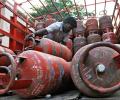
Cooking gas LPG price on Wednesday was hiked by Rs 15 per cylinder in line with a surge in international fuel prices. Rates of both subsidised and non-subsidised LPG prices were hiked, oil company officials said. Cooking gas now costs Rs 899.50 per cylinder in Delhi.
Oil fell below $59 a barrel for the first time since May 2009 on Tuesday, extending a six-month selloff as slowing Chinese factory activity and weakening emerging-market currencies added to concerns about demand.

Despite the recovery to above $40 levels after hitting $28-29 in Jan, worries of over-supply in the face of weak demand remain.

Usually, a fall in oil prices is followed with a cut in retail prices of auto fuels and the government passes on the benefit to consumers. However, Morgan Stanley believes gains this time around will remain capped.

If international crude oil prices zoom past the current level of about $90 per barrel and move towards $100 and beyond, middle-class consumers are not going to keep quiet about their discomfort, points out Arun Balakrishnan, former chairman and managing director, Hindustan Petroleum.
Rising production from OPEC as well as the US also weighing on prices

Persistent selling of the American currency by exporters and bank supported the rupee

The oil crisis could not have come at a worse time for the Modi government as its tax collection has fallen short of its 2020-2021 target by Rs 5.2 lakh crore.

A few years ago, when top officials of Indian state-run refiners went to Dubai to negotiate a crude oil supply contract, a senior official from state-owned Saudi Aramco told them, "We can negotiate on anything, but I am the last man standing for you. "Nobody can offer the range of crudes we do with certainty," an official who was part of the negotiating team recalls. Perhaps that explains why Saudi Arabia is less concerned about losing its place as India's premier oil supplier to an upstart like Russia, which emerged from nowhere to become India's biggest crude oil supplier in September and October.

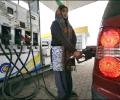
Petrol price was hiked by 30 paise per litre and diesel by 35 paise a litre, according to a price notification of state-owned fuel retailers. The seventh straight day of price hike pushed fuel rates to a new record high. The price of petrol in Delhi rose to its highest-ever level of Rs 104.44 a litre and Rs 110.41 per litre in Mumbai, the notification showed. In Mumbai, diesel now comes for Rs 101.03 a litre; while in Delhi, it costs Rs 93.17.
OPEC's move to cut output has pushed up oil prices. From here it could go either way: oil could reach $100/barrel or an analysis of demand and supply might follow, say Abheek Barua & Bidisha Ganguly.
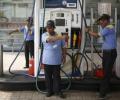
CARE Ratings, in a report, said it foresees an increase in the retail prices of petrol and diesel in the coming few days, depending on how the oil markets react in the reduction in supply from the cartel.
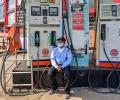
Petrol and diesel prices across the country soared to all-time high levels on Thursday as rates were hiked again in line with the spurt in international oil prices. Petrol price was increased by 30 paise per litre and diesel by 35 paise a litre, according to a price notification of state-owned fuel retailers. The price of petrol in Delhi rose to its highest-ever level of Rs 103.24 a litre and to Rs 109.25 per litre in Mumbai, the notification showed.

Top losers in the session included Maruti, Tata Motors, RIL, Yes Bank, Adani Ports, Bharti Airtel, Asian Paints, ONGC, HUL, Kotak Bank, IndusInd Bank and Axis Bank, falling up to 5 per cent.
OPEC, which has oil reserves that constitute 80 percent of the total global reserves, is unwilling to increase output to bring down oil prices. This makes OPEC too responsible for the rising oil prices, apart from the weak dollar. OPEC has said that world oil demand this year is forecast to grow by 1.2 million barrels daily to an average of 87 million barrels per day. As OPEC's output remains insufficient to cover rising demand from Asian region, oil prices will tend to rise.
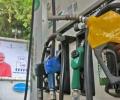
'The question often being asked is whether the demand for petrol and diesel is price inelastic?' asks Arun Balakrishnan, former chairman and managing director, Hindustan Petroleum.
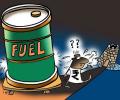
As stringent sanctions imposed by the European Union and US are crippling business and trade, desperate Russian oil companies are offering huge discounts to India, provided a payment mechanism to bypass the SWIFT ban is quickly approved by the government. According to sources familiar with the development, Russian oil firms are offering 25-27 per cent discount to the dated Brent crude prices. State-run Rosneft is one the biggest oil companies that supply crude to India.

Saudi Arabia's deep pockets and a strong financial system could help the country to ride out a low-price environment in order to protect its market share.

While OPEC has been unable to agree on an output freeze in an effort to support prices, Iraq was the latest Middle East producer to raise its exports quota

ONGC was the top loser in the Sensex pack, cracking over 16 per cent, followed by Reliance Industries, IndusInd Bank, Tata Steel, TCS, SBI, ICICI Bank and Bajaj Auto.

IndusInd Bank was the top gainer in the Sensex pack, soaring around 7 per cent, followed by Axis Bank, Bajaj Finance, ONGC, Titan, Infosys and Tech Mahindra.
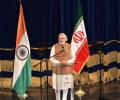
The Modi government caved in under American pressure without even token resistance. Two countries similarly placed as India with high dependence on Iranian oil -- China and Turkey -- have shown the grit to stand up to Washington, says Ambassador M K Bhadrakumar.

Crude oil's long price slide might be ending, feel some experts. Last Friday, the price of Brent crude, seen as a benchmark for what India uses, saw a low of $75.3 a barrel - it is now trading around $79. The fall has been nearly a third from its high seen in June, only five months earlier.
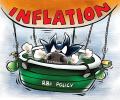
The Reserve Bank of India on Friday raised the retail inflation forecast for 2021-22 to 5.7 per cent due to supply side constraints, high crude oil and raw materials cost. The RBI in June had pegged the retail inflation estimate at 5.1 per cent for the current financial year. The RBI has the mandate to keep inflation in a band of 2-4 per cent, with a tolerance level of 2 per cent on either side.

The laggards include FMCG (16 per cent), Energy (37 per cent) and Media (34 per cent).

Kotak Mahindra Bank was the biggest gainer on both the indices, ending nearly 9 per cent higher following reports that Warren Buffett's Berkshire Hathaway Inc was planning to pick up stake in the private sector lender.

Oil prices could reach $100 per barrel if there were "dramatic" developments in the Gulf or elsewhere, a leading oil official has said.

The task of Union Finance Minister Arun Jaitley to keep inflation under check, even when the country reeled under severe drought for two years in a row, and reduce the current account deficit, was made easier by low crude oil prices.

India is estimated to spend $1.36 billion more a year for every one dollar a barrel increase in crude oil prices, says Subhayan Chakraborty.
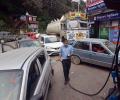
India's appetite for imported crude oil may wane in fiscal year (FY) 2023 from record levels in pre-pandemic 2019-20 fiscal as higher oil prices, a spillover from the conflict in Ukraine, and increasing use of biofuels affect domestic demand for petroleum products. Brent crude surged to a nine-year high, shy of a July 2008 record $147.50 a barrel, before declining to around $100 a barrel - but the volatility in commodity rates will slow global economic growth and use of fuels. Demand for all oil products may grow at only 2-3 per cent in FY23, slower than the current fiscal and nearly half the 5.5 per cent growth estimated by the petroleum ministry, according to industry officials.

'The markets have corrected almost 8-9 per cent from their highs, so one can accumulate quality stocks at reasonable prices.'
