
Electric passenger vehicle (PV) retail sales jumped more than twofold in September with Tata Motors (TaMo) leading the pack having over 6,000 registrations and a 40 per cent market share.
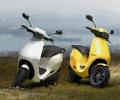
The Indian entrepreneurship success story will soon see one more company debuting on the public markets. Ola Electric, the electric vehicle (EV) company, has become the first such firm that has filed its draft red herring prospectus (DRHP) with the Securities and Exchange Board of India for its initial public offering (IPO). This is a fresh issue of equity shares of up to Rs 5,500 crore and an offer for sale (OFS) of more than 95 million equity shares at a face value of Rs 10.

The debate over working hours flared up after Infosys Co-founder N R Narayana Murthy called for 14-hour workdays.

Layoffs, corporate restructuring, governance and most importantly profitability: The 14 Indian startups that plan IPOs this year are pulling out all the stops to ensure successful market debuts.
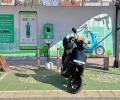
Electric two-wheeler (e2W) companies are upset with some of their suppliers of heavy rare-earth magnet-powered electric motors, who have objected to their proposal - under consideration by the government - that would allow e2W original equipment manufacturers (OEMs) an exemption from localisation norms on electric motors, thereby enabling them to continue receiving the 5,000-per-vehicle subsidy.V
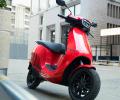
'Through volume numbers and unit sales one can see, we are not making a loss'

'...then preparing oneself for the long haul is also essential.' 'Identifying and holding onto values gives you strength to withstand the difficulties enroute.' 'Taking care of your physical, mental, and intellectual well-being gives you the strength to stay the path.'
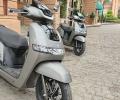
Hero MotoCorp and TVS Motor crossed Rs 1,000 crore in R&D spend for the first time, as legacy OEMs accelerate innovation to compete with new-age EV players.

Retail sales of electric passenger vehicles (ePVs) nearly doubled in July 2025, surging 93 per cent year-on-year (Y-o-Y) to 15,528 units, even as overall passenger vehicle (PV) retail volumes declined marginally. In contrast, electric two-wheeler (e2W) sales dropped by 4.3 per cent to 102,973 units, according to the Federation of Automobile Dealers Associations (Fada) data.

India's 25 venture capital and private equity backed "new-age" companies, that listed between May 2020 and June 2025, reveals a sobering reality behind the hype: barely a third have delivered sustained outperformance against the market.

Ola Electric's initial public offering (IPO), of Rs 5,500 crore, is essentially aimed at ensuring the company maintain its top position in the electric two-wheeler segment, with incumbent players TVS and Bajaj Auto giving a fight to the number one player in market share. Most experts and competitors say the amount being raised is in line with the investment required to expand the electric-vehicle (EV) business. There are two discernible trends in the competitive electric two-wheeler market.

Karnataka transport minister Ramalinga Reddy confirmed the development, stating that the companies must abide by the court's decision.

Among Sensex firms, Bharat Electronics, Eternal, Mahindra & Mahindra, Kotak Mahindra Bank, Tata Motors and Power Grid were the gainers. However, Adani Ports, ITC, UltraTech Cement and Titan were among the laggards.

Ola Electric on Thursday teased five new electric motorcycles that the SoftBank-backed company is working on, announcing the range after selling electric scooters. The products are labelled cafe racer, an adventure tourer, a scrambler and a naked motorcycle. The motorcycles are expected to be launched next year and would include premium and mass-market versions, said sources.

Ola Electric will miss its target to fully utilise installed production capacity in next six to eight months and will achieve only 50 per cent of it by November 2023, founder and CEO Bhavish Aggarwal said on Friday. At the time of launch of the new S1 Air electric scooter ahead of Diwali last month, he had said the company was already producing more than 1,000 a day at its 'future factory' and would be scaling it up significantly beyond that.
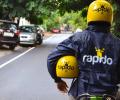
Bike-taxi drivers are also left stranded as many depended on the service.

Japanese investment giant SoftBank is looking to partially exit from three startups which are aiming at an IPO next year - Ola Electric, Swiggy and First Cry. But its decision will depend on the size of the offer for sale pool in each of the companies. According to sources aware of the strategy, Softbank invested over $850 million collectively in these companies whose value conservatively would go up more than 4.3 times to around $3.7 billion, based on preliminary estimates of their projected valuation when they go public next year.

Ola Electric, India's largest maker of electric scooters, launched its most affordable ride on Tuesday, in an attempt to woo more customers and expand its electric two-wheeler lineup.

SoftBank Group-backed Ola Electric is in talks with multiple global suppliers to build a battery cell manufacturing plant in India with a capacity of up to 50-gigawatt hours, sources said. As part of its broader electrification push, the firm plans to invest in companies with advanced cell and battery technology, alongside the 50 Gwh battery plant. Ola Electric needs 40 Gwh of battery capacity to power 10 million electric scooters annually. The remainder will be for its electric cars, which the company plans to manufacture in the future.

Start-ups don't care that mad-money funding comes to a hard stop after an IPO, observes Debashis Basu. As a listed entity, corporate actions have to take the interests of all shareholders, especially minority shareholders, into account. So far, we are not seeing any sign of it, observes Debashis Basu.

The government on Wednesday asked e-commerce platforms to conduct annual internal audits to make sure that they are not resorting to manipulative tactics to mislead consumers and prevent them from making right choices -- a technique commonly referred to as dark pattern -- and submit reports to the Department of Consumer Affairs (DoCA). It comes just a week after Uber was issued a notice by the Central Consumer Protection Authority (CCPA) over its "advance tip" feature.

Rising inflation and stagnant wages are forcing a number of salaried professionals to venture into the bike taxi service as part-time riders.

'Nobody wants to run an exploitation factory.'
Ola Electric on Wednesday said it has commenced deliveries of its S1 scooters. The company said it organised special events in Bangalore and Chennai on Wednesday to deliver both S1 and S1 Pro trims to the first 100 customers. "Today is a landmark day for those who have joined the revolution with us as we begin our deliveries of Ola S1. "We are working hard to ramp up the production at the Ola Future factory to get the scooters in the hands of our customers as per their delivery windows," Ola Electric chief marketing officer Varun Dubey said in a statement.

IPO-bound mobility platform Ola, said it has successfully raised $500 million via a Term Loan B (TLB) from marquee international institutional investors. This term loan has no impact on the valuation of Bhavish Aggarwal-led Ola. The Bengaluru-based firm recently raised $139 million. This is part of a $1 billion funding round for which the company is in talks with investors, increasing its valuation to about $7.5 billion, according to the sources.

An ex-employee claimed that team members were routinely subjected to verbal abuse, even for basic clarifications or suggesting improvements.
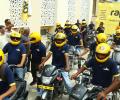
'Today, we have 2 million active drivers earning through our platform every month.'
Ola founder and chief executive officer (CEO) Bhavish Aggarwal will step back from day-to-day operations to focus more on engineering functions, team building, and products, apart from focusing on long-term strategic projects, such as two-wheelers, cars, and innovations in quick commerce and international expansion. "I'll be spending more time with all engineering functions, team building, and on products," said Aggarwal in an internal note, adding, "I'll also be increasing my focus on our longer-term strategic projects, including new two-wheeler products, our car project, innovations in quick commerce, electrifying ride-hailing, our cell research and development (R&D), international expansion, building our Pune technology (tech) centre, and Futurefoundry UK." To drive scale, speed, and quality, Aggarwal said he is expanding Ola Group's chief financial officer (CFO) G R Arun Kumar's role to help him steer 'day-to-day operations' across the group.
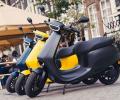
Ola Electric is moving the delivery for the first batch of its electric scooters to between December 15 to the end of the month, a two- to four-week delay from its earlier schedule, due to a shortage of chipsets and electronic parts. The first batch of deliveries were scheduled for November 30 but the company decided to delay them after a meeting between its factory team and the global supply chain on Saturday. It became clear that the late delivery of chips and electronic parts was only 'getting worse', sources told Business Standard. Ola has apologised to customers for the delay and said it is "ramping up production as fast as we can so that you can get your Ola S1 at the earliest". It has stopped taking any new bookings until the chip shortage has eased, say sources.
Moody's Investors Service on Monday said it has assigned a first-time B3 corporate family rating (CFR) to ANI Technologies, which operates ride hailing service Ola. Moody's CFRs are opinions of a corporate family's ability to honour all of its financial obligations. It has also assigned a B3 rating to the company's proposed senior secured term loan.

In the hottest sector of AI, where most global VC funding is going currently, the country's record has not been anything to write home about.

Players like Ola Electric, Ather Energy, Kinetic Green and BGauss are introducing premium services and infrastructure enhancements.
Upon completion, the factory will create almost 10,000 jobs and will initially have an annual capacity of 2 million units.
Ola Electric on Thursday said it will bring its electric scooter to the Indian market in July this year, and is working on setting up a 'Hypercharger Network' to include one lakh charging points across 400 cities. Last year, Ola had announced a Rs 2,400 crore investment for setting up its first electric scooter factory in Tamil Nadu. Upon completion, the factory will create nearly 10,000 jobs and will be the world's largest scooter manufacturing facility that will initially have an annual capacity of 2 million units.

While mobility aggregators such as Rapido and Uber have welcomed the decision, gig workers associations and unions remain concerned.

As a tech services company, Ola has never been in hardcore manufacturing. And unlike in ride hailing, which is a two-player market (Uber is the only other competitor), in two-wheelers it faces many entrenched players. But most of all, rivals say Ola's targets are out of sync with most, even ambitious, projections.

More than 30 technology startups, collectively valued at $100 billion, are poised to go public by 2027, signalling a potential rebound in India's stock market activity, according to a report by investment bank The Rainmaker Group. Walmart-owned Flipkart, financial technology (fintech) leader PhonePe, SoftBank-backed Lenskart, Razorpay, Zetwerk, and Meesho are among the top companies preparing to go public in India.

SoftBank-backed mobility firm Ola, announced expansion of its employee stock options (ESOP) pool to Rs 3000 crore. Ola is also allocating an additional Rs 400 crore worth of stocks to employees in the run up to its IPO. The allocation rewards Ola's high impact employees and will lead to long term wealth creation for them.

The two-wheeler giant had only 14 per cent of the electric two-wheeler market in May this year, but its 26.8 per cent in December

'Finding a job during the lockdown was not easy.'
