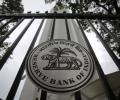
The deadline for officers to decide on their career path in the biggest organisational rejig in the central bank's 85-year history ends on January 31. The immediate fallout could be its disruptive impact on the supervisory process for 2020 -- and beyond -- given the manpower shortfall, even as more entities are set to come under closer central bank scrutiny.

From Ranbaxy to Religare, Aashish Aryan takes you through a maze of legal cases involving Malvinder Mohan Singh and his younger brother Shivinder Mohan Singh. Both are in police custody following a complaint of fund siphoning.

However, the proposed model, the white-label ATM model would allow non-banking companies to set up and run their own ATMs, under a pact with a sponsor bank and a network provider.

In financial year 2010-11, the likes of Larsen & Toubro, India Infrastructure Finance Company Limited, Power Finance Corporation and IDFC issued these in tranches.

Experts say foreign investor sentiment was bolstered by the US Federal Reserve's decision to go slow with interest rate hikes and hopes of political stability.

Among the stocks that have seen the largest cut by MFs, the DVR shares (shares with differential voting rights) of Tata Motors have seen a cut of 243 basis points (bps) in MFs' stake.

Unlike bank FDs that are considered risk-free investments, NCDs do carry a certain amount of risk, primary among them is the risk of default, either servicing the interest payment or meeting their principal repayment obligations.

What ex-IL&FS top brass got for loans? Foreign trips, private jets and chopper rides.
Financing against gold being a secured form of lending and higher margins are key reasons.

'No one seems to have looked at the extent of money that is being borrowed by individuals, and the rising levels of household debt.' 'At their present rates of growth, personal loans in India could well become the largest category of bank credit in just two or three years,' cautions T N Ninan.

'In times of recovery, we may see a rural-urban divide with the urban pockets affected more by COVID-19, but the MFI business model should encourage banks to handhold them in this hour of crisis,' notes Tamal Bandyopadhyay.
'Since the growth is not fast enough to provide jobs for the young, the fallout will be political and social,' warns T N Ninan.

As the government plans to take sector-specific steps to tackle the slump, Finance minister Nirmala Sitharaman will soon hold talks with representatives from various sectors to get and take steps so that the confidence of those sectors can be restored.
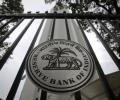
An initial reading of the guidelines indicates two factors - potential rise in borrowing cost and lower returns on investment book - could hit the spread of NBFCs.

Godhwani's exit comes at a time when the company's fund raising plans and proposed related party transactions are under scrutiny, says N Sundaresha Subramanian.

In 2018, venture debt providers cumulatively deployed Rs 1,300 crore. This year, the market is expected to absorb venture debt of Rs 1,800 crore to Rs 2,000 crore. So what makes this asset class so attractive?

They have cited higher capital for bad-loan provisioning, pending legislative amendments, and delay in finalising rules by the Reserve Bank of India (RBI) as some of the reasons.

"RBI will given additional licences" for setting up banks in the country, he said presenting the budget for 2010-11 in the Lok Sabha.

Finance Minister Nirmala Sitharaman will present her second Budget a little more than a month from now. Like any other FM, Sitharaman will depend on her team of bureaucrats and advisors to frame and present the Budget.

'The real estate sector has been badly bruised because it has become too reliant on funding from NBFCs, including housing finance companies. 'When the NBFC industry was rocked late last year by a large default, the real estate sector was hit hard. 'An intricate web of links between rural incomes, construction activity and shadow banks are fuelling the economic slowdown', says Pranjul Bhandari.

The Indian capital goods industry has not got the much needed import barriers especially for power equipments.

The Reserve Bank on Monday cautioned people against money schemes offering assured high returns and asked them not to have deposits with unauthorised non-banking finance companies (NBFCs), which falsely claim to have approval from the central bank to conduct business.

The announcement came just ahead of the meeting of a ministerial panel, headed by Finance Minister Pranab Mukherjee, to look into the Cairn-Vedanta deal which was struck in August.
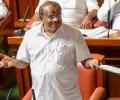
Kumaraswamy predicted that the political instability would continue in the state.

The finance ministry's plan to offer basic banking licences may find few takers because of doubts over the commercial viability of the proposed business model.

In October, the contribution through SIPs rose to Rs 79.85 billion, up 42% compared to the same month last year.

His portfolio was worth Rs 12,333 crore at the end of June 2018. It was worth Rs 10,633 crore at the end of the September quarter. Smallcaps account for the largest number of his stock-picks. Such a fall has now happened for the third quarter in a row.

IMF believes it is mostly cyclical, not structural, but because of the financial sector issues, recovery will be not be quick. IMF said, it saw an opportunity with the strong mandate of the new government to reinvigorate the reform agenda to boost inclusive and sustainable growth.
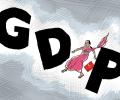
Fitch reaffirmed India's rating at 'BBB-' with a Stable Outlook saying the rating balances a still strong medium-term growth outlook compared with similar category peers and relative external resilience stemming from solid foreign-reserve buffers against high public debt, a weak financial sector and some lagging structural factors, including governance indicators and GDP per capita.

'The effect will be seen two-three quarters down the line.'

'Slowing down of the economy was mainly due to the demonetisation shock...' 'If you cut off the oxygen supply to a patient in the ICU and the patient dies, the patient does not come alive again when you restore the oxygen supply.'
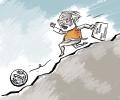
'Without bold action to deal with our banking crisis, count on the economy's doldrums to continue for much longer than most of us anticipate,' says Rahul Jacob.

If indeed the issues involved between the government and RBI are of immense public interest, why not make public the arguments of both the government and the RBI, irrespective of the outcome of the process, says Tamal Bandyopadhyay.However, the Act is silent on what happens if the governor's views differ from that of the government. If Patel does not want to budge from his stance the government can either see merit in the Governor's arguments and decide against going ahead with its plan or overrule him. My guess is that the issues raised by the government need to be sorted out not at the November 19 board meeting but between the Governor and the government, says Tamal Bandyopadhyay.

Based on a feedback, the exchange could cap a sector's weight at 25 per cent, or align with the broader market.
Prices in Bengaluru, the National Capital Region, Hyderabad and Ahmedabad, however, witnessed an uptick during the period.

Stocks of companies where promoters have pledged a high percentage of shares, like the Zee group, can be volatile. Such stocks are also prone to rumours, reports Sanjay Kumar Singh.
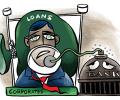
'We do not know when we will get to the business-as-usual mode.' 'Many borrowers may not be able to pay up.' 'The incidence of cheque bouncing has doubled or even trebled, some lenders say,' says Tamal Bandyopadhyay.

The surge in oil prices has also affected the rupee, which hit a 6-week low of 70.25 on Friday against the dollar.
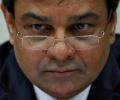
In his first comments after resigning as RBI governor on December 10 last year amid sharp differences with the government, Patel said banks indulged in over-lending, while the government did not "fully play" its role, and also conceded that the regulator should have acted earlier.

'If businesses are focused on de-leveraging, they can hardly be investing. This is the price extracted by investment mistakes during UPA rule, and should have been foreseen. 'But Modi-I must share the blame, for muted reform of the financial sector, partisan policy in telecom, the harm done to exports by an over-priced rupee, and so on,' says T N Ninan.
