
It works like this. There is a section in the US called 144A securities, which was launched in August 15, 2007. Trading in 144A securities takes place only among qualified brokers, dealers and QIBs. Retail investors cannot participate in this segment.

Nasdaq-listed IT services company Cognizant has reported a 5.8 per cent year-on-year decline in consolidated net profit for the March quarter to $546 million. The company in a release said its revenue guidance for the full year 2024 is "unchanged" in the band of 2 per cent decline to a 2 per cent growth in constant currency.

In India, the company serves customers such as stock exchanges, brokers, non-banking financial companies, financial services and insurance, IT and IT-enabled services.
"The tie-up with the ASE could either be an equity partnership or a technology tie-up, or both. The regulatory bodies have to clear the proposal and we also need approval from our members first," a top ASE official said on conditions of anonymity.

'Investing abroad helps mitigate currency risk for foreign-currency denominated goals, such as children's higher education and international travel.'

Mumbai-based Weizmann, part of a diversified group, will take to court its former partner Western Union Holdings, the American money-transfer giant, alleging that the United States-based company has imitated its trademark and logo. This, its lawyers say, constitutes a case of infringement and dilution of its intellectual-property rights.

The National Stock Exchange (NSE) of India is going to indefinitely defer the internal deadline set for extending trading hours, according to sources in the know. The exchange aimed to introduce a three-hour evening session exclusively for index derivatives by March 2024, contingent upon regulatory clearance from the Securities and Exchange Board of India (Sebi). Sources indicate that the market regulator has not provided a favourable indication, dimming optimism surrounding the proposal.

Among the Sensex firms, major winners included Tata Steel, rising 3.77 per cent, followed by HCL Tech, which gained 3.62 per cent. IndusInd Bank and PowerGrid closed with a gain of 3,60 and 3.34 per cent, respectively. Other gainers were Tech Mahindra, Hindustan Unilever, Bajaj Finserve and Bharti Airtel, among others. On the other hand, ICICI Bank, Axis Bank, Asian Paints, Bajaj Finance and TCS were the only laggards, sliding up to 2.94 per cent.

Nasdaq-listed Cognizant Technology Solutions has signed a definitive agreement to acquire global engineering company Belcan for about $1.3 billion (Rs 10,853.7 crore) in cash and stock. The transaction is expected to close in the September quarter. The total consideration includes $1.19 billion (Rs 9,935.31 crore) in cash and 1.47 million Cognizant shares, valued at $97 million (Rs 809.53 crore) based on the information technology services provider's closing share price on June 7, 2024.

Capital markets are becoming more prominent in India's growth story, with an expanding share in capital formation and investment landscape on the back of technology, innovation and digitisation, according to the Economic Survey 2023-24 tabled in Parliament on Monday. Further, Indian markets are resilient to global geo-political and economic shocks, it added. "Despite heightened geo-political risks, rising interest rates and volatile commodity prices, Indian capital markets have been one of the best performing among emerging markets in FY24," the Economic Survey said.

Improvement in financial savings channelised massive inflows into the equities market through the mutual fund route.

We asked colleagues, present and past, to reflect on a man who has made such a difference to their lives and careers. Here it is then, a rich collection of memories that offer enchanting glimpses of the enigmatic Ajit Balakrishnan.

'In the short term you keep your return expectations very, very low; in the medium term be prepared to invest and in the long term growth will come and your returns from stocks will be high.'

Trouble started brewing after Cognizant announced that Ravi Kumar, former Infosys president, would take over as the Nasdaq-listed company's CEO.

'India's fundamentals are a lot better (than those of other emerging market economies).' 'India will suffer (witness a fall in its stock market) what I call the second order effect.' 'And the second order will happen when these funds (belonging to macro and hedge fund investors and which have leveraged Japanese yen-carry trades), because they lose money elsewhere as lot of their positions were financed by borrowing Japanese yen, will have to book profits in investment destinations where they are making money, including in markets like India.' 'They (these investors) will have to effectively sell in countries like India and which is the consequence (the crash in equity markets) that Indian markets might see.'

A key reason for the rise in crypto currencies in 2023 is the possibility of the world's first Bitcoin ETF over the next few months.

rediffGURU Ramalingam Kalirajan answers your personal finance queries.

The US market has been a standout performer this year, with the benchmark Standard and Poor's 500 (or simply the S&P 500) gaining over 16 per cent during the first half of calendar year 2023 (CY23) in what was its best first-half show since 2019. By comparison, India's National Stock Exchange Nifty 500 has gained 6.4 per cent. On the surface, it appears that the US markets have done exceedingly well. However, a deeper analysis reveals the gains in the domestic market to be more well-spread.

While main events throughout the country were organised on Sunday by the Vishwa Hindu Parishad of America, several community members gathered at the iconic Times Square in New York to celebrate the historic event.

A piece of slightly negative news can cause a serious setback, warns Debashis Basu.

An aggressive rate hike by the US Fed and the possibility of a recession can trigger a slide in these stocks, which will be a good opportunity to buy from a long-term perspective.
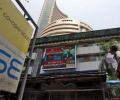
Benchmark indices Sensex and Nifty declined in early trade on Wednesday due to selling in financials, oil and IT stocks amid weak global trends.

Dwaipayan Bose on how index funds play a key role in the diversification of portfolios and help manage risks

Equity benchmark index Sensex buckled under selling pressure for the second straight session to close below the 65k mark on Friday, as investors offloaded IT, teck and metal stocks amid a bearish global trend. Besides, fresh foreign fund outflows also hit investor sentiments, traders said. In a volatile trade, the 30-share BSE Sensex declined 202.36 points or 0.31 per cent to settle at 64,948.66.

Investors seem to be shying away from stocks of companies in the 'digital' space with most counters that comprise the Nifty India Digital index giving negative returns over the past year. The index tracks the performance of a portfolio of stocks that broadly represent the 'digital theme' within basic industries, such as software, e-commerce, IT-enabled services, industrial electronics, and telecom services. The fall in some of these stocks over the past year has been steep; the sharpest decline of around 60 per cent was seen in shares of PB Fintech (parent company of Policybazaar).

NASDAQ, America's largest stock market, celebrates Indian Republic Day

Among Sensex shares, HDFC Bank fell the most by 2.58 per cent, followed by SBI (2.12 per cent), HDFC (2.09 per cent), and IndusInd Bank (2.02 per cent). Axis Bank, Bajaj Finserv, M&M, L&T, Reliance, Infosys and TCS were among the major losers. In contrast, Tata Motors, Maruti, NTPC, Sun Pharma, Power Grid and Titan were among the gainers.

Benchmark BSE Sensex rose by 319 points on Monday on gains in IT and financial stocks after positive quarterly results amid supportive global cues. The 30-share BSE barometer rose by 319.90 or 0.53 per cent to close at 60,941.67. The index opened higher and gained more than 400 points to scale the 61,000 level. It touched a high of 61,113.27 and a low of 60,761.88 in the day.

rediffGURU Ramalingam Kalirajan answers your personal finance queries.

The share of non-resident Indians (NRIs) and overseas investors in Indian mutual funds has been declining over time, despite adding half-a-trillion rupees to holdings over the last five years. Mutual fund holdings for the segment went up from Rs 0.95 trillion as of December 2018 to Rs 1.54 trillion as of December 2022, shows Business Standard analysis of data from the industry body Association of Mutual Funds in India (Amfi). Their share in overall mutual fund assets has fallen from 4.2 per cent to 3.9 per cent during the same period.

rediffGURU Dev Ashish answers your personal finance and mutual fund queries.

Omkeshwar Singh, head, Rank MF, a mutual fund investment platform, answers your queries:

Investors' wealth eroded by more than Rs 2.21 lakh crore in early trade on Wednesday, with the market witnessing a selling-off amid prospects of aggressive rate hikes by the US Federal Reserve to tackle high inflation, and sluggish global trends. In less than an hour of the start of trading on Wednesday, the key indices -- Sensex and Nifty -- were deep in the red and witnessed significant volatility, reflecting jittery investor sentiments. The market capitalisation of BSE-listed companies, which is also an indicator of wealth of investors, tumbled more than Rs 2.21 lakh crore to Rs 2,84,49,727.56 crore amid the 30-share Sensex falling 564.76 points to 60,006.32 points.

Expect heightened volatility and stress to hit the markets. Caution may be the need of the hour, alerts Akash Prakash.

'India seems to be on a relatively better wicket compared to other emerging markets.'

Benchmark Sensex trimmed early gains to close marginally higher while Nifty settled flat in choppy trade on Tuesday as gains in auto shares were offset by selling pressure in banking and energy shares. The 30-share BSE barometer closed marginally up by 37.08 points or 0.06 per cent to 60,978.75 with 15 of its stocks ending in green and the rest in red. The index opened higher and gained over 300 points to a high of 61,266.06 in early trade.

Dwaipayan Bose examines the seven important factors that investors about exchange traded funds must know before they start investing/trading in them.

Omkeshwar Singh, head, Rank MF, a mutual fund investment platform, answers your queries.

'Winning a deal is one aspect, making sure that we are able to execute it profitably is also important' says Rajesh Nambiar.
