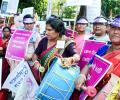
The Supreme Court has allowed the parents of the RG Kar Medical College rape and murder victim to pursue their plea for a further court-monitored CBI probe into the incident before the Calcutta High Court. The parents had expressed dissatisfaction with the CBI's initial probe and sought a more thorough investigation. The court, without making comments, disposed of the application, allowing the parents to continue the proceedings before the high court. The case has also prompted the Supreme Court to consider recommendations for preventing gender-based violence and developing safety protocols for medical staff at hospitals across the nation.
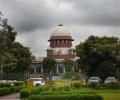
The Supreme Court of India has formed a National Task Force (NTF) to address the growing concern of student suicides in higher educational institutions. The court took note of the recurring cases and directed Delhi Police to register FIRs on the complaints of families of two students who died by suicide at IIT Delhi in 2023. The NTF, chaired by former apex court judge Justice S Ravindra Bhat, will prepare a comprehensive report, including the identification of causes leading to suicides, analysis of existing regulations, and recommendations for strengthening protections. The NTF will also have the authority to conduct surprise inspections of higher educational institutions and make further recommendations to ensure a holistic approach to addressing mental health concerns and eliminating suicides.
Maintaining that other persons were also involved in the crime, the parents of the victim have said that they expect that they will also be arrested and tried before the court.

Observing that working conditions have made doctors and health professionals susceptible to violence, the Supreme Court on Tuesday constituted a 10-member task force to formulate a national protocol for ensuring safety and facilities for them in the wake of the rape and murder of a medic in Kolkata.

The Supreme Court on Thursday refused to transfer the rape and murder trial pertaining to a doctor in Kolkata outside West Bengal.

The Supreme Court of India has directed its registry to call for a report from IIT Kharagpur and Kota, Rajasthan, after the suicides of a student and a NEET aspirant came to light. The court is seeking to ascertain whether FIRs were registered in both cases, highlighting the disturbing pattern of student suicides in educational institutions. The court has also previously ordered the formation of a national task force to address mental health concerns and prevent suicides in higher educational institutions.
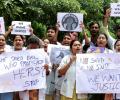
Night patrolling on hospital premises and regulating access for people to key areas are among the measures the Centre has asked states to implement to ensure the safety of medics at workplaces, following Supreme Court orders in the rape-murder case of a junior doctor in Kolkata.
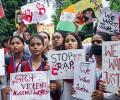
Terming the alleged non-cooperation of the Trinamool Congress (TMC) government as an example "symptomatic of a systemic malaise", the Union Ministry of Home Affairs has sought a direction to West Bengal authorities to extend full cooperation to the CISF.
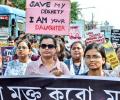
The top court also directed the protesting resident doctors in West Bengal to resume work by 5 pm on Tuesday and said no adverse action shall be taken against them on resumption of work.

Terming the rape and murder case of a medic at Kolkata's RG Kar Medical College and Hospital as horrific, the Supreme Court on Tuesday came down heavily on the West Bengal government over delay in filing first information report (FIR) in the matter.

The ministry said the mutated UK strain was detected in eight samples at the National Centre for Disease Control, one at the National Institute of Biomedical Genomics, Kalyani (near Kolkata), one at the National Institute of Virology Pune, seven at the National Institute of Mental Health and Neuro-Sciences Hospital Bengaluru, two at the Centre for Cellular and Molecular Biology in Hyderabad and one at the Institute of Genomics and Integrative Biology, Delhi.
These 25 people include the 20 who were found positive with the mutated strain on Tuesday and Wednesday.

Three new categories -- all asymptomatic healthcare workers working in non-COVID hospitals/areas of COVID hospitals/blocks, asymptomatic frontline workers such as surveillance workers deployed in containment zones and paramilitary/police personnel involved in COVID-19 related activities -- have now been included.
 © 2026 Rediff.com - Advertise with us - Disclaimer - Privacy Policy - Sitemap - Feedback - About us - Terms of use - Grievances