
'These are only passing clouds. The banking industry is a century-old industry and this is not the first time it is going through such a crisis.' 'When the economy revives, those companies that are in the infrastructure fields will also get revived.' 'After all, a lot of money has gone into creating assets like power projects and roads, so you can't say money has been wasted.'

In 2009, ArcelorMittal had picked up a stake in Uttam Galva Steels. A new Section 29A of the IBC prohibits promoters of companies with NPAs of more than a year from bidding for these companies.

Embattled retailer Future Retail Ltd (FRL) on Tuesday moved the Supreme Court to avert insolvency proceedings over missing a loan repayment deadline, even as its independent directors rejected an Amazon-supported offer to sell the company businesses at less than a third of what Mukesh Ambani's Reliance is offering. India's second-largest retailer, which operates multi-brand retail chains such as Big Bazaar, Easyday and Heritage, failed to pay Rs 3,494.56 crore to lenders by the due date of December-end and sought a 30-day grace period to resolve the situation. Unable to find money, it moved the apex court seeking to restrain its lenders from declaring the company a defaulter, which can invite initiation of insolvency proceedings.

IMF's Chief Economist Gita Gopinath on Thursday said it would be damaging for India to start tightening policy support in the midst of the COVID-19 pandemic and also stressed on reducing wasteful expenditures in the upcoming Budget. Delivering NCAER's '9th C D Deshmukh Lecture' virtually, Gopinath said there is scope for the Indian government to provide more direct support to people.

Banks are in the process of getting a board-approved restructuring framework in line with the RBI's framework and eligibility defined by the central bank.

For state-run lenders, the average NPAs shot up to 14.5 per cent, with IDBI Bank, UCO Bank and Indian Overseas Bank having their NPAs at above 25 per cent.
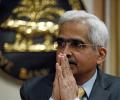
Available data obscures the true stress in bank books, and the pandemic will result in balance sheet impairments and capital shortfalls at lenders, RBI Governor Shaktikanta Das said on Monday. Balance sheet impairment and capital shortfalls will be more evident once the regulatory reliefs are rolled back, Das said in the bi-annual Financial Stability Report, asking lenders to augment capital.

Amid uncertainties arising out of the second wave of COVID-19, the Reserve Bank on Thursday said that a durable revival of private consumption and investment would be critical for sustaining economic growth post-pandemic. Observing that 2020-21 has left a scar on the economy, RBI in its annual report said, "in the midst of the second wave as 2021-22 commences, pervasive despair is being lifted by cautious optimism built up by vaccination drives." The second wave of the pandemic has prompted revision of growth projections for the current fiscal and the consensus appears to be gravitating towards RBI's forecast of 10.5 per cent, the report added.

Jaitley said the total gross NPA ratio has gone up to 4.03 per cent in 2013-14 from 3.42 per cent in 2012-13 and 2.94 per cent in 2011-12.

According to the RBI's Financial Stability Report, the industry's gross bad-loan is at a 14-year high. As RBI's March 2017 deadline for banks to clean up soured credit looms closer, Shailajanand Mishra takes stock of just how bad the situation is.

RBI has cited at least 10 areas where it has no control over PSBs.

Punjab National Bank has made a name for itself in recovery of bad loan dues. Usha Ananthasubramanian, managing director and chief executive officer of the government-owned lender, explains how it has achieved this reputation.

Observing that the economic recovery was not yet fully entrenched, the RBI Governor said recovery is likely to be gradual.

Microfinance portfolio of SFBs saw a muted growth of about 3% last year

The focus of the meeting will be on enabling businesses and households to avail of the revival framework on the basis of viability, necessary steps like finalising bank policies and identifying borrowers, and discussing issues that require addressing for smooth and speedy implementation.

Publicly traded banks in India added Rs 1 trillion in bad loans for the quarter ending December 31, 2015.

The finance ministry official may have claimed that the ministry does not have information on the loans sanctioned by different banks to Mallya or the details of the guarantee given by Mallya against those loans, but the ministry had responded to questions in this regard in Parliament in the past.

The crisis in Indian banking has now reached a point where the NPAs of many public-sector banks are higher than their net worth

'Companies with a strong business case and healthy balance-sheet should sail through and emerge more robust in the future.'
At least five state-run banks on central bank's radar for lax credit appraisal

2014 made a lot of promises; can the new year deliver?

New norms are in place to strengthen regulations for this set of lenders which has been playing a critical role in Asia's third largest economy, notes Tamal Bandyopadhyay.

Domestic investors were also concerned about possible stagflation in India due to low growth and high inflation in wake of recently released government data. IndusInd Bank was the top loser in the Sensex pack, dropping 5.44 per cent. Infosys, SBI, PowerGrid, Tech Mahindra, Bharti Airtel and HDFC Bank too fell up to 1.21 per cent.

'Our stable outlook currently points to the fact that the ratings are likely to remain stable for the next couple of years.'
The report said resilience of the banks has increased with a sharp improvement in the provision coverage ratio to 60.6 per cent in March 2019 from 52.4 per cent in September 2018 and 48.3 per cent in March 2018.

The central probe agency that began action against the banker by raiding his upscale residence in south Mumbai on Friday is primarily investigating Kapoor, his wife and three daughters over a Rs 600 crore fund received by a firm allegedly "controlled" by them from an entity linked to the scam-hit Dewan Housing Finance Limited.
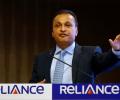
The Delhi high court on Thursday put on hold the insolvency resolution process (IRP) proceedings against Reliance Communications (RCom) chairman Anil Ambani in relation to the recovery of Rs 1,200 crore loans given by SBI to his two firms. Ambani had given personal guarantees for the Rs 565 crore and Rs 635 crore SBI loans to RCom and Reliance Infratel Ltd (RITL), respectively, in August 2016.

'The question is, how soon we can expect to re-attain the pre-lockdown levels of output and income.'

'It is going to be a buyers' market and you will get a good number of companies at reasonable valuations and that's when one has to be very greedy.'

Once these banks start showing losses, they will not be able to pay dividends to the government nor pay taxes, which will further aggravate the situation for the government as its return on investment as an investor would be very negligible for the next few years, says M V Subramanian.

The financial sector has been deeply troubled since 2013. It is now in a full-blown crisis, warns Devangshu Datta.
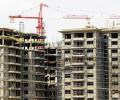
Data compiled by NPAsource.com, a portal that focuses on resolution of stressed assets, shows that there are around 2,200 units in the commercial category and nearly 11,000 units in the residential segment funded by banks and other financial institutions and valued at over Rs 7,700 crore, which have turned NPAs and are on the block.
The recapitalisation, the finance minister said, will enhance the lending capacity of state-owned banks and help them come out of RBI's Prompt Corrective Action framework.
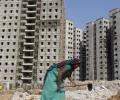
PMAY-Gramin, which was launched in November 2016, aims to construct 10 million homes by March 31, 2019, with private sector and state government participation

South African state prosecutors will approach the Supreme Court of Appeal for leave to challenge Oscar Pistorius' six-year murder sentence after failing with a similar bid at a lower court, the National Prosecuting Authority said on Thursday.

Banks have collected about 1,500 kg of gold from temples and trusts under the Gold Monetisation Scheme (GMS) since its launch last November.

The Indian economy was on an impressive growth path through the first decade of this century till it was brought to an abrupt halt by the policy inertia during UPA2 and the Modi government's inability to restore economic and financial momentum. Fascinating glimpses of what went wrong from Puja Mehra's must-read book The Lost Decade: How India's Growth Story Devolved Into Growth Without A Story.

As of June, the gross NPA of nationalised banks was 3.89 per cent and State Bank Group at 5.50 per cent.

Its total income (consolidated) rose to Rs 79,302.72 crore in the quarter under review, compared to Rs 74,948.51 crore in the year-ago period

The banking sector is set to move at a fast pace from hereon.
