
The Planning Commission was better than the Niti Aayog as it used to take up the issues of the states with the ministries concerned.
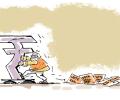
'How do you deliver wealth when you don't have the slightest idea about it?' asks T C A Srinivasa Raghavan.

Panagariya also pointed out that COVID-19 pandemic may lead to integration of global labour market.
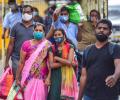
Addressing a press conference, NITI Aayog Member (Health) Dr V K Paul said the question of the third wave keeps coming up because the population is still 'very vulnerable' to the infection.
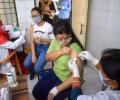
As states grapple with a shortage of coronavirus vaccines, the Centre on Thursday said that over two billion doses will be made available in the country in five months between August and December, enough to vaccinate the entire population.
Today, with growth having slowed and macro-economic challenges in every direction, would the government have benefited from the advice of 'Harvard' economists? asks T N Ninan.

Arvind Panagariya heads the government's main economic advisory body.
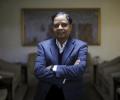
He said, clothing, footwear and electronic sectors are large job creators and need big reforms.

'A growth of above 7 per cent when the fundamentals of the economy are becoming stronger still makes India the fastest growing large economy.'

More than 6.5 crore vaccine doses have been administered across the country so far to frontline workers, healthcare workers, those above 60 and for people aged above 45 with specified co-co-morbid conditions.

There are no regulations governing virtual currencies in India and the RBI has not given any licence to any entity/company to operate such currencies.

The Indian Council of Medical Research will start national-level sero surveys to assess the spread of Covid-19 and all states/Union territories should also be encouraged to conduct them so that information from all geographies can be collected, the Union health ministry said on Friday.

India annually spends Rs 4.5 lakh crore on importing petroleum products, and Transport Minister Nitin Gadkari feels methane is a cost-effective import substitution. But is it? Pallava Bagla examines the pros and cons.

Zomato has the potential to be an equally important milestone for Indian equity markets, notes Akash Prakash.

The minister further said state discoms should not give orders for supply of equipment to Chinese firms.

The government said it had been evaluating the implementation of the decentralised model of vaccination since its launch on May 1 and that the decision to centralise it again was taken after detailed deliberations and following requests by some states, amid claims by the Opposition that the policy change was due to the Supreme Court's intervention.

From NITI Aayog to industry leaders to the Reserve Bank of India, all are apprehensive that any major increase in MSP, following the 2018-19 Budget announcements, would push up prices, if not immediately, in the next six to eight months after the decision is taken.

As the SARS-CoV2 evolves and mutates further, it is necessary to be prepared for new waves, Principal Scientific Adviser K VijayRaghavan cautioned on Wednesday, even as he said ferocity of the second wave of coronavirus in the country was not predicted.

Union Health Minister Harsh Vardhan on Monday said 28,252 cases of mucormycosis have so far been reported from 28 states/UTs in the country, of which 86 per cent cases have a history of COVID-19 and 62.3 per cent with a history of diabetes.

'With over 50 per cent of medical seats reserved for those who have the ability to pay a fee ranging from Rs 50 lakh to Rs 1.5 crore for a five-year MBBS course and quotas in accordance with affirmative policies in government colleges, the band of seats available for the not-so-rich and non-OBCs is very narrow.'
