
Tata Sons, now debt-free, has asked the RBI to drop its 'upper-layer NBFC' tag and allow it to stay private.

Sanjay Malhotra has made structural changes to banking regulation to bring down costs and increase efficiency. Plus, he kicked off a benign interest regime. But there are challenges ahead.

Investors can meet cash needs without selling their securities.

Education loan growth is set to halve this fiscal (FY26) because disbursements for the US decelerate following a raft of policy changes there.

The initial public offering of non-banking financial company Tata Capital Ltd got fully subscribed on the final day of bidding on Wednesday. The company's Rs 15,512 crore share sale received bids for 45,84,78,044 shares against 33,34,36,996 shares on offer, translating into 1.38 times subscription, according to NSE data till 13:36 hours.

If you are running a sweetmeat shop, will you manage a dairy for milk supply or buy milk from the market? Banks are running a dairy (which has its cost for processing milk), while NBFCs are buying milk from the market, observes Tamal Bandyopadhyay.

'Reinvention is not a hugely difficult task. With technology as available today, you can reinvent yourself pretty quickly.'

While rising interest rates and tighter liquidity are giving negative signals for the financial sector, increasing economic activity could mean higher business volumes for lenders. Liquidity in the banking system has moved from Rs 8 trillion surplus into a deficit of Rs 33,000 crore over the 2022 calendar year. By the end of November, bank credit had grown 17.5 per cent YoY (year-on-year).

Securitisation - sale of loans to investors - by lenders, including banks and non-banking financial companies (NBFCs), crossed Rs 50,000 crore during the fourth quarter ended March 2025 (Q4F25). This is a tad higher than Rs 48,000 crore during the same period of FY24.

Tata Capital Ltd, set to launch its IPO next week, has identified green financing and digital innovation as its core growth pillars, backed by the merger of its IFC-backed subsidiary Tata Cleantech Capital in 2024. By FY25, the cleantech and infrastructure finance book reached Rs 18,000 crore, growing at a 31.8 per cent CAGR over the last two years, the NBFC said on Friday.

Last fortnight, State Bank of India Chairman C S Setty lifted the veil on a subject long spoken of in corporate corridors: Why can't our banks finance mergers and acquisitions (M&As)? Change is in the air: Indian Banks' Association (of which Setty is the chairman) is to "make a formal request" to Mint Road to make way for it. Thus far the exclusive turf of foreign banks even though its funding remains offshore - as in, it's not on these entities rupee-book (and a few select shadow banks) - a most lucrative segment in the investment banking suite, M&As, will be homeward-bound.

'We are all in a tizzy about NBFCs in the aftermath of the IL&FS default.' 'We tend to jump to the notion that an NBFC is like a bank. But banks make a promise that deposits are liquid and have an assured return.' 'NBFCs make no such promises,' points out Ajay Shah.

'The RBI's clarification on non-performing advances accounting is likely to increase NPAs by around one-third for non-banking finance companies,' domestic rating agency India Ratings and Research said in a report on Friday.

Canadian firm Manulife and Mahindra & Mahindra (M&M), an Indian automaker with interests in financial services, have signed an agreement to form a 50:50 life insurance joint venture (JV) with a total capital commitment of up to Rs 3,600 crore each totalling Rs 7,200 crore.

Credit quality of Indian corporate is expected to be stable in the second half of the current financial year (H2FY26), supported by easing monetary cycle, and declining inflation, coupled with income-tax relief and rationalisation of the goods and service tax (GST) rates, among others.

Towards the end of February, the Reserve Bank of India (RBI) restored the risk weighting on banks loans to non-banking financial companies (NBFCs; including to microfinance institutions, or MFIs) to 100 - back to its November 2023 position - from 125. It is only a partial relief though. "Higher risk weighting on unsecured lending continues to be in place while the same on bank funding to NBFCs has been done away with. "This is a positive step by RBI," says Rajiv Sabharwal, managing director (MD) and chief executive officer (CEO), Tata Capital.

The asset quality of non-banking financial companies (NBFCs) deteriorated in April-September 2021 (H1FY22) owing to the second wave of the pandemic. Their gross non-performing assets (NPAs) rose to 6.8 per cent in September 2021 from 6 per cent in March 2021. The Reserve Bank of India's (RBI's) annual Trend and Progress report (FY21) said the sector might have to grapple with higher delinquencies as and when policy measures unwound. The pandemic posed significant challenges to NBFCs during the first wave (2020) also.

In yet another move to close the regulatory gap between banks and shadow banks, the Reserve Bank of India (RBI) has mandated exposure limits to the non-banking finance companies, in line with commercial banks. In the large exposure framework released on Tuesday, the regulator capped aggregrate exposure of NBFCs which are in the upper layer toward one entity at 20 per cent of capital base. The limit can only be extended by another 5% with board's approval. For a particular borrower group, the cap is at 25 per cent, with additional 10 per cent if exposure is towards infrastructure.

'Our focus would be to onboard top 100 merchants in top 10 different segments.'

The Reserve Bank of India (RBI) on Wednesday came out with comprehensive draft guidelines to harmonise and regulate gold loans across all financial entities, including putting a cap of 75 per cent on loan-to-value (LTV) ratio. The draft guidelines also aim to address concerns related to certain lending practices, provide clarity on specific aspects, and strengthen the conduct-related standards in the sector.

In 2009, the UPA government, had announced a slew of measures to boost liquidity in NBFCs. These included a scheme for providing liquidity support to NBFCs having assets size of over Rs 100 crore through a SPV.

Non-banking financial company (NBFC) Tata Capital is set to launch its much-anticipated $2 billion (Rs 17,200 crore) initial public offering (IPO) in the week beginning September 22, market sources familiar with the matter said on Sunday. The issue is expected to value the company around $11 billion, they added. Tata Capital is likely to make its stock market debut by September 30.

'Some buyers get carried away by festival offers and purchase higher variants or larger vehicles than they truly need, which impacts running cost and long-term affordability.'

With the price of gold entering a strong bull run, gold-loan non-banking financial companies (NBFCs) are under the spotlight, even though their performance is not directly linked to gold price. Muthoot Finance outperformed in the April-June quarter (Q1) of 2025-26 (FY26), with its assets under management (AUM) growing 10 per cent quarter-on-quarter (Q-o-Q) and 42 per cent year-on-year (Y-o-Y), an improvement of 88 basis points (bps) Q-o-Q in net interest margin (NIM), and a fall in credit cost. Gold AUM rose 40 per cent Y-o-Y and 10 per cent Q-o-Q. The company recorded recoveries of 350 crore, including 100 crore from an asset reconstruction company (ARC), resulting in a 100-bp Q-o-Q yield increase.

Finance Minister Nirmala Sitharaman on Monday said action will be taken in case there are violations of well laid down processes for auctioning of gold by banks and NBFCs when a borrower fails to pay the gold loan. During Question Hour in Lok Sabha, she said Non Banking Financial Companies (NBFCs) and Scheduled Commercial Banks (SCBs) are guided by similar rules.

Kolkata tops the list with 617 cancellations, New Delhi stands second with 203, followed by Mumbai at 190.

PSBs have been requested to reach out to MSMEs to provide bill discounting to them against their dues since they suffer the most from shortage of cash.

CPGRAMS -- an online platform available to citizens 24x7 to lodge their grievances to public authorities on service delivery -- has existed for close to two decades. But it has never been this active, points out Tamal Bandyopadhyay.

Banks are gaining market share at the expense of non-bank lenders such as housing finance companies, retail lenders, and those giving gold loans. There has been a steady decline in the market share of non-banking financial companies (NBFCs) in the credit market as banks have stepped up lending. NBFCs' share declined to a five-year low of 19.8 per cent in the first half of FY23, down from 20.3 per cent in H1FY22, and an all-time high of 23.1 per cent in H1FY19.

Investors may wait for six months and then take another look at the stock.

If the policy is extended to NBFCs and co-operative banks, they will have to disclose divergence in asset classification and provisioning during RBI inspections in their audited financial reports. Till now, these entities have been exempted from this. At present, there are more than 98,000 co-operative banks and 10,000 NBFCs. Sources said the RBI would concentrate on the top 50 co-operative banks and NBFCs.

With liquidity crunch hitting operations, many finance companies have put the brakes on sanctions in the third quarter in the aftermath of the IL&FS crisis.

Bank credit growth is expected to moderate this financial year after a robust 16 per cent estimated for last financial year, driven by strong economic activity and retail credit demand. There are three reasons for this: a statistical high-base effect given the strong growth seen last financial year, revision in risk weights by the Reserve Bank of India (RBI), and relatively slower economic activity.

Large tariffs by the United States administration and elevated geopolitical risk have increased near-term global financial stability risks, and along with weather events pose downside risks to domestic growth, Reserve Bank of India (RBI) Governor Sanjay Malhotra said in the foreword to the Financial Stability Report released on Monday.

Under the co-lending model, banks have to take their share of the individual loans on a back-to-back basis on their books while NBFCs are required to retain a minimum of 20 per cent share of the individual loans on their books.

The problem for the NBFC sector is the funding inertia by banks and not lack of funds.

Concerned over the rise in mis-selling of products by banks and non-banking financial companies (NBFCs), the Reserve Bank of India (RBI) is examining whether to come up with norms to curb such practices. Observing that pushing financial products, such as insurance, indiscriminately to unaware consumers may be detrimental to their well-being, RBI Deputy Governor M Rajeshwar Rao said, "We are examining whether it necessitates framing of guidelines to address mis-selling of financial products and services by REs (regulated entities)."

The financial services sector, including NBFCs and housing finance companies (HFCs), have historically been the largest borrowers from MFs.
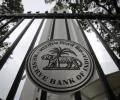
An NBFC must actively manage its collateral positions, differentiating between encumbered and unencumbered assets, and monitor such assets so that they can be mobilised in a timely manner, central bank says in circular.

By choosing your study destination carefully, leveraging government schemes, comparing loan options, and adopting frugal living practices, Indian students can acquire global credentials without mortgaging their futures.
