
In a bull-case scenario it sees the Sensex at 61,000 levels, while it's bear case scenario pegs the Sensex at 41,000 levels by December 2021.

India is likely to be the fastest-growing Asian economy in 2022-23, according to analysts at Morgan Stanley. They expect India's gross domestic product growth to average 7 per cent during this period - the strongest among the largest economies - and contributing 28 per cent and 22 per cent to Asian and global growth, respectively. The Indian economy, they said, is set for its best run in over a decade as pent-up demand is unleashed.

Sounding bullish on the stock markets, it pegged the Sensex target at 23,000 by December.

Comparative to other Asian GDP growths, India would have the fastest economic expansion, it said

The US' move to raise the tariff on most Indian goods to 50 per cent could drag India's GDP growth for FY26 by 35 to 60 basis points, according to various economists. One basis point (bp) is equal to 0.01 per cent.

Goldman cut India's growth estimates to 6.6 per cent from 7.2 per cent for the fiscal year ending March 2013, while BofA revised its forecast to 6.5 per cent from 6.8 per cent.

The sweeping tariffs proposed across sectors by US President Donald Trump are scheduled to be imposed starting April 2, with most analysts worried about their impact on companies, and in turn the financial markets. Recently, the US administration signaled that it will impose sectoral tariffs on energy, pharmaceuticals, semiconductors, agriculture, copper, and lumber.
Notwithstanding the protectionism and other hindrances, the current mood of optimism about the Indian business process outsourcing sector's growth prospects seems justified, according to the London-based magazine The Economist.

The general elections in April/May 2024 are expected to add volatility to the Indian markets, keeping investors on their toes.
India's challenges: infrastructure, large fiscal deficit, low FDI

A higher-than-expected consumer price inflation (CPI) print for March in the US has dashed hopes of an interest rate cut by the US Federal Reserve (US Fed) in June. Analysts now expect the US central bank to start cutting rates in September, provided inflation remains in check and oil prices remain supportive. The markets, analysts believe, partially factored in this possibility.

Expenditure on new projects slowed down for the second quarter in a row amid an uncertain global environment and higher borrowing costs. There were new projects worth a cumulative Rs 3.26 trillion in the July-September period, according to data provided by project tracker Centre for Monitoring Indian Economy (CMIE). This figure is much less than Rs 4.39 trillion in the June quarter (Q1FY23) and Rs 8.46 trillion in the March quarter (Q4FY22).

Brent crude oil prices may rise to $110 a barrel in 2023, up nearly 33 per cent from the current levels, said analysts at Morgan Stanley, in a recent note. This is, however, lower than the peak level of nearly $127 touched earlier in 2022 as geopolitical concerns took centre stage amidrising demand. "Looking ahead, Brent oil price growth will decelerate even more in the coming quarters. "This comes even as our global oil strategist expects a rise in oil prices back to $110 a barrel by the second half of 2023.
Now, economists are famous for having a wide array of views, with most of them being wrong, but it is difficult not to notice that economists working for companies that will benefit the most from -- and, in some cases, desperately need -- lower interest rates are the ones that are screaming most loudly about how terrible things are and how the US Fed needs to cut, cut, cut rates.

Coalition governments aren't necessarily a negative for the economy, though they can result in negative outcomes in the stock market if not already priced in before elections.
Interview with Asia-Pacific economist, Morgan Stanley

Usually, a fall in oil prices is followed with a cut in retail prices of auto fuels and the government passes on the benefit to consumers. However, Morgan Stanley believes gains this time around will remain capped.

Finance Minister Pranab Mukherjee is slated to present the Budget on February 26.

Analysts are bullish on consumption and investment themes.
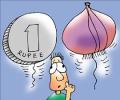
The first issue is inflation, which has been widely discussed. The government is now rightly working on reversing fiscal and monetary stimulus to manage the inflation pressure.
Stephen S Roach, chief economist at the US-based Morgan Stanley, returning from his fourth trip to India in three years, said the South Asian country has achieved breakthroughs in savings and foreign direct investments.
It is possible to calm the waters, but it'll mean unlearning our post-Depression lessons
Stephen S Roach, chairman of Morgan Stanley Asia, warned that Asia and India will be hit hard due to a likely recession in the US in 2008, saying "if US sneezes, Asia will catch a cold." Predicting a significant correction in emerging market equities, which would also not spare the fast rising Indian stock markets, Roach, who is regarded as one of the Wall Street's most influential economists, said he did not believe in the global de-coupling theories.

Morgan Stanley expects RBI to cut rates sharply rather than "dribble down".

Portfolio returns, say analysts at Morgan Stanley, are more likely to be driven by bottom-up stock-picking rather than top-down macro forces.

The study claims that from its peak of 18 per cent of gross domestic product in 2008, the crony capitalists' wealth is now down to three per cent

Domestic equity markets are in elite company. In May, Indian markets joined select developed markets (DMs) such as the US, UK and Germany to record new all-time highs. Among emerging markets (EMs), Brazil is the other market to have logged new highs this month. Asian peers such as South Korea, Taiwan and New Zealand are currently between 2 per cent and 10 per cent below their previous highs made earlier this year. The domestic markets were among the worst-performing major global markets in April amid a lethal second-wave of covid-19 infections.

The private sector's new project announcements in the quarter ending March were among the highest on record. The value of new private sector project announcements for the three months ending March 2024 was Rs 9.8 trillion, shows data from tracker Centre for Monitoring Indian Economy (CMIE). This is the second-highest on record in data going back to 2009.

After a stellar run in 2021 that saw the S&P BSE Sensex and the Nifty50 clock gains of 20 per cent and 22 per cent respectively, global equity markets, including India, are gearing up to welcome 2022 on a cautious note. For one, new variants of the Covid -19 infection that make current vaccines less effective is one of the key risks worth flagging, analysts said. Inflation was also a risk for this asset class in 2021, although most market participants expect that the current elevated inflation levels will be transitory.

The Reserve Bank may cut key interest rates as early as this week.
.jpg)
Bank has cited trend of global easing and weak growth
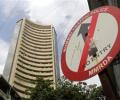
D-Street is hoping RBI policy review meeting on Tuesday will uphold its stand on easing of interest rates

Deloitte India on Friday said it estimates India's GDP growth at 6.6 per cent in the current fiscal helped by consumption expenditure, exports rebound and capital flows. In its India's economic outlook report, Deloitte said the rapid growth of the middle-income class has led to rising purchasing power and even created demand for premium luxury products and services. With the expectation that the number of middle-to-high-income segments will be one in two households by 2030/31, up from one in four currently, we believe this trend will likely become further amplified, driving overall private consumer expenditure growth, it said.

Chief executive officers (CEOs) across sectors have expressed intentions to expand capacities, expecting the government's target to invest a record Rs 11.11 trillion on infrastructure development will act as a catalyst for a jump in consumer demand. "With the government planning a capex of Rs 11.11 trillion, private sector investment will come in a big way. Companies will be preparing for it right from today," H M Bangur, chairman of Shree Cement, told Business Standard. For the past few years, the investment scene in India has been dominated by government capital expenditures; private investments in the manufacturing sector have remained muted.

According to the global financial services firm, the recent steps taken by the government provide further confidence that not only is the reforms agenda on track but the pace is accelerating too.

You may be popular initially because of politics and ideology but if the economy slows down, you will be losing your popularity: Nouriel Roubini.

''The outcome of the state polls may lead to some strategy-related permutations and combinations and the markets may extrapolate it to the likely outcome in the general elections.'
.jpg)
A section of the market believes RBI should hold rates as negative real rates will hurt savings and investment.

Fiscal consolidation is keenly awaited.
