
Omkeshwar Singh, Head, Rank MF, a mutual fund investment platform, answers your queries.
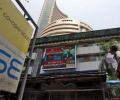
Hero MotoCorp was the top gainer in the Sensex pack, spurting 4.46 per cent. IndusInd Bank, Tata Motors, Vedanta, SBI, M&M, Sun Pharma, Tata Steel, HDFC and HDFC Bank too rose up to 3.63 per cent.

The S&P BSE Sensex zoomed 500 points to end at 27,627, the highest level in almost 9 months.

What worked for the markets was favourable global investor sentiment and encouraging flows into the emerging markets following stimulus measures taken by central banks.

Tech Mahindra was the top loser in the Sensex pack, shedding over 3 per cent, followed by NTPC, IndusInd Bank, Kotak Bank and Reliance Industries. NSE Nifty fell 185.60 points to 17,671.65.

Omkeshwar Singh, Head, Rank MF, a mutual fund investment platform, answers your queries.

Despite the recent fall, the Nifty Midcap 100 index has outperformed by gaining 20 per cent till date in this year calendar year.
Despite the recent fall, the Nifty Midcap 100 index has outperformed by gaining 20 per cent till date in this year calendar year.

Tata Steel was the top loser in the Sensex pack, shedding over 2 per cent, followed by Sun Pharma, ICICI Bank, SBI, Kotak Bank and Dr Reddy's. NSE Nifty dropped 151.75 points to 15,727.90.

'Sectors that had been left out till now will also start participating in the rally.'

'Whenever markets rally, the IPO pricing gets aligned to the prevailing market conditions.'

Investor wealth has jumped by over Rs 12.31 lakh crore in three days, taking the market capitalisation of all BSE-listed companies to a record Rs 198.43 lakh crore on Wednesday as equities continued their Budget-driven rally. The BSE benchmark Sensex closed above the historic 50,000 mark for the first time ever on Wednesday. The 30-share benchmark closed with a gain of 458.03 points or 0.92 per cent at 50,255.75. During the day, it zoomed 728.67 points to its lifetime high of 50,526.39. In three trading days, the benchmark has gained 3,969.98 points or 8.57 per cent.

Falling for the sixth straight session, the BSE Sensex plunged 1,114.82 points or 2.96 per cent to close at 36,553.60 on Thursday, tracking a heavy selloff in global markets. The market capitalisation of BSE-listed companies stood at Rs 1,48,76,217.22 crore, down by Rs 11,31,815.5 crore in six sessions. Since September 16, the 30-share BSE benchmark index has fallen by 2,749.25 points.

'I started reading your MF articles regularly so requesting your guidance as I would like to start investing in MFs'.

Navi Mutual Fund (MF), among the latest entrants in the Rs 35-trillion industry, is looking to make a mark in the passive investment space, which is gaining traction in the country. The Flipkart co-founder Sachin Bansal-led fund house filed seven offer documents with the market regulator Securities and Exchange Board of India (Sebi) on a single day this week. Some of the schemes Navi MF plans to launch are Navi NASDAQ 100 Fund of Fund, Navi Nifty Commodities Index Fund, Navi Nifty 100 ESG Index Fund.

Omkeshwar Singh, head, Rank MF, a mutual fund investment platform, answers your queries.
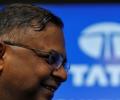
The Tata group companies are now more valuable than all the listed central public sector undertakings (CPSUs) or companies in the country. The key 20 listed Tata companies ended the 2021 calendar year with a combined market capitalisation of Rs 23.36 trillion, ahead of the 70 listed CPSUs, which had a combined m-cap of Rs 23.2 trillion. In comparison, these CPSUs had a combined market capitalisation of Rs 16.7 trillion at the end of December 2020 against the Tata group firms' combined m-cap of Rs 15.7 trillion.

Omkeshwar Singh, Head, Rank MF, a mutual fund investment platform, answers your queries

Omkeshwar Singh, head, Rank MF, a mutual fund investment platform, answers your queries.

The BSE Midcap and the Small-cap Index have run up 25.3 per cent and 31.3 per cent respectively over the past year. Valuations are no longer cheap, notes Sanjay Kumar Singh.

Equity benchmarks Sensex and Nifty ended marginally lower on Tuesday as investors booked profits at higher levels amid a mixed trend in global markets.

Omkeshwar Singh, head, Rank MF, a mutual fund investment platform, answers your queries.

The one-year returns for equity-oriented mutual fund (MFs) schemes have largely mirrored the gains made in the secondary market. However, schemes that invest in infrastructure (infra), small-cap, and public sector undertaking (PSU) banks have emerged standout performers, with gains in excess of 100 per cent in some cases. Of the total 484 equity schemes, 353 have managed to beat the Sensex, reveals the data provided by Value Research. Around 20 have delivered returns in excess of 90 per cent and six schemes have given returns of over 100 per cent in the past one year. The S&P BSE Sensex Total Return Index (TRI) has given returns of 51 per cent in the last one year, ended October 29.

On the Sensex chart, IndusInd Bank, Tata Steel, ONGC, ICICI Bank and Kotak Bank were among the top losers.

Titan was the top gainer in the Sensex pack, rising around 4 per cent, followed by HDFC, Nestle India, IndusInd Bank, UltraTech Cement and Bharti Airtel. On the other hand, Bajaj Auto, Tata Steel and NTPC were the laggards.

While mid-cap and small-cap funds have given category average returns of 73.3 per cent and 89.8 per cent respectively over the past year, large-cap funds' returns have been lower at 53.9 per cent, points out Sarbajeet K Sen.

Titan was the top gainer in the Sensex pack, rising over 3 per cent, followed by M&M, Reliance Industries, Axis Bank, TCS, Maruti and Infosys. NSE Nifty surged 122.10 points to 15,885.15.

Nikunj Saraf, Vice President Choice Wealth, will answers your queries.

ICICI Bank was the top gainer in the Sensex pack, rising over 3 per cent, followed by ITC, SBI, HCL Tech, Axis Bank, Bajaj Finserv and Tech Mahindra. NSE Nifty advanced 32 points to 15,856.05.

'Pockets of mid and small-cap indices are showing exuberance and are discounting even FY23 valuations now.'

Wondering if you did the right thing with your mutual fund investments?

Bajaj Finance was the top laggard in the Sensex pack, skidding over 2 per cent, followed by Kotak Bank, Nestle India, HDFC, M&M and ICICI Bank. ONGC was the top gainer, rallying around 8 per cent. NTPC, Asian Paints, Tech Mahindra, PowerGrid and IndusInd Bank were among the other winners.

Bajaj Auto was the top gainer in the Sensex pack, surging around 7 per cent, followed by Bajaj Finance, Bajaj Finserv, Kotak Bank, PowerGrid and Axis Bank. On the other hand, ONGC, HDFC, TCS and Reliance Industries were among the laggards.
Reliance was the top gainer in the Sensex pack, surging over 3 per cent, followed by ICICI Bank, Bharti Airtel, Dr Reddy, Maruti and ITC.
Omkeshwar Singh, Head, Rank MF, a mutual fund investment platform, answers your queries.

This correction has given a good entry for long-term investors. One should buy quality stocks and those with growth potential.

Stocks of public sector companies, especially the oil refining and marketing companies (OMCs) - Bharat Petroleum Corporation Limited (BPCL), Hindustan Petroleum Corporation Limited (HPCL) and Indian Oil Corporation Limited (IOC) - logged gains on Tuesday in a weak market. While the Nifty lost nearly 1 per cent in trade on Tuesday, the Nifty CPSE index - a gauge of performance of central public sector enterprises on the National Stock Exchange (NSE) - gained over 3 per cent in intra-day trade. The rally in PSU stocks comes on the back of the BPCL chairman, Arun Kumar Singh suggesting in the company's annual general meeting (AGM) on Monday that the government intends to complete the divestment process in the OMC by March 2022.

It's raining IPOs, with eight issues hitting the market in a span of six days. However, the pace of new filings points to a deluge during the latter part of the year. So far this year, 58 companies have filed their draft red herring prospectus (DRHP) with the market regulator for initial public offerings (IPOs), exceeding the combined tally of 50 in the last two years. Industry participants said the filing count could cross 100 this year, setting a new benchmark in terms of amount mobilised in a calendar year.

Omkeshwar Singh, Head, Rank MF, a mutual fund investment platform, answers your queries.

ONGC was the top gainer in the Sensex pack, rallying around 6 per cent, followed by IndusInd Bank, L&T, UltraTech Cement, Titan, SBI and NTPC. NSE Nifty settled 32.10 points up at 14,707.80.
