
In a statement, the BJP MP of Aarunachal East constituency said communities living beyond the McMahon Line share "deep civilisational roots with Bharat", and it's time for India to reclaim the regions "that are rightfully part of our country".

'China continues to perceive its relations with India through the prism of India-US relations, with the US using India to counter balance against China in the Indo-Pacific and beyond.'

Sticking to its stand that McMahon Line on India-China boundary is "illegal", China on Monday said it is ready to work with India to resolve the vexed border issue at an early date through "friendly consultations" to create more favourable conditions for bilateral ties.
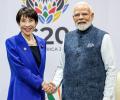
If they act now, they can reshape the strategic map of Asia without firing a shot. If they wait, the next opportunity will come only after a serious Taiwan Strait incident -- by which time the price will be far higher, and the room for boldness far smaller -- the opportunity may well be lost by then. The question is no longer whether this can or should be done, points out Varun Arya.
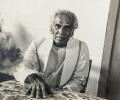
What appeared to be a generous act of friendship was, in truth, a manoeuvre within a much larger strategic game. The United States used the 1962 war not just to aid India but to test how far it could be pulled into the Western fold, points out Dr Kumar.
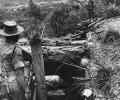
On November 18, 1962, 114 soldiers of the 13th Kumaon fought till the last man, and last bullet, in sub-zero temperatures, to beat back the huge Chinese army. We salute the Heroes of Rezang La.

Hulk Hogan, who helped turn pro wrestling into billion-dollar spectacle, dies at 71
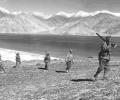
As India and China continue to face off across the Himalayas six decades later, the echoes of that earlier conflict remain unmistakable. The core of China's sensitivity lies not in maps or mountain passes, but in its perception of sovereignty over Tibet, points out Dr Kumar.

'There was a wrong policy of government during the Congress regime. They didn't construct roads up to the border which left a buffer zone of 3-4 km which China occupied. Construction of new villages isn't a new thing, it's all inherited from Congress'

'If Washington has to balance Chinese power, she will have to turn to the third biggest power in the world which is India.' 'The United States and India will have to work together in order to keep Chinese ambitions in check.'

One can only sincerely wish the Dalai Lama a very long life at the service of world peace. His presence is much required today on the planet, notes Claude Arpi, who has known His Holiness for more than half a century.

Why can't the Indian government propose to the Chinese a corridor circumambulating the Holy Mountain where people from both sides could perform the yatra again? asks Claude Arpi.

"Based on this consensus, the process of disengagement is almost complete. Our efforts will be to take the matter beyond disengagement; but for that, we will have to wait a little longer," he added.

In underlining the role of border villages as custodians of India's frontiers, New Delhi is following China's example in Tibet.

China on Thursday said it 'firmly opposes' the United States recognition of Arunachal Pradesh as part of Indian territory and affirmed that Washington, DC has nothing to do with the India-China border dispute.
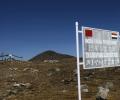
The resolution also pushes back against People's Republic of China (PRC) claims that Arunachal Pradesh is PRC territory, which is a part of the PRC's increasingly aggressive and expansionist policies.

The Chinese inference is that if the Chinese visa is embossed on an Indian passport, held by Indian citizens from Arunachal Pradesh, it may be tantamount to recognising Indian sovereignty over Arunachal Pradesh, states Rup Narayan Das.

India and China have so far held 19 rounds of talks to resolve the boundary dispute.
The resolution condemns additional Chinese provocations, including China's use of military force to change the status quo along the Line of Actual Control, construction of villages in contested areas, publication of maps with Mandarin-language names for cities and features in the Indian state of Arunachal Pradesh, and expansion of Beijing's territorial claims in Bhutan.

Chinese troops are reinforcing their posts in large numbers, increasing their patrolling, stepping up violations in the Tawang and Walong areas.

In the two years since the PLA's intrusions into Eastern Ladakh, the Border Roads Organisation is sparing no effort to build and upgrade road highways from Tezpur to the McMahon Line.

Less than a month after the historic visit of Prime Minister Narendra Modi to the US, a Congressional senatorial Committee has passed a resolution recognising Arunachal Pradesh as an integral part of India.

In an army that favours officers who have spent the bulk of their service years doing counter-insurgency operations in Jammu and Kashmir, General Anil Chauhan is that rarity: A China specialist who has logged plenty of service years along the Line of Actual Control and the McMahon Line with China.

'There is still no road on the last 37 km between the McMahon Line and Menchuka in Arunachal Pradesh. Ironically, during my visit, Beijing announced the opening of a 117-km highway linking Metok, located just north of the McMahon Line. My local friends kept saying with some envy in their voices, "The Chinese are very much in advance on us".' Claude Arpi on a recent visit to the last large village before the McMahon Line that divides India and China.
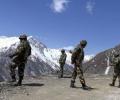
...with extravagant claims in both the eastern and western sectors, observes Ambassador Talmiz Ahmad, as India is fixated on asserting its border claims based on the McMahon Line.

'China wants to change the status quo of India's Northern Border and proves that it can do whatever it wants in what it perceives as its own territory,' states Claude Arpi.

'It has been doing yeoman service for the people of the North East.'

'Three decades of intensive discussions, protocols and Confidence Building Measures were jettisoned one fine morning in 2020.' 'The primary lesson that has been learnt is that that there is no reliability about the Chinese.'
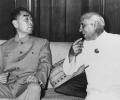
'Unquestionably, the spirit behind the Panchsheel agreement and the 'Hindi Chini bhai bhai' slogan were thrown overboard by the Chinese, and a trust deficit was injected between the two nations.' A revealing excerpt from General J J Singh's The McMahon Line: A Century Of Discord.

The youths were handed over to the Indian Army by the PLA after completing necessary formalities, Tezpur-based defence spokesperson Lieutenant Colonel Harsh Warrdhan Pande said.

The incident came to light when two members from the group of youths, who went hunting in the jungle, returned home and informed the families of the five that they were whisked away by the Chinese troops from Sera-7, an Army patrol zone located about 12 km further north of Nacho.
The five youths had gone missing on Friday from the Sino-Indian border in the Upper Subansiri district of Arunachal Pradesh.
"In 1962, China had captured Tawang and yet it withdrew from it and the rest of Arunachal Pradesh largely to what is the McMahon Line, thereby de facto accepting its validity. In the western sector, it did not go back to the pre-1962 line and retained the fruits of its aggression," former top diplomat Kanwal Sibal has said.
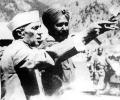
Let us hope that what happened in 1962 will never happened again, prays Claude Arpi

It is on the exact spot where the Guru is said to have created 108 waterfalls, that the Yangtse clash took place between the Indian Army and the Chinese PLA on the night of December 9, 2022. As it had done in Ladakh in May 2020, the PLA tried to change the unmarked LAC in the Yangtse sector in Arunachal Pradesh. It was the most serious border incident since the Galwan Valley clash in June 2020, notes Claude Arpi.
One priority for Delhi (for the new foreign secretary in particular) is to have an in-depth discussion with Dharamsala as soon as possible, suggests Claude Arpi.

China will use airpower to support Pakistan from the start of a war. China will use the opportunity to at least take Ladakh. Its growing navy will prevent India from blockading or attacking the Makran Coast. And thanks to Chinese weapons, Pakistan keeps expanding its forces, observes Ravi Rikhye.

Dai Bingguo, who served as the China's boundary negotiator with India from 2003 to 2013, told Chinese media, "If the Indian side takes care of China's concerns in the eastern sector of their border, the Chinese side will respond accordingly and address India's concerns elsewhere."
Prime Minister Narendra Modi's visit to Arunachal Pradesh on Friday, February 20, irritated the Chinese government so much that it summoned the Indian ambassador to register its protest against Modi visiting a territory China claims as Southern Tibet.
India's reaction came in response to Beijing announcing Chinese names for 15 more places in Arunachal Pradesh which the neighbouring country claims as South Tibet.
