
The seasonally adjusted Nikkei India Services Business Activity Index fell to 50.2 in May, from 51.0 in April, pointing to the slowest growth rate in the current 12-month stretch of expansion.
For July-September, it pegged CPI-based retail inflation at 4.2 per cent which it saw firming up to 4.8 per cent in the second half of the current fiscal.
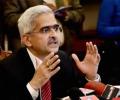
Seeking to dispel possible notions of the RBI not having done enough by opting for a pause for the second consecutive time, Das said the RBI has a wide dashboard of instruments beyond rates that can be deployed.

The Indian economy appears to have slowed down in 2018-19 due to lower private consumption, tepid growth in fixed investment and muted exports, a finance ministry report has said.
Instead of a rate hike, or even a pause, there could be a window for the RBI for an interest rate cut

While the RBI can nudge things along, ultimately bank owners must recapitalise and review internal processes to ensure that a culture of irresponsible lending doesn't continue, says Devangshu Datta.

The S&P BSE Midcap and the S&P BSE Smallcap indices added 0.5% and 0.7%, respectively

The Monetary policy committe comprising 6 members voted 6-0 in the favour of the rate cut.
The headline seasonally adjusted Nikkei India Composite PMI Output Index, that maps both the manufacturing and services sectors, rose from 53.3 in June to 54.1 in July.

RBI has pegged the GVA growth of 7.6 per cent for the current fiscal and 7.9 per cent the year after

For the first time, the value of card and mobile payments of Rs 10.57 trillion was more than ATM withdrawals of Rs 9.12 trillion in Q4 of fiscal 2019-20. In the months of lockdown, the gap may have widened further, but cash could be back in vogue when the situation normalises.

The fifth meeting of Monetary Policy Committee maintained the repo rate, at which it lends to the banks, at 6.25 per cent and the reverse repo, at which it borrows, will be 6 per cent.

After unseasonal rains, supply disruptions and pandemic-induced woes pushed retail inflation well over the Reserve Bank's comfort zone in 2020, the scenario is likely to stay that way at least in the short term as economic recovery slowly gains foothold. For most part of this year, pricier food items pushed the retail inflation, based on Consumer Price Index (CPI), higher in the range of 6.58-7.61 per cent, except for March when the reading was 5.91 per cent. Experts believe retail inflation is likely to average around 6.3 per cent this fiscal and mostly will remain sticky going forward owing to pick-up in demand across sectors.

Takeda had filed a case of patent infringement in response to Zydus' abbreviated new drug application.

While a pick-up in summer monsoon rains in recent weeks is expected to cool food inflation, most analysts don't anticipate another rate cut before a new governor is on the job

After stripping Pluto of planet status in 2006, some astronomers want to reclassify it once again, says Devangshu Datta.

'There are deliberations on whether there can be lowering of income taxes and other sops to keep more money in the hands of taxpayers, enabling them to spend more and boost demand.'

This is the ninth consecutive month that the manufacturing PMI remained above the 50-point-mark.

With enough liquidity in the system, lending and deposit rates are likely to fall further

SBI was the biggest loser in the Sensex pack, shedding 2.40 per cent, followed by Yes Bank, Bharti Airtel, L&T, Sun Pharma, M&M, ICICI Bank, ONGC, RIL, Asian Paints, Vedanta and HUL, which lost up to 2.37 per cent.

'Most importantly, marking a departure from the past, the RBI has made it clear that it is not overtly worried about the level of the local currency,' notes Tamal Bandyopadhyay.

Lower interest rates needed to boost manufacturing, officials say.

However, growth is expected to bounce back to an average of 7.3 per cent in the second half of 2017 and 7.7 per cent in 2018

The public sector banks are not in a position to cut rates because of their weak balance sheets and massive portfolios of non-performing assets, says Devangshu Datta.

After facing a drubbing in four states, Congress on Monday got some good news in Mizoram where it powered to a two thirds majority in the assembly elections snapping up 27 of the 40 seats, while the opposition Mizo National Front secured four.

The Instrulab Institute of Aviation Technology (IIAT) opens admissions to become an Aircraft Maintenance Engineer.

Both the indices closed at five-month highs, led by financial services, IT and metal stocks, amid persistent foreign fund inflows.

Inflation in the 'fuel and power' basket in December slumped to 8.38 per cent, nearly half of 16.28 per cent.

Going forward, the February factory output may be impacted as several industries such as automobiles, technology, pharma and fashion have some exposure to imports of raw and intermediate materials from China.

'Prime Minister Modi stated several times that we shall not let this challenge go away without converting it into an opportunity to undertake systemic reforms.' 'And hasn't that been reiterated in action?'

Tomorrow's review could also turn out be the last policy anchored by Rajan if the proposed Monetary Policy Committee (MPC) is put in place before the next review due on August 9.

A combination of farm loan debt waivers by state governments and the implementation of the pay commission award could entail some fiscal slippages and pose a risk to inflation

Delivering a public speech hours after the RBI launched a rescue act for Yes Bank on March 6, Governor Shaktikanta Das reiterated the RBI's affirmation to do whatever was needed to combat the coronavirus impact. On that day, India had only one confirmed COVID-19 infection, the World Health Organisation was five days off from declaring it as a pandemic and the financially debilitating lockdowns were not even on the horizon. Das' promise on efforts to mitigate COVID-19 impact appeared as a footnote in news reports from the event.
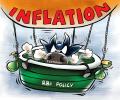
Currently, the retail inflation is well below the RBI's comfort level. The government has asked the central bank to keep inflation in the range of 4 per cent.

The report, however, said it remains watchful of the upside risks to inflation emanating from pass-through of minimum support prices (MSPs), adverse movement in crude oil prices, volatility in global financial markets, lagged impact of the rupee weakness on input prices, adverse implications from fiscal slippage and staggered impact of HRA increases by states and its second-round impact.

Currently, banks follow system of internal benchmarks, including Prime Lending Rate, Benchmark Prime Lending Rate, Base rate and Marginal Cost of Funds based Lending Rate.
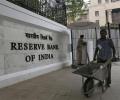
Key risk for price rise is the 'deficient' monsoon that could lead to a pick-up in inflation expectations.

FPIs, which are holding large exposures in Indian debt, could also be expected to book some capital gains as yields slide down

'Credit expansion is probably the quickest way to get the economy going again.' 'Easy credit is like a shot of nitro in a race car: In timely, small, quick, doses it can give a tremendous boost but carried to extreme it can destroy the engine,' points out S Muralidharan, former managing director, BNP Paribas.
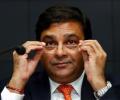
RBI retained the GDP growth for the financial year 2018-19 at 7.4 per cent.
