
The United States prosecutors on Tuesday sought 30 years' imprisonment for Pakistani-Canadian Tahawwur Rana, an accomplice of convicted terrorist David Headley, for providing material support to Laskar-e-Tayiba and conspiring for a terror attack on a Danish newspaper.
Foreign Secretary Ranjan Mathai and his Pakistani counterpart Jalil Abbas Jilani began their talks in New Delhi on Wednesday during which India is expected to strongly flag the issue of terror activities being planned from Pakistani soil in the backdrop of arrest of Laskar-e-Tayiba terrorist Abu Jundal, who has revealed Pakistani involvement in Mumbai terror attacks.
United States prosecutors on Tuesday defended a plea agreement with David Headley, co-accused in the Mumbai terror attacks, saying that this helped the Federal Bureau to extract invaluable information from him about Laskar-e-Tayiba and other terrorist outfits and their leaders in Pakistan.
In the fourth and concluding part of the series ProPublica's Sebastian Rotella talks about how Laskar-e-Tayiba operative David Coleman Headley was finally nabbed by United States law enforcement agencies, but only after he hoodwinked them for seven years. But the epilogue in the story is rather like the prologue: full of impunity and mystery
A top militant commander of the Laskar-e-Tayiba was killed in a fierce encounter in North Kashmir's Sopore on Tuesday afternoon.
A Pakistani anti-terror court on Thursday adjourned till January 6 next year the proceedings against seven suspects, including Laskar-e-Tayiba commander Zakiur Rehman Lakhvi, charged with involvement in the Mumbai terror attacks even as a notice was issued to one of the defence lawyers.
There appears to be a pattern in the manner that the accused in the 26/11 Mumbai terror attacks case are making statements before the court.
A mysterious 'Rahul' appears to have been the prime target of Chicago resident David Coleman Headley, nabbed by the Federal Bureau of Investigation for planning to carry out a major terror attack in India this month at the behest of Pakistan-based Laskar-e-Tayiba.
A Pakistani anti-terrorism court has rejected the bail application of one of the seven suspects facing trial in connection with the Mumbai attacks, which India has blamed on the banned militant outfit Laskar-e-Tayiba.
India on Thursday asked Pakistan to demonstrate the same 'force' to deal with terror groups like Laskar-e-Tayiba and Jaish-e-Mohammed like it has done against the Taliban in Swat Valley.
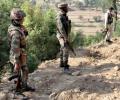
The terrorists were nabbed in a joint search operation launched Friday night by the 52 Rashtriya Rifles and Special Operation Group, Baramulla.

The Islamic State has emerged as the most potent terrorist threat globally but in the Afghan-Pak region the space is dominated by other terrorist groups like Taliban, Haqqani network and Lashkar-e-Tayiba, America's top spymaster has said.

Almost every claim made by India about Pakistan's role in the 2008 Mumbai attacks has been backed by investigator, who probed the case in Islamabad.

Party leaders and workers will try to build up public opinion against the alleged anti-national activities in the central varsity and in support of action against people involved in it.

With logistical support from the government, outlawed Jamaat-ud-Dawah chief Hafiz Saeed on Friday told his supporters that Pakistanis should come forward and help the Kashmiris in getting "freedom" from India.

'It was always anticipated that the return of the Taliban would embolden armed Islamists including anti-India groups like the Lashkar and Jaish.'

Two crucial witnesses in the Mumbai attacks trial, including an electoral officer who gave evidence about the Pakistani origin of one of the Laskar-e-Tayiba terrorists involved in the assault on India's financial hub, have been cross-examined in an anti-terrorism court.
