
The Indian banking system's net liquidity surplus has reached a four-year high of Rs 4.57 trillion, driven by maturing government securities, with further maturities expected to push the surplus to around 5 trillion.

The regulator wants to know if banks deploy the money to meet lending needs. Sources close to the development said that the central bank was checking if banks used the liquidity adjustment facility (LAF) for raising resources to meet short-term lending needs or pay off high-cost bulk deposits. Bankers said the central bank might be worried that the steps taken by it so far had not eased the liquidity situation and that call rates remained high.
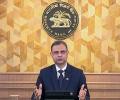
Mixed views were expressed by top economists on the Reserve Bank of India's (RBI) Monetary Policy Committee's (MPC) decision to hold the repo rate at 5.5% and maintain a neutral stance. While some say the decision was as expected and one more rate reduction is expected this fiscal, there is also a view that rate cut by MPC was warranted given the evolving global situation.

The Reserve Bank of India (RBI) has extended the trading hours for the interbank call money market from July 1, and that of repo and tri-party repo markets from August 1. Market participants said the decision is intended to help reduce the large Standing Deposit Facility (SDF) balances held by banks with the RBI, thereby addressing liquidity mismatches.
Reserve Bank on Friday decided to cut Cash Reserve Ratio (CRR) by a huge 1 per cent, which will unlock Rs 2.5 lakh crore liquidity to the banking system for lending to productive sectors of the economy. With the reduction in four equal tranches ending November 29, 2025, the CRR would come down to 3 per cent.

The Indian Air Force on Monday said all its military bases and systems continue to remain fully operational, and ready to undertake any further missions if the need arises.

After effecting two back-to-back 25 basis points rate cuts, Reserve Bank Governor Sanjay Malhotra on Wednesday hinted at another reduction in key policy rate by changing the central bank's monetary stance to 'accomodative' from 'neutral', which may further lower EMIs for consumers.
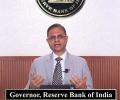
'India has the potential to grow at more than 7%, with the monetary policy providing a supportive hand.'

The Indian Air Force is set to conduct a mega airshow on Marina Beach in Chennai on the occasion of the 92nd Air Force Day on October 6.

To ease the potential liquidity stress, the Reserve Bank on Friday slashed Cash Reserve Ratio (CRR) by 50 basis points to 4 per cent, a move that would unlock Rs 1.16 lakh crore bank funds. The RBI on May 4, 2022 had raised CRR to 4.5 per cent from 4 per cent in an off-cycle Monetary Policy Committee (MPC) meeting, with effect from May 21 the same year.

In view of the rising number of mobile and internet banking users, the Reserve Bank of India (RBI) has proposed to tighten norms related to the liquidity coverage ratio (LCR) by increasing the run-off factor for retail deposits. "Banking has undergone rapid transformation in recent years. "While increased usage of technology has facilitated the ability to make instantaneous bank transfers and withdrawals, it has also led to a concomitant increase in risks, requiring proactive management," the RBI said in the draft guidelines released on Thursday.
The Reserve Bank on Friday took steps towards normalisation of liquidity management to pre-pandemic levels, with the introduction of the standing deposit facility (SDF) as the basic tool to absorb excess liquidity, and narrowing the liquidity adjustment facility (LAF) to 0.50 per cent from the 0.90 per cent. Governor Shaktikanta Das said the SDF will be at 3.75 per cent, 0.25 per cent below the repo rate and 0.50 per cent lower than the marginal standing facility (MSF) which helps the banks with funds when required. The SDF has its origins in a 2018 amendment to the RBI Act and is an additional tool for absorbing liquidity without any collateral.

The Indian Air Force's move comes over a year after the Navy made changes in its ensign shedding its colonial past.

The contracts for the procurement of the platforms and weapons systems were signed in the presence of Defence Minister Rajnath Singh and defence secretary Giridhar Aramane, under whose guidance these deals fructified, an official readout said.

The IAF Chief released the new ensign at the 91st IAF Day celebrations in Uttar Pradesh's Prayagraj.

The increase reflects a quarter-on-quarter increase of 2.6 per cent in October-December 2022-23. In absolute terms, the total liabilities, including liabilities under the 'Public Account' of the government, jumped to Rs 1,50,95,970.8 crore at the end of December 2022.

While the economy seems to be on a firm growth path, the fight against inflation is not over yet. Shaktikanta Das seems to be in no hurry. After playing well through a five-year Test match, he doesn't want to get out hit wicket, observes Tamal Bandyopadhyay.
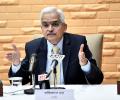
The Reserve Bank of India (RBI) on Wednesday raised the benchmark lending rate by 35 basis points to 6.25 per cent in a bid to tame inflation, which has remained above its tolerance level for the past 11 months. With the latest hike, the repo rate or the short-term lending rate at which banks borrow from the central bank now has crossed 6 per cent. This is the fifth consecutive rate hike after a 40 basis points increase in May and 50 basis points hike each in June, August and September.

Demonetisation of the high value currency notes of Rs 500 and Rs 1,000 did not have any discernible impact on currency in circulation (CIC) in the country, which has soared by almost 83 per cent since its announcement on November 8, 2016. The Supreme Court on Monday upheld the decision of the government on demonetisation. On November 8, 2016 Prime Minister Narendra Modi had announced demonetisation of old Rs 1,000 and Rs 500 banknotes and one of the key objectives of the unprecedented decision was to promote digital payments and curb black money flows.
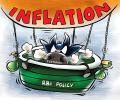
The RBI's Monetary Policy Committee brainstormed the impact of any future shocks on the inflation trajectory and stressed monitoring the cumulative effect of monetary policy actions over the past one year, which is still unfolding, revealed minutes of the rate-setting panel released on Thursday. The minutes of the meeting of the Monetary Policy Committee (MPC), headed by Reserve Bank Governor Shaktikanta Das, also indicated it would be premature to declare an end to the monetary tightening cycle, which started in May 2022 to check high inflation following the outbreak of the Russia-Ukraine war. The central bank, which effected six back-to-back hikes in the key short-term lending rate (repo) since May 2022 to check high inflation, decided to take a pause early this month.
The Reserve Bank has decided to keep the cash reserve ratio (CRR) of scheduled banks unchanged at 4.0 per cent of their net demand and time liabilities and keep the policy repo rate under the liquidity adjustment facility (LAF) unchanged at 7.25 per cent.
The Reserve bank of India has kept the repo rate and reverse repo rates unchanged in its mid-quarter review of monetary policy announced on Thursday.
Cash Reserve Ratio (CRR) is the amount of funds that the banks have to keep with the Reserve Bank of India. If RBI decides to increase the percent of this, the available amount with the banks comes down. RBI is using this method (increase of CRR rate), to drain out the excessive money from the banks.

SBI Research has projected the Indian economy to grow at 7.5 per cent in 2022-23, an upward revision of 20 basis points from its earlier estimate. As per official data, the economy grew by 8.7 per cent in FY22, net adding Rs 11.8 lakh crore in the year to Rs 147 lakh crore, the report said, adding this was however only 1.5 per cent higher than the pre-pandemic year of FY20. "Given the high inflation and the subsequent upcoming rate hikes, we believe that real GDP will incrementally increase by Rs 11.1 lakh crore in FY23. "This still translates into a real GDP growth of 7.5 per cent for FY23, up by 20 basis points over our previous forecast," SBI chief economist Soumyakanti Ghosh said in a note on Thursday.
The Reserve Bank is likely to maintain status quo on interest rates in its forthcoming monetary policy review but may change the stance in view of retail inflation piercing its upper tolerance limit, global uncertainties created by the ongoing Russia-Ukraine war, and the urgency to protect and boost growth, feel experts. The RBI governor-headed rate setting panel -- Monetary Policy Committee (MPC) -- will be holding its first meeting of the 2022-23 fiscal from April 6 to 8. The outcome will be announced on April 8.
IT majors and Maruti Suzuki down 8% were the top losers among Sensex-30.
The ability of banks to continuously tap funds through the central bank's Liquidity Adjustment Facility lowers their need to raise cash in the markets, which has thwarted the development of a proper money-market yield curve.
Markets ended over 1% lower, snapping a five-day winning streak, amid a sell-off in bank shares after the central bank late Tuesday imposed fresh restrictions on commercial banks' access to cash.
Markets opened sharply lower on Tuesday, amid weak Asian cues, on concerns that the liquidity squeeze by the central bank would hurt growth and impact equity inflows.

In its scheme of things, tackling inflation now comes ahead of ensuring growth in the world's sixth largest economy, points out Tamal Bandyopadhyay.
Observing that there is liquidity overhand of Rs 13 lakh crore in the system, RBI Governor Shaktikanta Das said on Friday that the exceptional measures undertaken during pandemic will be dealt in sync with macroeconomic developments to preserve financial stability. Since the onset of the pandemic, the Reserve Bank has maintained ample surplus liquidity to support a speedy and durable economic recovery, he said while announcing the outcome of the Monetary Policy Committee (MPC) meeting. The level of surplus liquidity in the banking system increased further during September 2021, with absorption under fixed rate reverse repo, variable rate reverse repo (VRRR) of 14 days and fine-tuning operations under the liquidity adjustment facility (LAF) averaging Rs 9 lakh crore per day as against Rs 7 lakh crore during June to August 2021, he said.

'Banks are being encouraged to lend instead of parking their resources with the RBI and earn risk-free interest income,' points out Tamal Bandyopadhyay.
The Reserve Bank of India in its quarterly monetary policy review has hiked rates.
The Reserve Bank has raised short-term borrowing rate (reverse repo) by 0.50 percentage points and lending rate (repo) by 0.25 percentage points.
Normally, the RBI is closed for public transactions every July 1 because of its annual closing of accounts.
Reserve Bank on Tuesday kept the bank rate and CRR unchanged, but hiked repo and reverse repo rate by 0.25 per cent to 5.5 per cent and 6.5 per cent respectively as part of measures to rein in inflation.

The move by the central bank follows concerns over tight liquidity conditions and banks' unwillingness to lend to NBFCs.

The following are the highlights of the mid-term review of Monetary and Credit Policy for the year 2003-04.
The Reserve Bank of India on Saturday decided to reduce the one-day and 14-day repo rate under the liquidity adjustment facility by 0.5 per cent to 4.5 per cent with effect from Monday.
