
'Prices can be adjusted now. The government can even temporarily cut taxes'.

"For 2010-11 and beyond, the Kirit Parikh report will be the benchmark. The report is being studied.These decisions are politically sensitive issues and have to be sustained over a period of time," Petroleum Secretary S Sundareshan told Business Standard. "It is impossible to insulate the Indian consumer against the movement in international oil prices."

The room for political manoeuvre to raise petroleum prices is the highest at this point in time, says Business Standard.

The expert group was tasked to suggest a methodology for pricing of diesel and cooking fuel.

Indian Oil Corporation (IOC) has come a long way in its 50 years of existence.

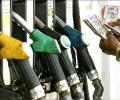
Petrol and diesel prices will go up by Rs 2.67 a litre and Rs 2.58 per litre, respectively, after Finance Minister Pranab Mukherjee on Friday raised customs and excise duties on the two, virtually putting the Kirit Parikh Committee report on fuel price in cold storage.
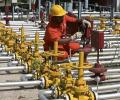
Gail India subsidiary Mahanagar Gas (MGL) on Friday announced a steep reduction in the retail price of compressed natural gas (CNG) by Rs 8/kg and domestic PNG (piped natural gas) by Rs 5/SCM across its licenced area. The move comes on the heels of the Centre revising the pricing methodology of domestically-produced natural gas on Thursday as proposed by the Kirit Parikh committee and following it with the new price announcement earlier in the day. In February, the city gas distributor reduced its CNG price by Rs 2.5/kg but prices are still around 80 per cent more than those in April last.

Upstream firms pay for a portion of fuel subsidies by extending discounts on crude oil they sell to refiners who are forced by the government to sell diesel and cooking fuel at rates lower than cost of production.
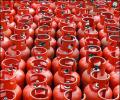
The government will provide five crore LPG connections on concessional rates in the name of women from below poverty line.
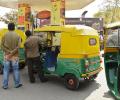
The Union Cabinet on Thursday approved a revision in the formula for pricing of natural gas and imposed cap or ceiling price to help cut CNG and piped cooking gas prices by up to 10 per cent. Natural gas produced from legacy or old fields, known as APM gas, will now be indexed to the price of imported crude oil instead of benchmarking it to gas prices in four surplus nations such as the US, Canada and Russia, Union I&B Miniser Anurag Thakur told reporters after a meeting of the Cabinet. APM gas will be priced at 10 per cent of the price of basket of crude oil that India imports (Indian basket of crude oil).
Diesel prices should be immediately hiked by Rs 4-5 per litre, the Kirit Parikh Committee has recommended while favouring continuation of existing pricing principles for controlled petroleum products.
Questioning the idea of market-determined prices for natural gas favoured by the petroleum ministry, the Planning Commission said on Tuesday that given the shortage of the fuel, the government had a role to play.
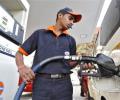
Ministry to propose a new subsidy mechanism to cap upstream firms' share.

Amid a spate of government proposals at its door, the Election Commission has asked all Union government departments to route their proposals through the Cabinet Secretariat.
Mansingh, a 1970-batch IAS officer from Gujarat cadre, was the number one choice for the post of chairman of PRB at the screening done by the Search Committee headed by Planning Commission Member (energy) Kirit Parikh, top officials said.

The government-appointed Kirit Parikh committee suggested an 'immediately' hike prices of diesel by Rs 5 a litre, Rs 4 per litre in kerosene and Rs 250 per cylinder in LPG, reduce annual entitlement of subsidised cooking gas cylinder from six from nine and phase out diesel subsidy in one year to cut a record subsidy burden.
Lower crude oil costs and higher marketing margins are expected to raise the fortunes of oil marketing companies (OMCs) in the first quarter (Q1) of 2023-24 (FY24), while city gas distribution (CGD) companies could also benefit from lower spot prices of liquefied natural gas (LNG). However, in a break from the past, growth trends are expected to diverge for various segments within the broad energy sector. Analysts expect the earnings from gas production to go down for upstream national oil and gas companies such as Oil and Natural Gas Corporation (ONGC) and Oil India (OIL) due to the introduction of the new domestic gas pricing regime on April 1. After showing steep losses over the first half of 2022-23 (FY23), the marketing margins of OMCs have steadily recovered in four months.

So far, GMTS has defaulted on the supply of more than 20 cargoes or shiploads, 13 of which were set to be received in the second quarter (July-September), officials said.
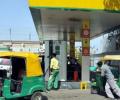
At present, India has 56,999 fuel outlets. Of those, only 6,276 are owned by private companies
If the reforms are implemented, multi-brand retail majors such as Future Group and Reliance Retail might enter the fuel retail space.

An interview with Kirit S Parikh, former Planning Commission member and chairman of the committee on oil pricing reforms.

The loss, which is made good through government subsidy, has declined since March as the rupee strengthened against the dollar and global oil prices softened.

Other members of the committee are Indian Council for Research on International Economic Relations chairperson Isher Judge Ahluwalia, National Council of Applied Economic Research director general Suman K Bery and the secretaries of yje ministries of finance and petroleum.
The ministry is preparing a draft note for consideration of the CCPA on pricing of diesel, kerosene and LPG, official sources said.
Planning Commission deputy chairman Montek Singh Ahluwalia and former Planning Commission member Kirit S Parikh, who heads an expert committee on fuel pricing, may join the deliberations, official sources said.

The government does not seem inclined, at least in the petroleum sector, to effect sudden and steep upward price revisions to tame its huge subsidy burden and rein in fiscal deficit.
Prices of natural gas, which is used to generate electricity, make fertiliser and is converted into CNG to run automobiles, is likely to rise to record levels at the rate review scheduled this week, sources said. The government-dictated price for natural gas produced in the country is to be revised on October 1. After factoring in the spike in energy prices witnessed in recent months, the rate paid for gas produced from old fields such as of state-owned Oil and Natural Gas Corporation (ONGC) is likely to rise to $9 per million British thermal units from current $6.1.
Prices of natural gas, which is used to generate electricity, make fertiliser and is converted into CNG to run automobiles, were on Friday hiked by a steep 40 per cent to record levels, in step with global firming up of energy rates. The rate paid for gas produced from old fields, which make up for about two-thirds of all gas produced in the country, was hiked to $8.57 per million British thermal units from the current $6.1, according to an order from the oil ministry's Petroleum Planning and Analysis Cell (PPAC). Simultaneously, the price of gas from difficult and newer fields like the ones in Reliance Industries Ltd and its partner bp plc operated deepsea D6 block in KG basin, was hiked to $12.6 per mmBtu from $9.92, the order said.

As fuel prices surged in September, the government's decision to ask companies to cut price by Rs1 each on a litre of petrol and diesel came as a dampner for private players.
 © 2026 Rediff.com - Advertise with us - Disclaimer - Privacy Policy - Sitemap - Feedback - About us - Terms of use - Grievances