
Lu said China will take 'further action' to safeguard its sovereignty.

Very few today realise that without Brigadier John Dalvi's courage, we would never have known what really happened during those tragic days of October/November 1962, reveals Claude Arpi.
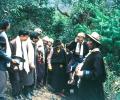
China may reacted angrily about his visit to Arunachal Pradesh, but the Tibetan spiritual leader has never been one to stand down. Despite Beijing's loud protests, backed by New Delhi, His Holiness has traveled to the border state seven times since he sought refuge from Chinese aggression in India in 1959.

The delivery channel of India Post is being utilised primarily for small towns and cities.

'While wishing the Tibetan leader a long and healthy life, one can hope for a 'selection' of the Tibetan leader in the Indian Himalayas.' 'It is vital for Tibetan Buddhism, but it is also in India's political interests,' says Claude Arpi.

The papers said India is using the Dalai Lama as a "diplomatic tool" against China for its "vice like veto" against India's membership in the Nuclear Suppliers Group and United Nations ban on Jaish-e-Mohammed chief Masood Azhar.
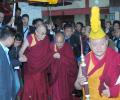
Beijing is clearly rattled by the Dalai Lama's visit. Unlike the 2009 visit, which was a four-day religious tour, the current visit is a high-decibel, 10-day affair, without the fig leaf of a "religious event", reports Ajai Shukla.

'If, as appears to be the case, India is on way to 'mending fences' with China, and China is equally desirous to 'reset' the relationship, this could be a self-reflexive moment in India's positioning vis-a-vis not just the Dalai Lama, but also the Tibetan issue and China as a whole,' points out China expert Alka Acharya.

On the title page of the Top Secret Report, Henderson-Brooks quotes the Chinese tactician Sun Tzu: 'Know yourself, know your enemy: A hundred battles, a hundred victories', says Claude Arpi, highlighting where the Indian Army and government failed to counter the Chinese attack in 1962.
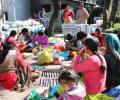
Sanjeev Nayar offers some ideas on how Indians can help in improving the lives of those living in border areas and in the process help the Indian Army.
