
Jamiat Ulama-i-Hind chief Maulana Arshad Madani's remarks alleging discrimination against Muslims, citing the Al Falah University case, have sparked a row with the BJP, who accused him of supporting terrorists.

The case has been registered against entities such as the Halal India Private Limited Chennai, Jamiat Ulama-i-Hind Halal Trust Delhi, Halal Council of India Mumbai, Jamiat Ulama Maharashtra and others for allegedly exploiting religious sentiments to boost sales by providing halal certificates to customers of a specific religion, the UP government said in a statement on Saturday.

At a press conference organised in Mumbai by the Jamiat Ulama Maharashtra (Arshad Madani), which provided them free legal aid, the acquitted also demanded action against officers for prosecuting them. Five of the six accused -- Adam Ajmeri, Mufti Abdul Qyyum Mansuri, Mohammed Salim Shaikh, Abdulmiyan Qadri and Altaf Hussain -- were present at the press conference.

In a statement, the state government alleged 'malicious attempts' to discourage the use of products lacking a halal certificate not only seek 'unfair financial benefits' but also form part of a 'pre-planned strategy to sow class hatred, create divisions in society, and weaken the country' by "anti-national elements".

Family members of Kamal Ahmad Vakil Ahmad Ansari, who died awaiting justice in the 2006 Mumbai train blasts case, read aloud the Bombay High Court's acquittal order at his grave, publicly affirming his innocence and demanding accountability from the system.
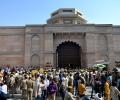
The Supreme Court of India is scheduled to hear a batch of petitions challenging the validity of certain provisions of the Places of Worship (Special Provisions) Act, 1991, which prohibits lawsuits to reclaim a place of worship or change its character from what prevailed on August 15, 1947. The pleas, including one filed by Ashwini Upadhyay, argue that these provisions violate the right to judicial remedy and create an arbitrary cut-off date. The matter will be heard in the backdrop of several ongoing cases related to places of worship, including the Gyanvapi Mosque in Varanasi and the Shahi Idgah Mosque in Mathura. The Muslim side has cited the 1991 law to argue that such suits are not maintainable. The Supreme Court had previously sought the Centre's response to Upadhyay's petition, which alleged that the law creates an "arbitrary and irrational retrospective cut-off date" for maintaining the character of places of worship.
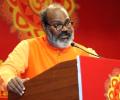
Narsinghanand has several cases against him, including for allegedly making a hate speech at a conclave in Haridwar in December 2021, and was out on bail.

In response to an RTI query filed by Gulzaar Azmi, general secretary (legal cell) of a socio-cultural organisation, Jamiat Ulama-E-Maharashtra, it was found that Sadashiv Abhimanyu Patil, a constable attached to Nashik unit of ATS, had sent Rs 1,000 thrice to accused Abrar Ahmed through money order in August, September and November 2008 from his residential address at police headquarters in Nashik.

Here's a recap of events that occurred in India in the past 24 hours.
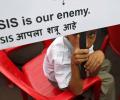
Such was the terror created by the ATS, that all their relatives stayed away.
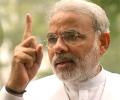
There is a churning going on among Muslims, and Mehmood Madni should be credited for breaking the silence. He has initiated a debate on the options before Muslims to look beyond the Congress yoke and fear of the BJP, says Ehtasham Khan

'As long as true Hinduism survives in India, we need not let the Hindutva fear factor keep us from accepting a change in Muslim personal law with a ban on triple talaq,' says Najid Hussain.
 © 2026 Rediff.com - Advertise with us - Disclaimer - Privacy Policy - Sitemap - Feedback - About us - Terms of use - Grievances