
The fresh round of India-China special representative talks, which were postponed in November after the Chinese protested the Dalai Lama's scheduled participation in a programme in New Delhi, will now be held on January 16-17 in the capital.

"All temporary structures and other allied infrastructure created in the area by both sides have been dismantled and mutually verified. The landform in the area has been restored by both sides to the pre-standoff period," the Army said in a statement.

"We villagers are not against the Army or the government. But getting a compensation for their land is the right of the villagers," Rana said.
The 11th round of the Corps Commander-level talks began at around 10.30 am at the Chushul border point on the Indian side of the Line of Actual Control (LAC) in eastern Ladakh, they said.
India-China bilateral trade hit a record $73.9 billion last year.
The Chinese side is said to have called off the 15th round of the talks between Special Representatives (SR) of both the sides after India refused to accept their demand that the congregation which was to be addressed by the Tibetan spiritual leader be called off.
The United States will have to take into account the views of the European Union and countries like India, China and Japan while framing foreign economic policy because of their growing clout in the global market, a top US analyst has said.

The Indian Army has been matching up to the Chinese build up in both Pangong Tso lake and Galwan Valley, the two locations in Ladakh which have witnessed major reinforcement of troops in the last two weeks, sources said. There was very little chance of easing of tension anytime soon as both sides are aggressively holding onto their respective positions, they said.

'but the terrorism issue should be fair, square at the centre of the conversation. It is the major issue ... I am not saying there are no other issues. But I am not going to duck that issue for the sake of talking'

India agreed to give up the Poonch salient as well as Uri. To the north India also proposed to give up land in the Gurez sector giving the entire Neelam/Kinshanganga valley to Pakistan. In return India sought control of the post dominating Kargil town, points out Colonel Anil A Athale (retd).

India and China on Friday are holding another round of high-level military dialogue to resolve the 22-month-long standoff in some friction points in eastern Ladakh, two months after the last round of such talks failed to yield any significant outcome.
Jaishankar's talks with Yang and later in the Strategic Dialogue were expected to cover the key India-China differences like China blocking India's bid to join the NSG and UN ban on Azhar.

The Indian side is expected to seek disengagement as soon as possible in the remaining friction points besides pressing for resolution of issues in Depsang Bulge and Demchok.
While weaknesses in major developed economies continue to drag the global recovery.

Jaishankar also spoke about how he expected a change in Russia's direction towards the rest of the world and it may likely want multiple options in Asia.
Forecasts of a frosty, rough patch in India-China relations, observers in New Delhi and Beijing told rediff.com, may be inaccurate, at least for now.
The Israel Export Institute on Monday urged the Israeli industry and trade ministry to adopt a plan that would increase exports by $3 billion by the end of 2004.

Prime Minister Modi and President Xi held the conversation on Wednesday on the sidelines of the BRICS (Brazil, Russia, India, China, South Africa) summit in Johannesburg.
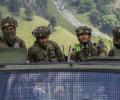
India and China on Saturday held another round of military talks with a focus on taking forward the disengagement process in Hot Springs, Gogra and Depsang in eastern Ladakh and bring down the tensions in the region, official sources said.

Officials in Beijing said the two countries were on course to meet the new target of $100 billion for 2015, set during Chinese Premier Wen Jiabaos recent visit to New Delhi.
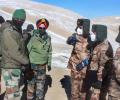
Foreign Secretary Harsh Vardhan Shringla terms India's relationship with China as "complex".
Ahead of the 50th anniversary of the 1962-war, China on Friday said that it "wholeheartedly" wishes to solve the border dispute with India through negotiations and maintain a friendly relationship. "China develops in a peaceful way wholeheartedly, and hopes to maintain a friendly and cooperative relationship with India. China wishes to settle boundary issues through negotiations wholeheartedly," Chinese foreign ministry spokesman Hong Lei said.
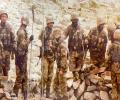
Speaking at a virtual conference of the World Economic Forum, the external affairs minister, at the same time, said the border row happens to be one part of the larger issue of how India and China adjust to each other when both are rising.

The Dalai Lama's proximity to the Chinese border will anger the Communist dictators in Beijing, who despise the Tibetan spiritual leader who retains his influence in his homeland 64 years after he fled Tibet.

"It is natural that China and India, as two regional emerging powers, will possess similar and even overlapping maritime interests," an article from an official think tank in the state-run Global Times said on Wednesday.

The Summit will take bilateral relations to a higher level and have a major and positive impact on regional and world peace, stability and development, Sun said.

External Affairs Minister S Jaishankar on Wednesday took a critical view of some of the key decisions made by the Jawaharlal Nehru government, and said one needs to get out of this "cult worship" that the period from 1946 onwards was "great years" and the country did "splendidly".

The Chinese inference is that if the Chinese visa is embossed on an Indian passport, held by Indian citizens from Arunachal Pradesh, it may be tantamount to recognising Indian sovereignty over Arunachal Pradesh, states Rup Narayan Das.

Global aviation industry would improve its profit from $6.7 billion to an estimated $8.4 billion thanks to the two countries.
Multiple rounds of talks have failed to yield any significant result in defusing border tensions. The last round of Corps Commander-level talks between both countries were held on November 6, 2020 in Chushul in Eastern Ladakh.

'The choice of Dhoka La for the intrusion by Chinese troops is significant and suggests a twin objective of pressuring Thimpu to allow Beijing to establish an embassy there and reinforcing Chinese claims on Arunachal Pradesh,' warns former RA&W officer Jayadev Ranade.
The meeting primarily focused on implementation of certain decisions taken at the fifth round of talks between Corps Commanders of the two armies last week on the disengagement process as well as to bring down prevailing tension in the region, sources said.
The one-day event organised on Tuesday by the 2010 India-China Development Forum, which was set up with backing of China's top media houses and the Indian Embassy in Beijing, has displayed a heated debate, something that the Chinese media professionals have rarely seen and appeared to have thoroughly enjoyed.

The structure and the level at which the hotline would be set up is likely to come up for discussion in future meetings between the two countries at the military level, they said.

On Pakistan, the publication quoted him as saying that India wants "normal and neighborly relations."

Italy, Greece, South Korea, Taiwan and Turkey also figure in the list released by Pompeo, who said over 20 countries have cut their oil imports from Iran, reducing purchases by more than one million barrels per day.

Dr Jaishankar, right, appears to look away from Wang Yi, second from right, at the East Asia Summit Foreign Ministers Meeting in Jakarta, Indonesia, Friday, July 14, 2023.
If India, China and the United States are to prosper in a globalised economy, a joint, cooperative transformation of their higher education systems was imperative, believes B M Naik, former principal of the engineering school at the Guru Gobind Singh College in Nanded, Maharashtra."To bring about this transformation from one level to the high level and to the global level and quality standard education, what is most important is that these ideas must move fast," he said.

Jaishankar said India should be confident enough to "leverage" the international system to create the "best possible outcome".
