
Moody's Investors Service on Thursday said loans to retail customers, especially those to low-income borrowers, will remain most affected due to the shock caused by the coronavirus pandemic. Despite the pandemic challenges, asset quality at Indian banks has performed better than expected at the start of the outbreak, Moody's said. "Corporate loans, in particular, have performed well because banks prior to the pandemic had largely provisioned for legacy problem loans and tightened underwriting standards," Moody's vice president and senior credit officer Srikanth Vadlamani said. Addressing an online conference organised by Moody's and its affiliate Icra, Vadlamani said an increase in non-performing loans in both public and private sector banks is subdued.

The next auction for bauxite blocks in Odisha may see heightened interest with Adani Group charting an entry into alumina refining and existing players looking to boost capacity. Hemant Sharma, principal secretary, Odisha industries department, said that three bauxite blocks have been scheduled for auctions this year. Adani Group - which will be setting up a 4-MMTPA alumina refinery and may enter aluminium production - is expected to bid for mines, though raw material linkages shall be available from Odisha Mining Corporation (OMC).

Corporate India's credit quality showed a sharp improvement in the second half of FY22, but high input prices and withdrawal of pandemic-related relief measures can pose pressures in the new year, rating agencies said on Friday. Crisil Ratings, which rates a large number of financial sector entities, reported an improvement in the credit ratio -- the number of upgrades to downgrade -- to 5.04 times in the second half of this financial year, from the 2.96 per cent in the first half of the fiscal. It attributed the improvement to a sustained rebound in demand, which lifted revenues of most sectors to pre-pandemic levels and proactive relief measures by the government that cushioned the pandemic blow.

Production of eight infrastructure sectors expanded by 7.9 per cent in September -- the highest in three months -- on account of better show by coal, fertiliser, cement and electricity segments, according to official data released on Monday. In September last year, the growth rate stood at 5.4 per cent. It was 4.1 per cent in August. The previous high was in June when the output expanded by 13.1 per cent.

Airlines operated at much lower capacity of about 27% this July compared to July 2019 level, but there was a marginal rise over the 25% capacity achieved in June 2020.

The government may be staring at a modest slippage in fiscal deficit for 2022-23 (FY23), with the Ministry of Finance seeking parliamentary approval for additional spending through a second and final tranche of supplementary demands for grants. On Monday, as the Budget session of Parliament resumed, Finance Minister Nirmala Sitharaman sought Parliament approval for additional gross spending of Rs 2.7 trillion in FY23 (which ends on March 31). While net cash outgo is pegged at Rs 1.48 trillion, the rest will be matched by savings or enhanced receipts, the finance ministry said.

It was August 2007. Tata Steel was turning 100. Jamshedpur, its hometown, had an air of celebration. The line-up for the special event included the launch of Air Deccan's commercial flight connecting Kolkata and Jamshedpur, and release of Russi Lala's new book, Romance of Tata Steel. There was also the screening of The Spirit of Steel, a 20-minute documentary directed by Zafar Hai showcasing Tata Steel's legacy, and a corporate anthem penned by Javed Akhtar and composed by Shankar, Ehsaan and Loy.

The production growth of eight infrastructure sectors -- coal, crude oil, natural gas, refinery products, fertiliser, steel, cement and electricity -- was 19.3 per cent in May 2022, the data showed. In June, the output of coal, refinery products, fertiliser, cement and electricity rose by 31.1 per cent, 15.1 per cent, 8.2 per cent, 19.4 per cent, and 15.5 per cent, respectively.

As the economic crisis in Sri Lanka - the world's largest exporter of orthodox tea - continues to rage across the island nation, tea producers in India look to cash in on the opportunity to seize the market. The country's largest tea growing company, McLeod Russel India, expects orders to come in from July. "A huge opportunity is coming up for everyone in India. "McLeod Russel is well placed because we have the capacity for orthodox tea," said Azam Monem, director, McLeod Russel. About 10 per cent of McLeod's production is orthodox tea.

States' borrowing cost fell for the second consecutive week on Monday, with the weighted average cut-off easing by 4 bps to 7.67 per cent from 7.71 per cent in the last auction when it slid by 7 bps. The yield on the benchmark 10-year G-secs also declined in the week by 4 bps to 7.23 per cent from 7.27 per cent last Tuesday, Icra Ratings said on Monday. The weighted average cut-off of the 10-year state debt also eased to 7.61 per cent at Monday's auctions from 7.66 per cent last week.

Reinvent and innovate will be the key mantra for the Indian pharma industry in the New Year as the 'pharmacy of the world' looks to move from volume to value leadership, amid emerging challenges of inflation and pricing pressures in the global markets. While R&D investment, market competitiveness, regulatory scrutiny, and domestic price regulations are expected to shape the growth of generics and injectable products, concerns such as price control and customs duties on medical equipment will continue to bother the healthcare industry in 2023. The industry believes that in view of India's G20 Presidency, digital health innovation, achieving universal health coverage, improving healthcare infrastructure and delivery will continue to be the key driving factors in 2023.

The domestic basic telephone network is expected to grow at a slow rate over the next few years owing to increased competition from cellular wireless services
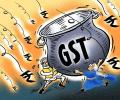
GST collection grew by 12 per cent in April to Rs 1.87 lakh crore, the highest monthly mop-up since the rollout of the indirect tax regime. The gross GST revenue collected in the month of April 2023 is Rs 1,87,035 crore of which CGST is Rs 38,440 crore, SGST is Rs 47,412 crore, IGST is Rs 89,158 crore (including Rs 34,972 crore collected on import of goods) and cess is Rs 12,025 crore, the finance ministry said in a statement. The previous high collection of Rs 1.68 lakh crore was in April last year.

The fresh restrictions imposed in Maharashtra to contain the second wave of COVID-19 are likely to impact the festive season auto sales, as Navaratri and Gudi Padwa are falling in April, according to rating agency Icra. These two festivals account for a sizeable chunk of the annual vehicle sales across the country, especially in Maharashtra, it said. Gudi Padwa, which is a major festival of Maharashtra, will be celebrated on April 13, while Navrarati will also begin on the same day.

SBI will auction two non-performing accounts (NPAs) next month to recover dues of over Rs 313 crore, according to a notice by the lender. The two accounts to be put up for e-auction on August 6 are Bhadreshwar Vidyut Pvt Ltd (BVPL) with a loan outstanding of Rs 262.73 crore and GOL Offshore Ltd with Rs 50.75 crore dues. "In terms of the bank's policy on sale on financial assets, in line with the regulatory guidelines, we place these accounts for sale to ARCs/banks/NBFCs/FIs, on the terms and conditions indicated there against," SBI said in the notice. The reserve price for the auction of Bhadreshwar Vidyut is set at Rs 100.12 crore and for GOL Offshore at Rs 51 crore.

India has been relatively insulated from the severe headwinds in the West. However, with a third of the global economy expected to slip into recession in calendar year 2023, the impact will strongly be felt on India's exports and trade economy, leading economists said in a panel discussion at the Business Standard BFSI Insight Summit in Mumbai on Wednesday. The panel comprised former Reserve Bank of India executive director and former Monetary Policy Committee member Mridul Saggar, State Bank of India Chief Economic Advisor Soumya Kanti Ghosh, Citibank India Chief Economist Samiran Chakraborty, ICRA Chief Economist Aditi Nayar, and IndusInd Bank Chief Economist Gaurav Kapoor. The topic of the panel discussion was No recession in sight: Is India decoupled from developed economies?

The Reserve Bank of India (RBI) will maintain the policy repo rate at 6.5 per cent during its upcoming June 8 announcement, considering the easing of retail inflation in April and the potential for further decline, indicating the effectiveness of previous policy rate actions, anticipate experts. Headed by Reserve Bank Governor Shaktikanta Das, a meeting of the six-member Monetary Policy Committee (MPC) is scheduled for June 6-8. The decision of the 43rd meeting of the MPC would be announced on Thursday, June 8.

While there was a sharp drop in footfalls in malls in H1FY21, there was reasonable recovery in H2. However, the second wave derailed the recovery.

India's appetite for imported crude oil may wane in fiscal year (FY) 2023 from record levels in pre-pandemic 2019-20 fiscal as higher oil prices, a spillover from the conflict in Ukraine, and increasing use of biofuels affect domestic demand for petroleum products. Brent crude surged to a nine-year high, shy of a July 2008 record $147.50 a barrel, before declining to around $100 a barrel - but the volatility in commodity rates will slow global economic growth and use of fuels. Demand for all oil products may grow at only 2-3 per cent in FY23, slower than the current fiscal and nearly half the 5.5 per cent growth estimated by the petroleum ministry, according to industry officials.

As on March 31, 2019, while the promoter group's stake, including individual promoter shareholders as well as group investment firms, stood at 42.71 per cent, it fell to 38.39 per cent on Tuesday.

As temperatures soar across the country, amid searing heat wave, analysts see power demand hitting fresh record highs this year. The time, therefore, may be opportune to add related stocks on dips as higher demand boosts earnings visibility, they said. On April 18, India's electricity demand touched a new high of 216 gigawatts.
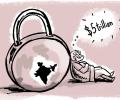
The wait for India to become a $5-trillion economic powerhouse by 2024-25 (FY25) is going to take longer than what the finance ministry had originally intended, according to the International Monetary Fund (IMF). The vision will instead be achieved in 2028-29 (FY29), reveals the IMF data, illustrating a four-year delay. Chief Economic Advisor (CEA) V Anantha Nageswaran had in February said India would become a $5-trillion economy by 2025-26 or the following year, on the back of 8-9 per cent sustained growth rate in real gross domestic product (GDP). However, the IMF data conveys that the economy will be $4.92 trillion in FY28, clearly alluding to the fact that the target will be realised in FY29.

India's industrial production contracted by 4 per cent in October, the sharpest fall in 26 months, mainly due to decline in output of manufacturing and subdued performance of mining and power generation sectors, according to official data released on Monday. The Index of Industrial Production (IIP) had grown 4.2 per cent in October 2021. The previous low was (-) 7.1 per cent in August 2020.

In November, the fiscal deficit widened by Rs 2.2 trillion, the highest ever in any month this financial year.

The Union government could target a fiscal deficit of 5.8-6 per cent of nominal GDP for 2023-24, and it should continue its capital expenditure push and look to simplify the personal income tax regime, economists recommended Finance Minister Nirmala Sitharaman and her team during their pre-Budget interaction on Monday. Starting last week, Sitharaman had eight pre-Budget consultations this time. More than 110 invitees representing seven stakeholder groups participated in these meetings, the finance ministry said in a statement. The stakeholder groups included representatives and experts from agriculture and agro-processing industry; industry, infrastructure & climate change; financial sector and capital markets; services and trade; social sector; trade unions and labour organisations; and economists.

Retail inflation fell to a 15-month low of 5.66 per cent in March, mainly due to a decline in food prices, government data showed on Wednesday. The inflation figure in March is within the RBI's comfort zone as it is below 6 per cent. The retail inflation based on Consumer Price Index (CPI) was 6.44 per cent in February 2023 and 6.95 per cent in the year-ago period.

The rating was downgraded despite 25 per cent held by stronger partner Indian Hotels, which operates the company's seven properties in India.

Led by healthy growth in coal, crude oil, fertilisers, cement and electricity production, output of eight core industries grew to a 13-month high of 18.1 per cent in May this year, according to official data released on Thursday. The growth of core infrastructure sectors expanded by 16.4 per cent in the year-ago period and 9.3 per cent in April this year. The last high growth was recorded in April 2021 when it was 62.6 per cent.

With the first quarter gross tax mop-up reaching Rs 5.6 lakh crore, Icra Ratings on Friday said the government is set to exceed the budgeted tax collection target of Rs 22.2 lakh crore for 2021-22, led by indirect taxes. The government has budgeted a modest 9.5 per cent growth in tax collections at Rs 22.2 lakh crore for FY22, over FY21 collections of Rs 20.2 lakh crore. However, despite the second wave of the pandemic, the April-June quarter tax collections rose to Rs 5.6 lakh crore, which is 39 per cent higher than Q1 of FY20.

After raising interest rate by a cumulative 250 basis points in 11 months, the Reserve Bank of India (RBI) on Thursday unexpectedly kept benchmark rate unchanged as global banking woes added uncertainty to the economic outlook. Five out of six members of MPC voted to remain focused on the withdrawal of accommodation to ensure inflation aligns with target while focusing on growth, RBI Governor Shaktikanta Das said on Thursday. The Monetary Policy Committee of the central bank decided to take a pause after a rate hike seen in previous six consecutive policies.

Production of eight infrastructure sectors expanded by 3.8 per cent in December 2021 against a 0.4 per cent contraction in the same month last year on better show by coal, cement and refinery products, according to the official data released on Monday. Barring crude oil and steel, all sectors recorded positive growth in December 2021. The core sector industries had grown by 3.4 per cent in November 2021.

When the world was upended by the Covid-19 pandemic, metals got its shine back. In the last two years, infrastructure spending by major economies spurred demand, energy transition and intermittent supply disruptions fuelled a scorching rally in metals after a downturn during the first Covid wave. Now, Russia's war on Ukraine is ensuring that elevated prices stay the course.

PowerGrid was the top gainer in the Sensex pack, rising around 4 per cent, followed by ITC, Bajaj Finance, Infosys, NTPC and Tech Mahindra. NSE Nifty advanced 117.15 points to 17,072.60.

Leading automakers Maruti Suzuki India, Hyundai and Tata Motors reported a double-digit increase in dispatches to dealers in April as the demand remained robust especially for the sports utility vehicles. The country's largest car maker Maruti Suzuki India (MSI) said its domestic passenger vehicle wholesales rose 13 per cent to 137,320 units last month as against 121,995 units in April 2022. Sales of mini cars, comprising Alto and S-Presso, fell 18 per cent to 14,110 units as compared with 17,137 units a year ago.

Punjab National Bank on Monday allayed concerns about its exposure to Adani companies and noted that its loans to the group are diversified into 8-9 companies, which are generating sufficient cash. Atul Kumar Goel, the bank's MD & CEO, in a post-earnings call said total exposure to Adani group, so far, stands at Rs 7,000 crore, of which Rs 2,500 crore is in the airport sector. He further said there is "no worry as the exposure is not very big" and that the bank is keeping an eye on the development that is taking place.
It would be a difficult task for the Indian economy to reach the $5-trillion mark a year before the International Monetary Fund (IMF) projection of 2026-27. Pankaj Chaudhary, minister of state for finance, said in the Rajya Sabha on Tuesday that the government is taking steps to make the country a $5-trillion economy at a date earlier than the IMF's projection. In that context, it would not be difficult to meet the projection in the third quarter of FY27.

Retail inflation inched up to 4.48 per cent in October due to an uptick in food prices, government data showed on Friday. The Consumer Price Index (CPI) based inflation was at 4.35 per cent in September and 7.61 per cent in October 2020.

New Delhi's timing couldn't have been worse, both for India's fledgling electric vehicle (EV) sector and prospective electric bike buyers. It was hard to miss the perfect storm brewing for India's EV industry since early 2022. On one hand, you had several accidents involving battery fires that unnerved consumers; on the other, uncertainty had crept in over subsidies.

Global oil prices have slumped and India has access to larger amounts of discounted Russian crude oil, yet refiners are not passing on their savings to consumers

According to Icra, domestic passenger traffic declined by 1.1 per cent in March, overall traffic saw a de-growth of 0.1 per cent in the month as international aircraft movement dipped by 1 per cent while domestic aircraft movement was flat.
