
For decades, multinational pharmaceutical companies and Indian drugmakers worked in ways that supported each other: MNCs brought innovation and brands, while Indian companies built scale through generics and cost efficiency. There was an important overlap - generic drugs - but this is shrinking fast. And the consequences are reshaping India's gigantic pharmaceutical market.

Ahmedabad-headquartered Zydus Lifesciences posted a 17 per cent year-on-year (Y-o-Y) rise in revenue from operations to Rs 6,123 crore, while the net profit increased by 38 per cent to Rs 1,258.6 crore aided by consistent performance in the US and India formulations businesses.

The US Food and Drug Administration's (USFDA)'s new draft guidelines aimed at speeding up and reducing the cost of developing biosimilars - lower-priced, near-replicas of complex biologic medicines - could significantly benefit Indian biotech companies.

As the potential threat of a steep 200 per cent tariff on pharmaceutical imports hangs in the air, analysts and industry insiders feel that focus on exports to non-US regions as well as domestic market will increase as a long-term trend. US President Donald Trump told CNBC's Squawk Box in the first week of August that planned tariffs on import of pharmaceutical products to the US could eventually reach up to 250 per cent.

Enhertu currently costs around Rs 1.6 lakh per 100-milligram injection.

A fresh US executive order (EO) which seeks to bring down prices of prescription drugs in the country by up to 90 per cent -- on par with other developed nations -- will affect innovator companies, while sparing the Indian generic drug makers in the short term. US President Donald Trump signed the EO on Monday, directing the US Trade Representative and the Secretary of Commerce to act against foreign countries that "purposefully and unfairly undercut market prices", driving price hikes in the US.
Analysts are expecting pharmaceutical companies to post sales growth of 10-11 per cent in the second quarter this financial year while the Ebitda (earnings before interest, tax, depreciation, and amortisation) margins are anticipated to improve by about 110 basis points. Ebitda improvement will be led by lower input costs because prices of active pharmaceutical ingredients (APIs) are 5-15 per cent lower year-on-year (Y-o-Y). Axis Capital said sales growth would be around 10 per cent, of which growth in the India market would be 11 per cent or so.
Medicine sales grew at a fast clip in smaller cities like Madurai, Meerut, Agra, and Varanasi in the last 12 months. The domestic pharmaceutical market, overall, has grown 12.3 per cent in this period, according to data from IQVIA MAT for April. MAT refers to the moving annual turnover or the turnover of the last 12 months. The data further showed that the top 30 cities contributed around 32 per cent to sales.

As the market buzzes with news of Cipla promoters exiting the business through a stake sale and Ahmedabad-based Mehta family-led Torrent Pharmaceuticals racing to acquire its rival, Cipla, an analysis reveals that if the deal were to go through, both companies might need to divest as many as 15 brands to comply with Competition Commission of India (CCI) norms. A recent analysis by Bernstein shows that Cipla and Torrent share a presence in 332 products (based on product and molecule data from market research firm IQVIA). Bernstein analysts Nithya Balasubramanian and Parth Shah noted that, while this may appear as a high number, a significant portion of these products lack significance.

Trade generic drugs (medicines that are sold directly through distributors) are fast becoming a key segment for domestic pharma firms as volume growth slows in the overall market. Big companies like Cipla and Alkem have a significant presence in the segment but recently, players like Torrent Pharmaceuticals and Dr Reddy's Laboratories (DRL) have also entered this market. What is driving big pharma's focus on trade generics? The volume growth in the Indian Pharma Market (IPM) has come down from 5.6 per cent in FY16 to 0.1 per cent in FY23.

The average salary received by students during campus placements for 2021-2022 was Rs 21.48 lakh per annum. The highest salary offered was $250,000.

147 domestic and international recruiters -- including Ola, Amazon, Flipkart and Xiaomi -- hired all 460 graduates.

Vaccine major Bharat Biotech on Wednesday said its COVID-19 vaccine, Covaxin, has demonstrated an interim vaccine efficacy of 81 per cent in the Phase 3 clinical trials.
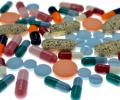
The original list had named 349 drugs, but 15 drugs, approved prior to 1988, have been kept outside the purview of the ban
 © 2026 Rediff.com - Advertise with us - Disclaimer - Privacy Policy - Sitemap - Feedback - About us - Terms of use - Grievances