
Hyundai Motor India Ltd reported a 35 per cent decline in consolidated profit after tax to Rs 888.62 crore in the first quarter ended June 30, impacted by lower revenue and higher expenses, with MD & CEO Tarun Garg noting it was a "challenging quarter".

India remains one of the Hyundai Motor group's most important and strategic markets globally. The initiative positions India as a strategic core market for the group's growth, emerging market expansion, and next-generation automotive innovation.

Hyundai Motor India Ltd reported a 22.22 per cent decline in consolidated profit after tax to Rs 1,255.63 crore in the March quarter, primarily due to higher expenses, despite an increase in total revenue from operations.

Korean auto major Hyundai plans to invest an additional Rs 4,000 crore in Maharashtra by 2030, aiming to nearly double capacity at its new Pune manufacturing plant to 320,000 units per annum in a phased manner, a top company executive said.

Hyundai Motor India Ltd on Thursday reported a 14.3 per cent rise in consolidated net profit to Rs 1,572.26 crore in the second quarter ended September 30, 2025.

Hyundai Motor India Ltd, the Indian arm of South Korean automaker Hyundai, has received capital markets regulator Sebi's approval to float an initial public offering (IPO), people familiar with the development said on Wednesday. This development marks a significant milestone for the Indian industry, as it is the first automaker initial share-sale in over two decades, following Japanese automaker Maruti Suzuki's listing in 2003.

Hyundai Motor India Ltd (HMIL) is set to launch a localised mass-market SUV built on a dedicated EV platform, expanding its EV portfolio beyond the IONIQ 5 and CRETA Electric, while also significantly boosting its charging infrastructure and training its workforce.

Hyundai Motor India is set to outpace the broader passenger vehicle market, projecting an 8-10 per cent domestic sales growth in H2FY27, fueled by strategic launches of a new mid-size SUV and a dedicated electric vehicle, alongside increased production capacity.

South Korean auto major Hyundai Motor Co president & CEO Jose Munoz on Wednesday said the company's Indian arm will invest Rs 45,000 crore by FY30, aiming to make India its second-largest region globally. Addressing investors here in his first visit to the country, Munoz said Hyundai Motor India Ltd (HMIL) has set a target of up to 30 per cent export contribution.
For FY26, the company has adopted a cautious outlook, anticipating domestic growth to broadly track the industry's low single-digit estimated growth amid ongoing economic headwinds.

Jio Platforms Ltd's Rs 30,213-crore initial public offering (IPO) achieved full subscription within 100 minutes of opening, making it the fastest among India's mega issues, surpassing previous records set by companies like Reliance Power.

In August, Hyundai recorded its highest ever domestic sales for the month with 54,396 units sold, marking a 23.6 per cent Y-o-Y increase. The Creta Electric currently anchors Hyundai's mass-market electric portfolio, while the Ioniq 5 caters to the premium end


Jio Platforms Ltd, the digital and telecom arm of Reliance Industries, is poised to launch India's largest-ever initial public offering (IPO) at Rs 30,213 crore, surpassing Hyundai Motor India's Rs 27,870-crore offering.

Passenger vehicle dispatches in the domestic Indian market are estimated to have surged by 33 per cent to approximately 4.7 lakh units in July, with market leaders Maruti Suzuki and Hyundai reporting record sales, alongside significant growth from Tata Motors and Mahindra & Mahindra.

Hyundai Motor India (HMIL) raised Rs 8,315 crore from anchor investors on Monday, setting the stage for the country's biggest-ever maiden share sale. The Indian arm of the South Korean carmaker Hyundai Motor Company (HMC) allotted 42.4 million shares to 225 funds at Rs 1,960 apiece, the higher end of its price band. Among the investors receiving allotments were the Singapore government's sovereign wealth fund (GIC), New World Fund, and Fidelity.

Jio Platforms Ltd's Rs 30,213-crore initial public offering (IPO) has garnered bids worth Rs 3.73 lakh crore, achieving a subscription rate of 5.57 times the shares on offer, driven by robust institutional and anchor investor demand.

The Indian Road Transport Ministry has amended the Central Motor Vehicles Rules to permit flex-fuel vehicles capable of running on up to E100 (nearly pure ethanol), a move aimed at reducing dependence on imported crude oil and promoting alternative fuels.

Jio Platforms Ltd's (JPL) public offer, valued at Rs 30,213 crore, was fully subscribed within 100 minutes of opening, making it the fastest-ever subscribed IPO in India, driven by strong institutional demand.
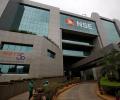
The National Stock Exchange of India's (NSE) mega Rs 22,569-crore initial public offering (IPO) was fully subscribed on the second day of bidding, driven by strong interest from qualified institutional buyers and non-institutional investors.

The National Stock Exchange of India's (NSE) mega Rs 22,569-crore initial public offering (IPO) was subscribed 43 per cent on its first day of bidding, making it India's second-largest public issue after Hyundai Motor India's Rs 27,870-crore IPO in 2024.

The National Stock Exchange of India's (NSE) mega Rs 22,569-crore initial public offering (IPO) opened for subscription, receiving 9 per cent bids on its first day, with strong participation from anchor investors.

Shares of the National Stock Exchange of India Ltd (NSE) climbed nearly 1 per cent on their trading debut, reaching a market valuation of Rs 4,53,123 crore, following a significantly oversubscribed initial public offering.

Domestic passenger vehicle dispatches in India are estimated to have grown by approximately 21 per cent to 4.60 lakh units in September, with major carmakers like Maruti Suzuki, Tata Motors, M&M, and Hyundai all reporting double-digit growth, driven by increased supplies for the upcoming peak festival season and healthy demand.

Hyundai has started to build one of two new factories planned for China.
The National Stock Exchange (NSE) has set its initial public offering (IPO) price band at Rs 1,700-1,785 per equity share, with the subscription period running from September 17 to September 21, aiming to raise up to Rs 22,569 crore.
The National Stock Exchange's initial public offering (IPO), expected to raise around Rs 30,000 crore, is likely to open for public subscription on September 18 and list on September 25, potentially becoming India's largest IPO.

The company has not indicated the exact rise in prices of its models
The Road Transport Ministry has updated the Central Motor Vehicles Rules 1989 to allow flex-fuel vehicles capable of running on up to E100 (nearly pure ethanol). These amendments include E100 alongside E85 for emission certification and raise the vehicle weight limit for light petrol and diesel vehicles. This move supports India's strategy to reduce crude oil import dependence, with major automakers already developing flex-fuel models for the Indian market.

Hyundai Motor India Ltd (HMIL) announced plans to make Tamil Nadu its 'flagship EV hub for India', committing over 26,000 crore in investment, enhancing localisation, and creating approximately 2,000 additional jobs over the next five to six years. The company will roll out two new EV models from its Chennai facility this year, including its first mass-market dedicated EV.

Leading automakers in India, including Maruti Suzuki, Tata Motors, Mahindra & Mahindra, and Hyundai, reported increased vehicle dispatches to dealers in February, driven by sustained domestic demand.
Leading automakers in India, including Maruti Suzuki, Tata Motors, Mahindra & Mahindra, and Hyundai, reported increased vehicle dispatches to dealers in February, driven by sustained domestic demand.

Jio Platforms Ltd's Rs 30,213-crore initial public offering was subscribed 3.01 times, attracting approximately Rs 66,500 crore in public bids, with qualified institutional buyers oversubscribing their portion by 9.02 times, while retail investor demand remained under-subscribed at 0.68 times.

India's passenger vehicle sales are estimated to have surged by approximately 35 per cent to about 4.5 lakh units in August, driven by strong performances from major automakers like Maruti Suzuki India, Tata Motors Passenger Vehicles, and Mahindra & Mahindra, with the industry entering the festive season with optimism.
The Qualified Institutional Buyers (QIBs) portion of the Jio Platforms IPO was fully subscribed at over 2x demand within minutes of its issue opening on Wednesday, indicating strong institutional interest in India's largest public issue.

As India's festive season approaches, passenger vehicle dealers are seeing a notable increase in inventories, yet discounts remain surprisingly moderate compared to previous years, signalling a tighter demand-supply balance in the automotive market.
The National Stock Exchange's (NSE) initial public offering (IPO) is expected to shrink in size to Rs 25,000-27,000 crore, down from an earlier estimate of Rs 30,000 crore, as some shareholders are reducing their offer for sale (OFS) stake.

September marked India's highest-ever monthly EV retail volume. More than one in nine two-wheelers retailed in September was electric.

The partnership strengthens HMC's presence in global cricket, marking its return to the sport after its earlier association with the ICC between 2011 and 2015.

The automaker was found to have engaged in anti-competitive practices.
