
Jamaat-ud-Dawah chief Hafiz Mohammad Saeed, who is accused of masterminding the Mumbai terror attacks, on Friday said the only solution to resolving problems between India and Pakistan is the 'liberation of Jammu and Kashmir', failing which radical groups will resort to the 'option of Jihad'. Addressing a gathering of about 10,000 people at the Mall Road in Lahore to mark 'Kashmir Solidarity Day', Saeed said this is the message he would convey to Home Minister P Chidambaram.

Disappointed at the Lahore high court's decision to scrap terror cases against Jamaat-ud Dawa chief Hafiz Saeed, India on Monday said it would take up the issue with Pakistan, as it had earlier made to understand that formal investigation would be conducted against him.
Union Home Minister P Chidambaram, while reacting to Pakistan's claim that India had not provided any evidence against Saeed, said "Zaki-ur-Rehman Lakhvi is one of the masterminds. There are others. We know their names and Pakistan also knows their names. If they do not bring the others to trial, then I would have to conclude, reluctantly and regretfully that they are dragging their feet," Chidambaram told media-persons in New Delhi.
The Obama administration is "disturbed" by the release of Jamaat-ud-Daawa chief Hafiz Mohammad Saeed, who was placed under house arrest nearly six months ago in the wake of the Mumbai attacks, US Special Representative Richard Holbrooke said on Wednesday.

A Pakistani court on Monday admitted a petition filed by banned Jamaat-ud-Dawah chief Hafiz Mohammad Saeed challenging two cases registered against him by police under the Anti-Terrorism Act for inciting people to wage 'jehad'.

On the eve of crucial talks between Indo-Pak Foreign Ministers, top diplomats of the two countries met in New York on Saturday to prepare ground for the parleys, where India is expected to demand speedy probe into the Mumbai attacks and decisive action against their mastermind, Jamaat-ud-Dawaah chief Hafiz Mohd Saeed.
The Pakistani police on Wednesday said they were awaiting instructions from the government for taking further action against founder of Lashkar-e-Tayiba and Jamaat-ud-Dawa chief Hafiz Saeed, who was placed under house arrest after two cases were registered against him under an anti-terror law.
A teary-eyed Kasab, Pakistani gunman convicted in the 26/11 terror attacks case, thanked judge ML tahiliyani after he was awarded the death sentence in Mumbai on Thursday.

"We have submitted all information available to us, but we want more information to make our case solid," Pakistan's Interior Minister Rehman Malik said, adding that in the absence of enough evidence, the court would exonerate Saeed for lack of authentic proof.

National Security Advisor M K Narayanan has said "dialogue is the way forward" with Pakistan and that the dossier against Lashkar-e-Tayiba founder Hafiz Sayeed is a "grade one" evidence.
The US also said Pakistan-based Lashkar-e-Tayiba posed a "regional and global" threat for it and India. "There are five, probably six, suspects currently being held in Islamabad in connection with the 26/11 Mumbai terror attacks," US Ambassador Timothy J Roemer said.
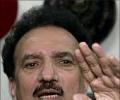
Pakistan on Friday claimed that the trial of Lashkar-e-Tayiba operatives arrested for their involvement in the 2008 Mumbai attacks would be completed within four months, but also sought more time to examine the evidence provided by India against the terror group's founder Hafiz Mohammad Saeed.

No militant belonging to the Lashkar-e-Tayiba or its parent organisation, the Jamaat-ud-Daawa, has been included in Pakistan's top 10 most wanted terrorists list.JuD chief Hafiz Saeed, along with other top LeT commanders, has been accused of masterminding the deadly Mumbai terror attacks on November 26, 2008, in which 179 people were killed.Pakistan's top ten most wanted terrorists belong to six militant and sectarian organisations linked to the al-Qaeda and the Taliban.
Facing strident calls to bring the perpetrators of the Mumbai attacks to justice, Pakistan says the terror strike last November "would not have happened" if India had shared information about some suspects in time. Islamabad also said it will examine the fresh evidence provided by India on the basis of which Interpol issued a Red Corner Notice against Jamaat ud-Dawaa chief Hafiz Mohammad Saeed, the prime accused in planning and executing the 26/11 attacks.
The next war between India and Pakistan could be fought over water, Lashkar-e-Tayiba founder Hafiz Muhammad Saeed has claimed. Saeed, who currently heads the Jamaat-ud-Dawah, made the remarks while addressing a gathering at a mosque in Chowburji area of Lahore on Sunday.

With Interpol issuing Red Corner Notice against Jamaat-ud Dawa chief Hafiz Saeed, India on Wednesday said the development vindicates its stand on his involvement in Mumbai terror attacks, and urged Pakistan to act on the basis of evidence collected 'painstakingly'.External Affairs Minister S M Krishna said the world should take note of the Interpol notice.
Pakistan will fulfil international obligations regarding the designation of individuals and entities by the United Nations as terrorist, Pakistan Prime Minister Yousuf Raza Gilani told visiting US Deputy Secretary of State John Negroponte.
India handed over "additional information" on Mumbai attacks to Pakistan High Commissioner Shahid Malik, who met Foreign Secretary Nirupama Rao in New Delhi on Friday. During the meeting held following a request by Malik, additional information on the 26/11 terror attacks including inputs on some of the key aspects and accused involved was given by Rao.

Swaraj said India has made many efforts to have talks with Islamabad and the only reason they have stopped is because of Pakistan's behaviour.

Stating that prosecution of "some individuals" of the Lashkar-e-Tayiba by Pakistan was "not enough," India on Wednesday demanded "severe action" against Hafiz Saeed, mastermind of Mumbai attacks, so that he does not remain a free man to incite more violence against the country.

India on Thursday rubbished Pakistan's contention that it was not provided sufficient evidence about involvement of Jamaat-ud Dawa chief Hafiz Saeed in Mumbai attacks, even as it is seeking details about Islamabad's claim about banning outfits like JuD and Jaish-e-Mohammad.
Pakistan on Thursday said that the information provided so far by India on the Mumbai attacks was not enough for it to take legal action against outlawed Jamaat-ud-Dawa chief Hafiz Mohammed Saeed. "It needs to be underlined that the dossiers and information received from India apropos Saeed are not really enough ... to proceed legally as is being expected," Foreign Office spokesman Abdul Basit told a weekly news briefing in Islamabad.
India on Saturday said there was "enough evidence" to continue investigation against Jamaat-ud Dawah chief Hafiz Saeed in connection with the Mumbai attacks even as it finalised response to the latest set of questions sent by Pakistan.
Unhappy over Pakistan's repeated claim about lack of evidence to prosecute Jamaat-ud Dawa chief Hafiz Saeed, India on Wednesday said it should not ask any more questions as enough proof has been provided in the dossiers on Mumbai attacks. "They should not ask any more questions. Everything is contained in the dossier," Home Minister P Chidambaram told reporters in New Delhi when asked to comment on Pakistan's claim that it does not have evidence to prosecute Saeed.
The Pakistan government on Wednesday asked the Supreme Court to adjourn for a week, the hearing of petitions against the release of Jamaat ud Daawa chief Hafiz Mohammed Saeed, a key accused in the Mumbai attacks, even as Punjab province's move to withdraw its plea was stalled due to federal intervention.

Swamy demanded to dismiss the AAP government in Delhi and asked for President Rule.
The Pakistan Supreme Court on Monday asked authorities to provide 'solid grounds' for detaining Hafiz Mohammad Saeed, more than a week after two petitions were filed before it against the release of the banned Jamaat-ud-Dawaah chief, a key accused in the Mumbai attacks, from house arrest.

Notwithstanding the recent Indo-Pak foreign secretary-level meeting for which India took initiative, Jamaat-ud-Dawah chief Hafiz Mohd Saeed has said Pakistan will have to 'fight a war at all costs' if New Delhi is not prepared to hold talks.
A Pakistani court has directed authorities to respond within a week to a petition by Lashar-e-Tayiba founder Hafiz Mohammad Saeed's wife challenging his detention in the wake of the Mumbai terror strikes.
On the eve of the Indo-Pak foreign secretary-level talks, Pakistan on Wednesday said that India's demand for handing over of Jamaat-ud-Dawa chief Hafiz Saeed, the mastermind of the 26/11 Mumbai attacks, should not be bracketed with the parleys as it would be 'counter-productive.'
India on Monday termed as "internal matter" the Pakistan Supreme Court rejecting petitions challenging the release of Jamaat-ud-Dawah chief Hafiz Saeed, a key accused in the Mumbai terror attack, but said it will closely monitor the case.
Pakistan Supreme Court on Monday rejected, on technical grounds, two petitions by the Pakistan and Punjab governments challenging release of Hafiz Mohd Saeed, Jamaat-ud-Dawah chief and a key accused in the Mumbai attacks, from house arrest, prompting authorities to announce they will file fresh pleas after removing the flaws.
Pakistan's federal government and the authorities of Punjab province on Saturday filed two petitions in the Supreme Court challenging the release from house arrest of outlawed Jamaat-ud-Dawah chief Hafiz Mohammad Saeed, wanted by India for the Mumbai terror attacks.
Jamaat-ud-Dawaa chief Hafiz Saeed, the alleged mastermind of the Mumbai terror attack, on Wednesday claimed that he has never known Ajmal Kasab, the lone terrorist arrested that night. "I never saw him. In fact, it was from the media in India that I discovered he was a Pakistani national," Saeed said in a rare interview to Qatar-based Al Jazeera news channel in Lahore."I have never met Kasab nor have I ever known him and I have said this on many occasions," he said.
The Jammu and Kashmir government suspended four police officers and an official of the forensic science laboratory (FSL) in the rape-and-murder of the two young women in Shopian town.

IS-Khorasan was sanctioned for its links with Al Qaeda and involvement in several deadly attacks in Afghanistan and Pakistan that killed over 150 people.
India on Monday reacted strongly to the Lahore High Court's order to dispose of the anti-terror case against Jamaat-ud-Dawa chief Hafiz Saeed, the alleged mastermind behind the November 26, 2008 Mumbai terror attacks.

Banned Jamaat-ud-Dawa chief Hafiz Mohd Saeed has joined the debate over conditions attached to US aid to be provided to Pakistan, charging that clauses asking the country to take action against militant groups had been included due to "Indian pressure".
Mohammed Omar Madni, a suspected aide of Lashkar-e-Tayiba founder Hafiz Saeed, is likely to be questioned by the Mumbai police in connection with the July 11, 2006 serial train blasts case. "We are in touch with Delhi police authorities and after getting more information from them, we will send a team to interrogate him," Additional Director General (Anti-Terrorism Squad) K P Raghuvanshi said.
Pakistani authorities are keeping a close watch on Jamaat-ud-Dawa chief Hafiz Mohammad Saeed, who is allegedly the mastermind behind the terror attack on Mumbai, after a court ordered his release from detention three days ago. Personnel from the Prison Department were withdrawn from Saeed's residence in Johar Town in Lahore soon after the Lahore High Court released him from house arrest on Tuesday.However, the government of Punjab province has deployed policemen at his home.
