
The HSBC/Markit purchasing managers index for the services industry inched up to 47.1 in October from 44.6 in September, the fourth successive monthly contraction of service sector output across India.

The HSBC/Markit Purchasing Managers Index for the services industry inched up to 47.2 in November from 47.1 in October, the fifth sub-50.0 reading and indicated an output contraction across the Indian service economy.

The HSBC/Markit Purchasing Managers Index for the services industry fell to 46.7 in December from 47.2 in November, registering the sixth consecutive monthly drop in output levels, the longest period of continuous reduction since the 2008/2009 global financial crisis.

The HSBC/Markit purchasing managers index for the manufacturing industry stood at 50.1 in July, slightly more than 50.3 in June, indicating a broad stagnation of manufacturing operating conditions in India.

India's services sector activity expanded in May and the pace was the fastest in three months, driven by uptick in new orders, an HSBC survey said on Wednesday.


The HSBC Markit Services Purchasing Managers' Index fell to 51.7 in June from May's three-month high of 53.6, in a sign that Asia's third-largest economy is still struggling to climb out of a quagmire of low growth and high inflation.

"Any lingering concern that India's manufacturing recovery was tailing off should be put off. A second consecutive rise in PMI has taken the series to a new cycle high consistent on double digit rise in industrial production," said Robert Prior Wandesforde, senior asian economist, HSBC.

Data for the four largest emerging economies showed contrasting activity trends in November. China registered growth for the seventh month running, while India posted the fastest growth since June.

The HSBC Emerging Markets Index, a monthly indicator derived from Purchasing Managers' Index surveys, inched up to 50.6 in May from 50.4 in April, indicating weak output growth across global emerging markets.

The HSBC Emerging Markets Index, a monthly indicator derived from the PMI surveys, inched up to 50.4 in April, from 50.3 in March, signalling only a marginal increase in output across global emerging markets in April.

The index has posted below the 50 mark, which marks contraction, for the third consecutive month.
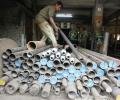
China posted the sharpest increase in output for 15 months, while India saw the steepest expansion since February 2013.

India's manufacturing sector activity remained broadly flat in June as new orders declined for the first time in over four years and power cuts and fragile economic conditions weighed on the sector's performance, an HSBC survey said.
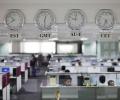
Strong new business growth was the primary factor.

Meanwhile, outlook for global emerging markets remained relatively weak in September.

India's private sector activity contracted further in August, reflecting faster contractions of both manufacturing and services output, amid decline in new orders and tough economic conditions.
.jpg)
The subdued labour market is likely to recover.

In the offshore non-deliverable forwards, the one-month contract was at 62.26/36, while the three-month was at 62.83/93.

According to bankers and economists, there is room for further rate cut by the RBI as retail and wholesale inflation rates have remained benign.

The market breadth in BSE remains positive with 1,554 shares advancing and 1,196 shares declining.
After contracting for 3 consecutive months, manufacturing activity saw an uptick in November, latest data from the HSBC Purchasing Managers' Index shows.

The pace of economic growth in emerging markets continued to revive from the stagnation seen earlier in the year.

The 30-share Sensex ended down 538 points at 26,781 and 50-share Nifty ended down 152 points at 8,067.

Markets shrugged off RBI's neutral stance on key policy rates.

Although the country's manufacturing growth rate fell to its lowest in over four years last month, the export orders picked up and both input and output inflation eased, as per a monthly Purchasing Manager survey conducted by HSBC India and financial information provider Markit.

Markets recorded their biggest single-day fall since August 1 amid growth concerns in the euro zone.
The improvement, coupled with the positive findings of Monday's survey on Indian manufacturing, augurs well for Asia's third-largest economy, which grew at a higher-than-expected 4.8 per cent annual rate in the three months through September.
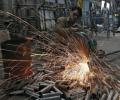
Manufacturing growth in India lost momentum in February.
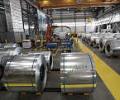
Recent reform measures announced by the government expected to boost the sector.

Although growth picked up slightly across the world's main emerging markets on an average, rates of expansion remain subdued

The HSBC Manufacturing Purchasing Managers' Index fell to 51.3 in April from March's 52.1

Factory growth picked up in May.

Sensex closed 63.82 points higher at 26,851.05 in Muhurat trading; Nifty rises 18.65 points to end at 8,014.55.

The new orders sub-index, which includes domestic demand as well as orders from abroad, rose to 53.2 in May
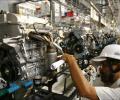
The index monitoring new business fell to a six-month low of 51.6 from March's 53.5, prompting some firms to cut jobs.
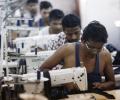
That prompted manufacturers to add jobs for the first time since June.
The survey showed firms passed on a greater cost burden to consumers. Prices charged rose at their fastest pace since October.

Earning numbers of blue-chips, including ITC and SBI, due tomorrow.

Services sector slowed down in May on weak economic factors.
