
'They are attacking my wife; they are attacking our 13-month-old daughter. They are saying that I do drugs.' 'I'm giving an open challenge to Mr Nawab Malik and Ms Sana Malik let's go to the labs and let's do the medical test of our family and your family.'

The government is keen on getting global oil majors like Saudi Aramco and National Iranian Oil Corp on board Hindustan Petroleum and Bharat Petroleum through the market route even though privatisation of the state-run oil refining and marketing compa

An HPCL-led consortium had put the project on hold in 2009.
The official, who did not wish to be identified, said the government will wrap up the stake sale in HPCL by November.\n\n
A day ahead of a crucial meeting of the Cabinet Committee on Divestment, Defence Minister George Fernandes said he favoured public sector units like Oil and Natural Gas Corporation to be allowed to bid for HPCL.

The Western Ghats Ecology Expert Panel report, submitted by ecologist Madhav Gadgil last year, was further delaying the Rs 30,000-crore (Rs 300-billion) refinery project of Hindustan Petroleum Corp Ltd (HPCL) in Maharashtra, a senior official of the state-run oil marketing firm said. The project has already been delayed due to bureaucratic red tape.
The process of divestment of HPCL and BPCL, the two public-sector oil companies, would not be set in motion till the Lok Sabha has discussed the issue, Union Petroleum Minister Ram Naik said on Saturday.
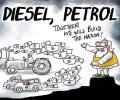
Petrol and diesel prices are unlikely to be increased despite firming raw material costs because of upcoming general elections next year, Moody's Investors Service said. Three state-owned fuel retailers -- Indian Oil Corporation (IOC), Bharat Petroleum Corporation Ltd (BPCL) and Hindustan Petroleum Corporation Ltd (HPCL) -- which control roughly 90 per cent of the market, have kept petrol and diesel prices on freeze for a record 18 months in a row. This is despite the raw material (crude oil) cost surging last year, leading to heavy losses in first half of 2022-23 fiscal year before easing oil prices propelled them to profitability.

'He was the best court craftsman that I have ever seen who could modulate his arguments in accordance with the judge and the mood.'
The government has asked Supreme Court not to stay the privatisation of public sector oil majors -- Hindustan Petroleun Corporation and Bharat Petroleum Corporation
Public sector Hindustan Petroleum Corporation is planning to invest $1.5 billion in its petrochemical complex project, featuring refinery, naphtha cracker and aromatic plant.

The post-Covid pandemic boom in corporate revenues appeared to have faded away in 2023-24. Yet, companies have reported a sharp recovery in their profits in FY24, driven by high margins. Their combined net sales, including gross interest income for lenders, rose by a modest 4.8 per cent year-on-year (Y-o-Y) in FY24.
Government will retain veto powers in crucial decisions even after the privatisation of oil refiner Hindustan Petroleum Corporation Ltd through special clauses in the sale agreement.
Arun Shourie, Union Minister for Divestment, said that the next meeting of the Cabinet Committee on Divestment would discuss the sell-off modalities of HPCL and BPCL.
Attorney General Soli Sorabjee has said the sale of stakes in two state-run oil refiners does not need parliamentary approval.
Petroleum Minister Ram Naik said on Wednesday that he would forward to the Cabinet Committee on Divestment the proposals from public sector units under his ministry to bid for Hindustan Petroleum Corporation Ltd after examining individual proposals.
Petroleum Minister Ram Naik said the terms and conditions of the strategic sale of HPCL and and public offer in BPCL would be worked out by a core group of secretaries on divestment.
Low bids caused state oil refiner Hindustan Petroleum Corporation to cancel a rare tender to export the high sulphur fuel oil it usually sells at home, a company source said on Monday.\n\n\n\n
Hindustan Petroleum Corporation Ltd will invest over Rs 900 crore (Rs 9 billion) on expansion and modernisation of its retail network in 2006-07, Petroleum Minister Murli Deora said on Tuesday.

The top 100 companies have accounted for 63% of the gains (Rs 51 trillion out of Rs 81 trillion), while firms beyond the top 100 have contributed 37 per cent (Rs 30 trillion).
Indian Oil Corporation (IOC) on Tuesday reported halving of its March quarter net profit largely because of losses in the petrochemical business and shrinking margin after it announced a pre-election fuel price cut despite rising input costs. The net profit of Rs 4,837.69 crore in January-March compared to Rs 10,058.69 crore a year back and Rs 8,063.39 crore in the preceding October-December quarter, according to a stock exchange filing by the company.
Hindustan Petroleum Corporation Ltd has paid Rs 103.84 crore (Rs 1.04 billion) to the government as 60 per cent interim dividend for 2003-04.
Attorney General Soli Sorabjee is likely to give by Friday his opinion on legal aspects of divestment of oil PSUs HPCL and BPCL, which were nationalised through Acts of Parliament.
Hindustan Petroleum Corporation on Saturday reported a net loss of Rs 22.14 crore (Rs 221.4 million) for the second quarter ended September 30, 2005 as against a net profit of Rs 294.31 crore (Rs 2.94 billion) in the quarter ended September 30, 2004.

Capital expenditure (capex) by 54 large central public sector enterprises (CPSEs) and five departmental arms with an annual capex target of Rs 100 crore and above has reached around 42.5 per cent of their annual target of about Rs 7.33 trillion in this financial year so far, a senior official from the Ministry of Finance told Business Standard. "The Centre is pushing the big public undertakings in the infrastructure and refinery sector to achieve 90 per cent of their target by the end of the third quarter," he said. The capex by this group of CPSEs stands at around Rs 3.1 trillion in the April-August period so far.
Hindustan Petroleum Corporation Ltd will invest Rs 1,040 crore (Rs 10.40 billion) in 2004-05 in its refineries and pipeline projects to attain organic growth, the Lok Sabha was informed on Thursday.
Oil and Natural Gas Corporation is likely to buy 16.9 per cent stake of Hindustan Petroleum Corporation in loss-making Mangalore Refinery and Petrochemicals for close to Rs 550 crore.\n\n
Global oil prices have slumped and India has access to larger amounts of discounted Russian crude oil, yet refiners are not passing on their savings to consumers

The fire broke out at 4 pm and was brought under control after some time. The exact cause of the accident could not be ascertained, HPCL officials said.
While prices sustaining lower levels is crucial, Govt actions are also a key monitorable given the forthcoming elections in 2024.
India's crude oil imports from Russia fell for a second straight month in January to its lowest in 12 months but the nation's insatiable appetite for Russian crude remains for the long term, according to data from energy cargo tracker and industry officials. Russia supplied 1.2 million barrels per day of crude oil to India in January, down from 1.32 million barrels in December and 1.62 million barrels in November 2023, according to data from energy cargo tracker Vortexa. Russia however continues to remain India's top oil supplier, accounting for a little less than a quarter of 4.91 million barrels a day of oil that the world's third largest energy consumer imported in January.
Notwithstanding the robust turnaround in the financial performance for the June quarter (Q1FY24), stocks of state-run oil marketing companies have been in a downtrend in the last month. The fall comes on a rise in crude oil prices that have surged to a 7-month high of $88 a barrel. A busy political calendar in the months ahead that may see the government keep a lid on auto fuel prices is also a dampener, analysts said. Shares of Hindustan Petroleum (HPCL), Bharat Petroleum (BPCL) and Indian Oil (IOC) have shed 9-11 per cent since their respective earnings announcement between July 26 to August 4.

The entire flight -- from take off to landing -- was fully autonomous, which means it was on auto-pilot, Omnipresent Robot Technologies Founder and CEO Aakash Sinha said.
Capital expenditure by 54 large central public sector enterprises and five departmental arms, having a capex minimum target of Rs 100 crore, rose 93 per cent year-on-year (YoY) in the April-May period to Rs 1.39 trillion. The National Highways Authority of India (NHAI) and the Railways have started this financial year's capex cycle on a stronger note. In the first two months of FY24, the 54 CPSEs, along with the departmental arms, achieved 19 per cent of their combined budget target of Rs 7.33 trillion, Business Standard has learnt.

Jet fuel or ATF price on Wednesday was cut by almost 6 per cent after four rounds of monthly increases since July, while commercial cooking gas (LPG) rates were raised by a steep Rs 101.5 per 19-kg cylinder in line with international benchmarks. However, the price of domestic LPG - used in household kitchens for cooking purposes - remained unchanged at Rs 903 per 14.2-kg cylinder. Aviation turbine fuel (ATF) price was cut by Rs 6,854.25, or 5.79 per cent, in the national capital to Rs 111,344.92 per kl from Rs 118,199.17, according to a price notification of state-owned fuel retailers.

Investors are showing some interest in the downstream energy cycle. Refiners and marketers, especially the public sector (PSU) oil marketing companies (OMCs) could see a revival of marketing margins. Lower crude oil and gas prices may also improve margins in industries like paints, logistics, synthetic fabrics, plastics, and fertilisers. In the medium-term, however, there could be a supply overhang affecting OMCs as new refining capacities are scheduled to be commissioned, especially in China, and this may lead to a drop in the refining margins as capacity would be surplus to demand until and unless there's a pick-up in global growth.

As oil marketing companies (OMCs) stare at huge under-recoveries, India is facing fuel shortage across the country with states like Rajasthan, Madhya Pradesh, Karnataka Uttarakhand, Gujarat and Haryana being the worst hit. The under-recoveries suffered by OMCs are around Rs 20-25 a litre for diesel and Rs 14-18 a litre for petrol, said sources. Government and state-run companies denied reports of any crisis or supply-side issues on the availability of fuel.
