
The telecom regulator on Friday released a list of 40 "defaulter" principal entities, including large banks like HDFC Bank, SBI and ICICI Bank, that are not fulfilling the regulatory norms on bulk commercial messages despite repeated reminders. Hardening its stance on the issue, the Telecom Regulatory Authority of India (TRAI) warned that defaulting entities should comply with the stipulated requirements by March 31, 2021 "to avoid any disruption in the communication with customers" from April 1, 2021. "As sufficient opportunity has been given to principal entities/ telemarketers to comply with the regulatory requirements and that the consumers cannot be deprived of the benefits of the regulatory provisions any further, therefore it has been decided that from April 1, 2021, any message failing in the scrubbing process due to non-compliance of regulatory requirements will be rejected" by the system, TRAI said in a statement.
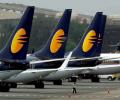
Lenders of bankrupt airline Jet Airways, led by the State Bank of India (SBI), on Thursday told the Supreme Court that successful bidder Jalan Kalrock Consortium (JKC) was "unwilling" to pay the dues and that the "liquidation" was the only option left. The bench led by Chief Justice of India (CJI) DY Chandrachud was hearing the SBI-led consortium plea against the NCLAT's March order upholding ownership transfer of the bankrupt airline to JKC.

Among the Sensex pack, HDFC Bank, ICICI Bank, Kotak Mahindra Bank, Bajaj Finance, IndusInd Bank, Bharti Airtel and Nestle were the biggest gainers. Tata Consultancy Services, Sun Pharma, Infosys and Tata Motors were among the laggards.

NTPC was the top gainer in the Sensex pack, rallying around 4 per cent, followed by Titan, SBI, HUL, IndusInd Bank and UltraTech Cement. NSE Nifty advanced 63.15 points to 15,746.50.

Benchmark Sensex rose by 443 points to close at a new record high while Nifty settled above the 24,100 mark on Monday on buying in banking and IT shares in line with gains in Asian and European markets. The 30-share BSE Sensex settled higher by 443.46 points or 0.56 per cent at an all-time high of 79,476.19.

Among the 30 Sensex firms, Asian Paints, Infosys, JSW Steel, UltraTech Cement, Power Grid, Larsen & Toubro, HCL Technologies and Tata Steel were the biggest laggards. Tata Motors, HDFC Bank, Bharti Airtel, ITC, IndusInd Bank and Axis Bank were the gainers.

The financial numbers for 2023-24 (FY24) of the four pure-play listed asset management companies (AMCs) have enthused the Street. All firms listed robust growth in net profit and revenue both during the January-March quarter (Q4) of FY24, as well as in full FY24. The strong performance comes amid a positive growth environment for the sector, led by tailwinds such as sharp growth in assets under management (AUM) and robust performance in equity offerings.

The US Fed interest rate decision, ongoing quarterly earnings, macroeconomic data and FII trading activity are the major triggers that will drive stock markets this week, analysts said. Investors would also track global market trends and the movement in global oil prices for further cues. "This week, the focus will shift to global cues, particularly the US markets," Santosh Meena, Head of Research, Swastika Investmart Ltd said.
Among the Sensex components, Nestle, Maruti, IndusInd Bank, ICICI Bank, Hindustan Unilever, Larsen & Toubro, Tata Consultancy Services, Infosys, HDFC Bank and Axis Bank were the major laggards. Tata Steel, JSW Steel, Power Grid, Tech Mahindra and State Bank of India were among the gainers.

From the 30 Sensex pack, State Bank of India, Mahindra & Mahindra, Bharti Airtel, Titan, HDFC Bank, IndusInd Bank, Axis Bank and Bajaj Finance were the biggest laggards. JSW Steel, Tech Mahindra, Larsen & Toubro, Hindustan Unilever, HCL Technologies and Reliance Industries were among the gainers from the pack.

HDFC Bank becomes first Indian lender to develop mobile banking app for Apple's latest offering in India.

Among the 30 Sensex companies, Axis Bank, HDFC Bank, ICICI Bank, Kotak Mahindra Bank, IndusInd Bank, State Bank of India, Infosys, Wipro, Tech Mahindra and HCL Technologies were the gainers. On the other hand, Titan, Maruti, Bharti Airtel, Larsen & Toubro, NTPC, Reliance Industries, Bajaj Finance and Power Grid were among the laggards.
India now has three companies in the global top 100 list in terms of market value: Reliance Industries (RIL) ranks 72, Tata Consultancy Services (TCS) is at 86 and HDFC Bank at 99.

He urged employees to work as a team, follow the vision the lender has set out for itself and beat competition.

"The penalty has been imposed in exercise of powers vested in RBI under the provisions of section 47 A (1) (c) read with section 46 (4) (i) of the Banking Regulation Act 1949, taking into account the failure of the bank to adhere to the aforesaid direction issued by RBI," said the central bank in a statement. This action is based on the deficiencies in regulatory compliance and is not intended to pronounce upon the validity of any transaction or agreement entered into by the bank with its customers, the RBI added.

Adani group is on track to surpass a combined Ebitda (earnings before interest, taxes, depreciation, and amortisation) of Rs 1 trillion in the ongoing financial year (FY25) as it prepares for a $2 billion (over Rs 16,700 crore) share sale by its flagship entity Adani Enterprises next month, according to a source close to the matter.

Among Sensex firms, HDFC Bank climbed more than 2 per cent. TCS, Maruti, Infosys, Reliance Industries and Bharti Airtel were among the major gainers. State Bank of India, JSW Steel, ITC, Tata Motors, UltraTech Cement and Nestle were among the laggards.

Here are some golden nuggets when it comes to creating wealth. Read them and if you find yourself saying, 'This everybody knows', cross your heart and ask yourself how many times you have forgotten these simple rules, says P V Subramanyam.
Among the 30 Sensex companies, Mahindra & Mahindra, Power Grid, Sun Pharma, Nestle, UltraTech Cement, NTPC, ITC, ICICI Bank, Titan, Bajaj Finserv, Bharti Airtel, and HDFC Bank were among the biggest gainers. IndusInd Bank, Adani Ports, Tata Steel, Reliance Industries, Axis Bank and Bajaj Finance were among the laggards.

'Credit card debt comes with high interest cost and stringent penalties.' 'If you do not repay on time, the costs balloon.'

Movement in the stock market this week will largely be driven by global trends, macroeconomic data announcements and trading activity of foreign investors, analysts said. Equity benchmark indices, which are on a dream run for the past several days, will also track trading in global oil benchmark Brent crude and movement of rupee against the US dollar. "The next FOMC (Federal Open Market Committee) meeting is scheduled for mid-September, but before that, the market will be closely watching upcoming US economic data.

Housing Development Finance Corporation Ltd on Saturday decided to divest up to 10 per cent of its stake in HDFC Asset Management Company.

Among the Sensex firms, Power Grid, Kotak Mahindra Bank, Tech Mahindra, Bajaj Finserv, ITC, Bharti Airtel, Nestle, NTPC, Bajaj Finance, Reliance Industries, Infosys and HDFC Bank were the major gainers.

Benchmark equity indices Sensex and Nifty slumped over 1 per cent on Friday, tracking a weak trend in global markets and fresh foreign fund outflows. Falling for the third day running, the 30-share BSE Sensex tumbled 1,017.23 points or 1.24 per cent to settle at 81,183.93.
The HDFC bank has bagged the annual Country Awards for Achievement from India conferred by Hong Kong-based publication Finance Asia.
The April-June quarter (Q1) of the current financial year (FY25) may be soft for banks with loan growth moderation, net interest margin (NIM) pressures, and higher staff and credit costs inching up, according to analysts. Credit growth could ease due to the lagged impact of the Reserve Bank of India (RBI) tightening and deposit growth has weakened, and the current account and savings account (CASA) ratio has declined 10-370 basis points (bps) quarter-on-quarter (Q-o-Q) for many banks.

'We have filed a complaint with the police authorities.'
HDFC Mutual Fund on Thirsday completed acquisition of Zurich fund to become one of the largest players in the country.\n\n\n\n

From the Sensex basket, Power Grid, NTPC, JSW Steel, Asian Paints, ITC, Bharti Airtel, Hindustan Unilever and Tata Motors were the biggest gainers. On the other hand, Tata Consultancy Services, Kotak Mahindra Bank, Infosys, Wipro, Mahindra & Mahindra and HDFC Bank were among the laggards.

Dr Nagesh Kumar, one of the three new MPC members, wanted the MPC to reduce the repo rate by 25 basis points to 6.25%.
Benchmark Sensex declined over 45 points in highly volatile trade on Wednesday, tracking weak Asian markets and continuous foreign fund outflows. Declining for the second straight session, the 30-share BSE Sensex fell 45.46 points or 0.06 per cent to settle at 73,466.39. During the day, it went lower by 437.93 points or 0.59 per cent to 73,073.92.

The three day MPC meeting began on Monday and the decision will be announced on Wednesday by RBI Governor Shaktikanta Das.

From the Sensex basket, Maruti, Mahindra & Mahindra, NTPC, JSW Steel, Larsen & Toubro, Reliance Industries, Axis Bank, and Power Grid were the major gainers. Nestle, Wipro, Tata Consultancy Services, HDFC Bank, Titan, HCL Technologies and Infosys were the laggards.

Customers frequently sign without reading the terms and conditions, resulting in a poor understanding of coverage, and eventually leading to partial payouts
It is ranked 7th on the list of world's top-10 consumer finance firms

Private life insurers experienced reasonable growth in the July-September quarter (second quarter, or Q2) of 2023-24 (FY24), and the October data is also encouraging. The individual weighted received premium (WRP) for private players grew by 19.8 per cent year-on-year (Y-o-Y) in October. However, Life Insurance Corporation (LIC) of India had slower growth, pulling the industry growth rate down to 13 per cent Y-o-Y.
Power Grid was the biggest gainer on the Sensex chart, rising 2.54 per cent, followed by Tech Mahindra, Bajaj Finance, NTPC, UltraTech Cement, Larsen & Toubro, Tata Steel, Bharti Airtel, Bajaj Finserv and HCL Technologies. In contrast, Mahindra & Mahindra, Hindustan Unilever, Infosys and Titan were among the laggards.
From the Sensex basket, Asian Paints, Sun Pharma, HDFC Bank, Tata Consultancy Services, Axis Bank, Tata Steel, JSW Steel, Larsen & Toubro, ICICI Bank and Power Grid were the major gainers. Tata Motors dropped over 8 per cent despite reporting over three-fold jump in consolidated net profit at Rs 17,528.59 crore for the fourth quarter ended March 31, 2024. NTPC, Bharti Airtel, Titan, State Bank of India and Nestle were the other major laggards.

After ICICI bank, the largest mortgage lender HDFC has also decided to discontinue the teaser rate scheme that entail cheaper home loans to new borrowers.

Commissions paid to mutual fund distributors (MFDs) increased by over 20 per cent for most large fund houses in 2023-24 (FY24), driven by a sharp market rally and strong inflows. The largest fund house, SBI Mutual Fund (MF), which now manages nearly Rs 10 trillion in assets, paid Rs 2,025 crore to its major distributors - 21 per cent higher than the Rs 1,675 crore payout in 2022-23 (FY23).
