'The solution is to replace, clean up, retest and proceed.' 'There is nothing to worry about if corrected.'

The Indian Space Research Organisation successfully put India's heavy rocket Geosynchronous Satellite Launch Vehicle-Development 5 (GSLV-D5) into orbit from the spaceport at Sriharikota, Andhra Pradesh at 4.18 pm on Sunday.
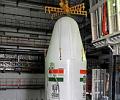
The launch of a Geosynchronous Satellite Launch Vehicle was called off by the Indian Space Reasearch Organisation at the eleventh hour on Monday due to a fuel leak in its second stage -- in a setback to the mission to test its homegrown cryogenic engine -- after its failure three years ago.

The rocket is almost 49 meters high -- as much as a 17-floor building. It weighs 415 tons -- as much as the combined weight of 80 full grown elephants.
Enthused over its successful launch of GSLV D5 with GSAT-14 communication satellite from Satish Dhawan Space Centre in Sriharikota on Sunday, the Indian Space Research Organisation is planning a series of GSLV launches and an experimental launch of the advanced version GSLV Mark III soon from the spaceport.
Boosting India's communication services, its latest satellite GSAT-16 was successfully launched on board Arianespace rocket from the spaceport of Kourou in French Guiana in the early hours of Sunday, after a delay of two days due to bad weather.

It is important for India to develop multiple launch sites and become capable of undertaking more launches in a year's time, says Ajey Lele.
 © 2026 Rediff.com - Advertise with us - Disclaimer - Privacy Policy - Sitemap - Feedback - About us - Terms of use - Grievances