
New data shows India's emissions rising faster than its 2030 targets.

India's per capita green house gas (GHG) emission in 2030 will be well below those in the developed countries in 2005, according to a report.

Among major economies, India in FY23 recorded the steepest increase in greenhouse gas (GHG) emission, climbing 6.1 per cent, with China trailing close behind at 5.2 per cent, according to the United Nations Environment Programme (UNEP) Emissions Gap Report 2024. In contrast, GHG emission decreased in both the European Union (EU) and the United States (US) by 7.5 per cent and 1.4 per cent, respectively. Despite India's rise, its 2023 GHG emission remains relatively low at 4,140 million metric tons of carbon dioxide equivalent (MtCOe) against China's 16,000 and the US's 5,970.

Four big global companies - Bayer, GenZero (a wholly-owned arm of financial major Temasek), Shell and Mitsubishi - have decided to scale up their carbon credit programme in nine states to empower farmers. The credits are generated through the adoption of smart agriculture practices - Alternate Wetting and Drying (AWD) and Direct Seeded Rice (DSR). Since over a year, the project, which was being run on a pilot basis, has positively impacted 10,000 farmers, covering more than 25,000 hectares.

'Battery electric, hydrogen fuel cell and hydrogen ICE, could be the three technologies which have the potential of being zero emission and that are what we will have to work on,'

Consuming more fruits, vegetables, dairy and seafood can actually harm the environment, according to a study.

Software-to-soap maker Wipro Ltd plans to reduce its greenhouse gas footprint by half in the next five years. The Bangalore-based company with significant interests in IT, would reduce GHG intensity to 2.5 tonnes per employee by 2015, according to the company's second sustainability report released recently. The GHG footprint for the India operations of Wipro's IT business stands at 4.79 tonnes per employee.
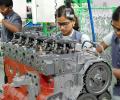
Cummins India will soon start producing fuel-agnostic engine systems at the Tata-Cummins plant in Phaltan in Satara district of Maharashtra, senior officials at Cummins India said. The firm will start limited production by the end of 2023 and mass production will likely begin by 2024, the officials said.

Despite a 187 km, seven-line metro network carrying 2.4 million commuters every day, private vehicles rose 92% over the last 15 years

Petrol doped with 20 per cent ethanol was rolled out on Monday at select petrol pumps in 11 states and union territories as part of a programme to increase use of biofuels to cut emissions as well as dependence on foreign exchange-draining imports. At present, 10 per cent ethanol is blended in petrol (10 per cent ethanol, 90 per cent petrol) and the government is looking to double this quantity by 2025. Prime Minister Narendra Modi launched the higher 20 per cent ethanol blended petrol two months ahead of the planned rollout in April, at the India Energy Week (IEW) 2023 in Bengaluru.

You can do small things and bring about big changes to make your planet live longer...

Proposals are being worked upon at the Copenhagen summit to cut the greenhouse gas emissions in the atmosphere, prominent among which is the use of nuclear energy.
The GHG emissions from the forestry and agriculture account for over 30 per cent of the current annual total emissions. Of this, nearly 17.4 per cent emissions emanate from deforestation and forest degradation and 13.5 per cent from agriculture. Where individual GHGs are concerned, about 50 per cent of the total methane releases come from the farm sector, basically from the paddy fields and livestock.
Delhi Metro is turning more eco-friendly with installation of solar panels for electricity at its headquarters which will prevent 2.35 tonnes of greenhouse gas emissions per year.

India and China seemed to be on the same side at the Copenhagen Climate Summit, while the United States had to gatecrash to join hands.
The United Nations on Wednesday supported India's position on climate change and pulled up the United States for its failure to do enough to curb the green house gas (GHG) emissions.
Foreseen climate changes are likely to affect food production in the country, cutting it down by 10-40%.

Worse still, the cities ranked second, third and fourth for their poor air quality are also in India.

The government must justify why we need to buy foreign reactors when we have developed up to 700 MWe unit-size pressurised heavy water reactors, a design which can be easily extended to 900 to 1000 MWe unit size. Why can't the 'Make in India' philosophy apply to indigenous nuclear reactors, more than 18 of which have been designed, built, and being operated by Indian engineers, asks Dr A Gopalakrishnan.
