
Fino Payments Bank's MD and CEO, Rishi Gupta, has been arrested for violating Goods and Services Tax laws, prompting the appointment of Ketan Merchant as the interim head.
Fino Payments Bank asserts its compliance with GST regulations following the arrest of its MD and CEO, Rishi Gupta, by the Directorate General of GST Intelligence (DGGI). The bank clarifies that the investigation pertains to program managers associated with multiple banks and not the bank's own GST compliance.

Fino Payments Bank (Fino) has become the first such entity to get an in-principle approval from the Reserve Bank of India (RBI) to transition into a small finance bank (SFB).

'There has to be a safe harbour for licensed entities, which have followed all the norms prescribed by the RBI.'

Manish Khera, chief executive officer, Fino, tells Shriya Bubna that the smart card technology platform of Fino can help banks cut operational costs by one-third and MFIs, but connectivity remains an issue.

Payments banks have urged the Union finance ministry to increase their deposit limit for each account to Rs 5 lakh, according to a source who participated in a meeting, chaired by the Department of Financial Services Secretary M Nagaraju, in New Delhi. At present, they can accept deposits of up to Rs 2 lakh.
Mumbai-based FINO, a multi-bank promoted company, is engaged in providing financial and non-financial products and services to the unbanked rural and urban population. It has enrolled 6 million customers since its inception in 2006.

Many high-profile IPOs in India since 2021 have destroyed investor wealth due to overvaluation, weak business models, and post-listing disinterest, turning 1 lakh investments into as little as 3,500.

PB Fintech, the parent of Policybazaar and Paisabazaar, has set a price band of Rs 940-950 apiece for its initial public offering (IPO), which will open on November 1 and close on November 3. The company may be valued at around Rs 44,000 crore, and looking to raise an amount of around Rs 5,826 crore. The IPO comprises a fresh issue of Rs 3,750 crore, along with an offer for sale (OFS) of Rs 1959.72 crore by existing promoters and shareholders.

Payments banks are expecting to get the rights to offer small-ticket loans sometime soon, according to an industry source familiar with the matter. The industry has been in talks with the Reserve Bank of India (RBI) for some time in seeking lending rights.

'Lack of self-control over spending leads to a credit card debt trap.' 'People think they have money and spend using a credit card, but when it's time to pay, they realise they don't have the money.'
RBI's exercise will take into account standards of governance, the viability of the payment bank (PB) business model, and changes, if any, if needed.
Currently, only three have completed more than six months of operation in the space - Fino Payments Bank, Airtel Payments Bank and Paytm

After a month long gap, the primary market is heading for a busy time, with five firms including Paytm parent One97 Communications and policybazaar parent PB Fintech have lined up their IPOs in the first half of November to raise over Rs 27,000 crore collectively. The other three firms whose initial share-sales are set to open are Sapphire Foods India, which operates KFC and Pizza Hut outlets, decorative aesthetics supplier SJS Enterprises and microcrystalline cellulose manufacturer Sigachi Industries. The IPOs of FSN E-Commerce Ventures Ltd, which runs online marketplace for beauty and wellness products Nykaa, and Fino Payments Bank are currently open for public subscription.
Bharti Airtel aims to leverage its 180 million plus digital service customers and its wide presence in rural areas to grow its payment bank business. "We are well placed as we can leverage the 180 million plus customers we have across our digital assets. "We offer a plethora of services such as lucrative interest rates, gift cards, FASTag, telecom recharges, payments and debit cards. "Our large merchant base of more than eight million allows us to drive both engagement and monetisation.

After a stellar November that saw companies mop up over Rs 36,000 crore from the primary market via initial public offers (IPOs) and offers for sale (OFS), the current month, analysts said, will test investor's willingness to stay on with their investments as the one-month mandatory lock-in period for anchor investors begins to loosen. A note by Edelweiss Alternative Research suggests that in calendar year 2021 (CY21), 51 companies went public. Of these, 41 issuances' anchor selling dates are already over.

While a wallet is convenient, payments bank offers interest on deposits and ATM facility.

While payments banks surely lose money, their operating ratios were looking better in 2017-18 compared to the year before. This implies that as customer volumes start picking up, the business models may perk up too, says R Jagannathan.

Snapdeal delivers to the Dharavi centre, where buyers pick up their orders.

Remunerate Business Correspondent Channel to bring sustainability and scalability in the model

This is going to be the lowest price for a Coke product in the non-returnable ready-to-drink category.

Hectic fundraising through IPOs will continue next week, with three firms -- One97 Communications, owner of Paytm; Sapphire Foods India, which operates KFC and Pizza Hut outlets; and Latent View Analytics -- are set to launch their initial share-sales to collectively mop up about Rs 21,000 crore. This comes after five companies successfully concluded their public offerings (IPOs) this week. Those five firms are - FSN E-Commerce Ventures, which runs online marketplace for beauty and wellness products Nykaa; Fino Payments Bank; Policybazaar parent entity PB Fintech; decorative aesthetics supplier SJS Enterprises; and microcrystalline cellulose maker Sigachi Industries.

Priyadarshini Maji evaluates the impact that payment banks are likely to have on your financial life.
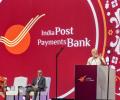
Key questions remain about the operational and financial viability of a completely paperless bank such as India Post, says Mayank Jain.
Biometric cards contain the details of policyholders such as name, age, address and finger prints. Besides helping the customers to pay their renewal premiums, the card will facilitate claim processing. It authorises transactions based on the customer's fingerprints.

The primary market is set for a bumper Rs 80,000-crore bonanza with 30 companies already filing IPO papers to raise Rs 55,000 crore, while around 10 more are lined up for this month itself, seeking to mop up another Rs 25,000 crore, say investment bankers. The market has been on a non-stop rally, hitting new records almost every week, on the back of an influx of investors -- a vast majority of them first-timers -- coupled with a flood of liquidity. Foreign funds alone had pumped in a record $35 billion into the market in FY21, while the trend has continued this fiscal as well. Domestic institutions led by LIC have also infused trillions of rupees, helping woo retail investors in troves -- the year saw over 20 million new investors coming to the market.
Union Bank of India will bring banking services to the doorsteps of over 2.5 lakh hawkers in Mumbai by partnering with their association and FINO Fintec, a micro finance institution.
The Department of Posts was one of the 11 entities to get the in-principle nod from the Reserve Bank of India in 2015 for setting up a payments bank.

The Department of Post, Tech Mahindra, Videocon Group and stock exchange NSE have joined big corporates like Ambanis and Birlas to seek entry into banking business through newly created niche category of Payments and Small Finance Banks.
According to sources, the postal bank will tie up with other banks and financial companies to offer products like loans, mutual funds, and insurance policies to its customers.
.jpg)
SBI will hold 30 per cent in RIL joint venture

Last August, RBI gave in-principle approval to 11 applicants.

Last year, the software giant launched a cloud adoption programme for SMBs.
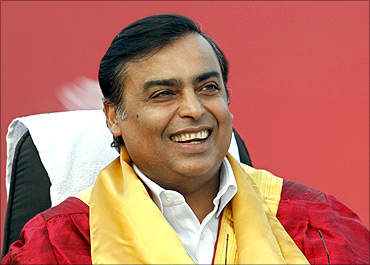
Payments banks will mainly deal in remittance services and accept deposits of up to Rs 1 lakh.
Experts contend that this setback, even if temporary, could put the company at a disadvantage to its competitors in acquiring new customers.

Non-resident individuals (NRIs) have also been allowed to apply for the niche banking licence, provided they plan to return to India.

Sixty-five per cent of the company's sales are coming from Tier II cities and beyond, says the company CEO.
.jpg)
Reliance, Birla Group, Airtel eye small finance banks.

In August, RBI allowed 11 business houses to start a payments bank.
The government plans to transfer all subsidies including food, fertiliser and kerosene, potentially taking direct payments to more than $60 billion.
