
Recently, TPEM's first born electric concept, Avinya broke cover. The model promises a minimum range of 500 kilometres and advanced technology features, aimed at buyers in India and outside. TPEM, the newly formed entity may also consider a separate dedicated sales channel for the EVs with a distinctive corporate identity once the volumes reach a critical mass and throughput is large enough for the dealers to be profitable, said Chandra. Elaborating further on the hiring strategy he said, "We will hire from everywhere-wherever the talent of the required competency is available."
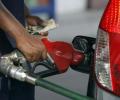
A looming global shortage of diesel in Europe presents India with more than one opportunity to profit from strong margins. A shortage of the fuel, a key contributor to inflation, has been exacerbated by the conflict in Ukraine, and western sanctions on Russian fuel supplies. The slowdown in natural gas supply means the West needs diesel to heat their homes this winter.

If you plan to invest in an FD, go for the 12-15-month tenure. This will allow you to redeploy maturity proceeds at higher rates (if rates rise), advises Sarbajeet K Sen.

Thirteen companies have joined the Rs 1-trillion-plus market capitalisation club this year, so far. This even as the benchmark Sensex has gained less than 3 per cent on a year-to-date basis, underscoring the bullish undercurrent in the broader market. The trend shows a harsh second wave of Covid-19, subsequent lockdowns, and hit to the economic activity has made little dent into India Inc or shareholders' wealth. At the start of the year, there were 29 companies with a market value of more than Rs 1 trillion.

Many years during which monsoons were poor saw high returns, while normal or excess rainfall has also coincided with poor calendar year gains.


Gautam Adani on Tuesday said his ports-to-energy conglomerate never slowed or stopped investing in the country as the group's success is based on its alignment with the India growth story. Speaking at the annual shareholder meeting of the group companies, he said the previously announced $70 billion investment in new energy business will help turn India from being a net importer of oil and gas to an exporter of clean energy. "Never have we walked away from investing in India, never have we slowed our investments," he said. "We believe our scale, our diversified business, and our track record of performance positions us very strongly to continue to perform well in a variety of market conditions."

Markets

A few years ago, when top officials of Indian state-run refiners went to Dubai to negotiate a crude oil supply contract, a senior official from state-owned Saudi Aramco told them, "We can negotiate on anything, but I am the last man standing for you. "Nobody can offer the range of crudes we do with certainty," an official who was part of the negotiating team recalls. Perhaps that explains why Saudi Arabia is less concerned about losing its place as India's premier oil supplier to an upstart like Russia, which emerged from nowhere to become India's biggest crude oil supplier in September and October.

India's current account slipped into a deficit of $9.6 billion or 1.3 per cent of GDP in the September quarter, the Reserve Bank said on Friday. The current account, which records the value of exports and imports of both goods and services along with international transfers of capital, was in a surplus mode both in the quarter-ago and year-ago periods. India's current account surplus had stood at $6.6 billion or 0.9 per cent of GDP in the April-June 2021 quarter, while in the year-ago period (Q2FY22), the surplus had stood at $15.3 billion or 2.4 per cent of the GDP, the data said.

The asset quality of non-banking financial companies (NBFCs) deteriorated in April-September 2021 (H1FY22) owing to the second wave of the pandemic. Their gross non-performing assets (NPAs) rose to 6.8 per cent in September 2021 from 6 per cent in March 2021. The Reserve Bank of India's (RBI's) annual Trend and Progress report (FY21) said the sector might have to grapple with higher delinquencies as and when policy measures unwound. The pandemic posed significant challenges to NBFCs during the first wave (2020) also.

'At current valuations, we believe large-caps offer better downside support.' 'Hence, we are suggesting a small tilt towards them.'

Infrastructure funds, which bet on stocks closely linked with infrastructure development in the country, have emerged as one of the best-performing categories over the past year. They have generated an average return of 90.63 per cent - the third-best, after technology funds and small-cap funds. Of the 21 schemes in the category, seven have given a return of more than 100 per cent in a year.

Mutual funds, as experts and custodians of another set of retail investors' savings, play a speculative game they are neither supposed to nor equipped to do, cautions Debashis Basu.

The move towards indigenisation of defence procurement creates new opportunities for India's military industrial sector. The Government of India (GoI) has so far released five lists of items for positive indigenisation - these should be manufactured in India, rather than imported. Each item on these lists represents an opportunity for some local firm.

Indian companies are expecting generous tax incentives from the Union Budget that will help them invest more in building capacities in the coming years. While the productivity-linked incentives (PLIs) are a good start to spur local manufacturing, the government should also take steps to boost consumer demand, which is not showing encouraging signs, say chief executive officers (CEOs) of India Inc. Statistics released by the Reserve Bank of India (RBI) shows that Indian banks had sanctioned loans worth Rs 75,558 crore in 220 new projects - a record low - in the pandemic-hit financial year ending March 2021. This is not showing any signs of a significant pick up in the last nine months of the ongoing financial year.

Nepal's decision to ban the import of non-essential items amid depleting forex reserves may hit Indian exports. The country's central bank - Nepal Rastra Bank - last week instructed commercial banks not to open letters of credit (LCs) for importing non-essential items. This is to prevent further decline of the country's foreign exchange reserves. However, it has not issued any formal communication yet.

In the past 10 trading sessions, shares of the state-owned company have shot up more than 50 per cent.

Bajaj Finance was the top laggard in the Sensex pack, plunging around 6 per cent, followed by IndusInd Bank, SBI, M&M, Axis Bank, Bajaj Auto and ICICI Bank. NSE Nifty sank 229.55 points to 14,637.80.

The country's first ever carmaker, Hindustan Motors, is looking at a second coming. Talks are on for a joint venture with a European auto company focused on the electric vehicle (EV) space. A memorandum of understanding (MoU) has been signed and due diligence is expected to start shortly and will take 2-3 months to conclude.
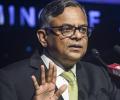
The 14 listed Tata group companies in which Tata Sons holds a stake are paying out a record Rs 35,441 crore to their shareholders by way of dividends and share buyback for FY21.
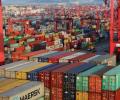
Uncertainty looms over India's export outlook, with the new Covid-19 variant Omicron spreading rapidly across the country's key shipment destinations. With the US and parts of Europe witnessing more than 100,000 Covid-19 cases a day, exporters expect some disruption. However, there may not be an immediate decline in exports from India because the order books remain strong at least for the next few weeks, they said.

Without exception, the top four majors beat Street estimates across all parameters - revenues, profitability, or net profit growth. However, what stood out were the large deal wins reported by the big two, TCS and Infosys.

Despite the demonetisation of 2016 and the rise in digital transactions that followed, the economy's dependence on cash has remained as high as ever. So when the Reserve Bank of India (RBI) introduced a pilot project of its version of digital cash - called the central bank digital currency (CBDC) - on December 1, many questions were asked. Can the CBDC replace physical cash, even partially? Can it match cash in terms of convenience? Are CBDC transactions truly anonymous?
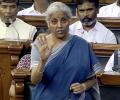
India is facing no risk of recession or stagflation as macroeconomic fundamentals of the economy are strong, Finance Minister Nirmala Sitharaman said on Monday. Replying to a debate on price rise in the Lok Sabha, she said the GST collection and Purchasing Managers' Index (PMI) are indicating that the Indian economy is getting more robust. The GST collection rose 28 per cent to touch the second-highest level of Rs 1.49 lakh crore in July. GST, introduced in July 2017, touched a record high of Rs 1.68 lakh crore in April 2022.

The third-quarter financials didn't excite market watchers. But equity investors can still make money if they invest in the right stocks.

'With the ease of access, we have seen an increased participation from tier-2, tier-3, and tier-4 cities/towns.'

India's economic growth slowed to 8.4 per cent in the second quarter of 2021-22, mainly due to waning low base effect, official data showed on Tuesday. The GDP growth in April-June quarter this fiscal stood at 20.1 per cent. The Indian economy had contracted by 24.4 per cent in April-June last year.

'Slower-than-anticipated recovery can be a bigger risk this time than a liquidity-driven event -- at least for India.'

India's budget for the fiscal beginning April focuses on giving a boost to the ongoing economic recovery through a sharp increase in capex spending but is short on major growth-enhancing structural reform announcements, Fitch Ratings said Wednesday. The deficit targets present in the Union budget 2022-23 by Finance Minister Nirmala Sitharaman on Tuesday "are a bit higher than our forecasts when we affirmed India's 'BBB'/Negative sovereign rating in November," said Jeremy Zook, director and primary sovereign analyst for India, Fitch Ratings. While it was widely expected that the fiscal deficit will be lower than the targeted 6.8 per cent of the GDP in the current fiscal year ending March 31, 2022, Sitharaman put the number at 6.9 per cent.

'Spends are likely to increase from the current levels because recovery is yet to fully be over.'
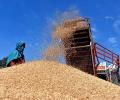
A decision to tap the 30 countries for exporting wheat was taken at a meeting of the commerce ministry on Thursday.

IndusInd Bank was the top gainer in the Sensex pack, rallying over 7 per cent, followed by SBI, ICICI Bank, HDFC twins, Axis Bank, Bajaj Finserv and UltraTech Cement. NSE Nifty soared 245.35 points to 14,923.15.

Richest Indian Gautam Adani's ports-to-power-to-cement conglomerate is "deeply overleveraged" with the group predominantly using debt to invest aggressively across existing as well as new businesses, CreditSights, a Fitch Group unit, said on Tuesday. In a report titled 'Adani Group: Deeply Overleveraged', CreditSights said, "In the worst-case scenario, overly ambitious debt-funded growth plans could eventually spiral into a massive debt trap, and possibly culminate into a distressed situation or default of one or more group companies." Starting out as a commodities trader in the late 1980s, the Adani group has diversified from mines, ports and power plants into airports, data centers and defence.

Despite a massive underperformance at the bourses since the last six months, analysts are turning optimistic on Reliance Industries (RIL). Those at Jefferies, for instance, say that the company is a proxy play for India's consumption growth story. The key catalysts for the stock, according to a Jeffries note, include faster-than-expected market share gain in retail, oil-to-chemicals (O2C) stake sale, recovery in gross refining margins (GRM), potential public listing of Jio and even a possible banking licence going ahead. That apart, analysts feel any tariff hike in Reliance Jio (RJio) - its telecom venture - will also aid performance. With balance sheet adequately de-levered, proceeds from a strategic stake sale in the O2C business will create a sizeable war chest for the company, analysts say.

Over the past decade, a change in consumer choice swept through the battery industry - the walkman lost its mojo, smartphones took over cameras and batteries were tucked away in remotes and wall clocks that hardly needed frequent call-ups. The result: Brand Eveready lost mind space. And the company's attempt to stick to the on-ground marketing activities didn't quite help. But Eveready, now at the cusp of change, is putting things right - a new Give Me Red television commercial has been launched after a gap of 7 years featuring an empowered bride ski-diving to her wedding venue. The creative, according to Eveready sources, is in sync with the brand doctrine.
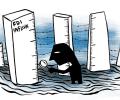
Foreign direct investments into the country is on the rise, jumping to $12.1 billion in May this year, Commerce and Industry Minister Piyush Goyal said on Monday. He also said the government is working on a mission mode to achieve exports target of $400 billion in 2021-22. "India has received the highest ever FDI inflow in 2020-21. "It surged by 10 per cent to $81.72 billion and FDI during May 2021 is $12.1 billion, i.e. 203 per cent higher than May 2020," he said while addressing a meeting of different industry associations on promoting exports.

The finance ministry on Friday said advance tax collection increased by 53.50 per cent to Rs 4.60 lakh crore so far this fiscal year, indicating recovery in the economy. Direct tax collections for 2021-22, as on December 16, show that net collections are at Rs 9.45 lakh crore compared to Rs 5.88 lakh crore over the year-ago period, representing an increase of 60.8 per cent, the ministry said in a statement. "The net collection (as on December 16) in FY22 has registered a growth of 40 per cent over the corresponding period of previous year when the net collection was Rs 6,75,409.5 crore, and a growth of 40.93 per cent over the corresponding period of 2018-19 when the net collection was Rs 6,70,739.1 crore," it said.
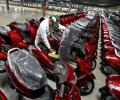
What has hit sentiment further is a draft proposal by the government to increase vehicle insurance premiums for financial year 2022-23 (FY23). Third-party motor insurance premiums have not been increased over the last two years and if this is approved, insurance costs for specific segments could rise by a fifth. The worst impacted is the 350cc and above two-wheeler segment, where premiums are up 21 per cent. Royal Enfield (Eicher Motor) is the market leader in the segment. The premiums in the 150-350cc two-wheeler category are also being inc

'Re-evaluate your career goals and be ready to embrace challenges. ' 'Work thoroughly on your resume by highlighting the key skills and major areas of work.' 'Check and apply for jobs posted by employers regularly.' 'Stay positive.'
