
Small-cap stocks raked in big gains in fiscal 2021-22 by giving up to 36.64 per cent returns, outshining the bigger benchmark gauge and experts believe that they may continue to outperform in FY23. Markets faced many headwinds in the latter part of the last fiscal with the emergence of geopolitical tension, inflation concerns and FII selling. Analysts said that the first half of the last fiscal was very good, while the market entered into consolidation in the second half, combined with high volatility.

The Centre could better its fiscal deficit at 6.6 per cent of GDP in this financial year on stronger-than-expected revenue buoyancy, even if the budgeted disinvestment target is not met, Fitch Ratings has said. The international rating agency had last week kept the sovereign rating unchanged at 'BBB-' with a negative outlook, and said that the risks to India's medium-term growth outlook are narrowing with rapid economic recovery from the pandemic and easing financial sector pressures. In an email interview with PTI, Fitch Ratings Director (Asia-Pacific Sovereigns) Jeremy Zook said the two key positive triggers that could lead to a revision of the outlook to stable are implementation of a credible medium-term fiscal strategy to lower debt burden and higher medium-term investment and growth rates without the creation of macroeconomic imbalances, such as from successful structural reform implementation and a healthier financial sector.

Indian companies are generating more cash than ever. The net cash flow from listed firms' operations hit a new high of Rs 11.1 trillion in financial year 2023-24 (FY24), crossing the Rs 10-trillion mark for the first time, according to the Centre for Monitoring Indian Economy (CMIE) data going back to 1990-91. The FY24 figure represents a 19.3 per cent jump over the previous year, even as quite a few companies are yet to release their numbers.

With decline in number of fresh COVID-19 cases and easing of restrictions, the country's gross domestic product (GDP) will grow at 8.5 per cent in FY2021-22, according to credit rating agency Icra Ratings. It expects the gross value added (GVA) at basic prices (at constant 2011-12 prices) to grow at 7.3 per cent in FY2022. "The impact of the second wave of COVID-19 and the ensuing state-wise restrictions was seen across a variety of high frequency indicators in April-May 2021.

The October-December quarter (Q3FY25) results of fast moving consumer goods (FMCG) major Hindustan Unilever (HUL) indicated weak demand, with urban growth muted and rural showing recovery. Consolidated revenue grew by 1.6 per cent (volume was flat) to Rs 15,818 crore, due to price hikes. Prices of key raw materials such as palm oil and tea remained elevated, leading to compression of gross margin.

India's economy contracted by 7.3 per cent in fiscal 2020-21. The pandemic, it said, will leave new economic scars and deepen pre-pandemic constraints.

The stocks are largely from sectors such as chemicals, finance and cement, which struggled earlier but the worse seems to be behind them.

Reserve Bank of India (RBI) Governor Shaktikanta Das said on Friday said the central bank has developed an innovative artificial intelligence and machine learning (AI/ML) based model MuleHunter.ai to address the growing issue of mule bank accounts that are often used for committing financial fraud. Developed by the Reserve Bank Innovation Hub, the new initiative is piloted with two public sector banks.

Not all listed companies above a threshold have spent on corporate social responsibility (CSR) in the way they were required to do. The aggregate unspent amount in 2022-23 (FY23) stood at a five-year high of Rs 1,475 crore. In FY23 listed companies spent Rs 15,602 crore while the amount to be expended was Rs 15,787 crore, according to the data from corporate tracker primeinfobase.com.

The economic growth may have slowed to 3.5 per cent in fourth quarter of 2021-22 from 5.4 per cent in the previous three-month period due to the impact of higher commodity prices on margins, decline in wheat yields and on higher base, Icra Ratings said on Monday. The agency said the hiccups in the recovery of the contact-intensive services attributable to the third wave of Covid-19 in the country may have also affected the economic growth in the quarter. Even the gross value added (GVA) at basic prices (at constant 2011-12 prices) in Q4 FY2022 seems to have eased to 2.7 per cent from 4.7 per cent in Q3 FY2022, it said.

Using the debt-to-GDP ratio as a fiscal anchor aligns with efforts to promote fiscal transparency through proper disclosure of off-budget borrowings.

Reserve Bank of India (RBI) on Friday said its board has approved a dividend payment of Rs 30,307 crore to the government for the financial ended March 2022. The board approved the transfer of Rs 30,307 crore as surplus to the central government for the accounting year 2021-22 while deciding to maintain the Contingency Risk Buffer at 5.50 per cent, RBI said in a statement. The decision on the dividend payment was made in the 596th meeting of the Central Board of Directors of RBI, headed by Governor Shaktikanta Das, held on Friday.

A BEST electric bus, traveling at a speed of 46 kmph, collided with a crowd in Kurla, Mumbai, killing seven people and injuring 42 others. The driver, Sanjay More, has been arrested for reckless driving. The accident has raised concerns about speed limits and training for drivers of automatic transmission buses.
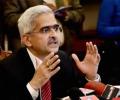
He said the impact of the second wave of COVID-19 has waned by August,and economic growth will be better from the second quarter onward on a sequential basis. Speaking at an event organised by The Indian Express and Financial Times, Das said the RBI has decided to give more emphasis on growth because of the pandemic and operate in the 2-6 per cent inflation band set by the government for it. The central bank will seek to gradually move towards achieving the 4 per cent target over a period of time, he said, adding that the possibility of a sustained increase in inflation is unlikely.

Hit by the third wave of the COVID-19 pandemic and soaring fuel prices, airlines are flying towards record losses with a likely loss of a whopping Rs 20,000 crore for the full fiscal year, warns a report. The airlines are flying towards their steepest-ever net loss of over Rs 20,000 crore this fiscal, which will be 44 per cent more than Rs 13,853 crore they bled last fiscal, Crisil said in a report. This will push back the industry's recovery beyond fiscal 2023, the report based on three large listed airlines--Indigo, Spicejet, and Air India--which together command 75 per cent of the domestic traffic, warned.

Of the total 199 small and medium enterprises (SMEs) listed this year so far, 22 had an issue size of less than Rs 10 crore, which the Securities and Exchange Board of India (Sebi) will no longer allow in the listed ecosystem after its recent consultation paper. The market regulator on Tuesday proposed an overhaul of the rules governing the initial public offerings (IPOs) of SMEs and corporate governance norms for listed SMEs, following concerns over 'systemic risk' seen in the ecosystem with instances of fund diversion and price manipulation.

The BJP declared a total income of Rs 1917.12 crore during 2021-22 and spent Rs 854.467 crore or 44.57 per cent of it.

Auto manufacturers have focused on launching CNG variants of their popular models to meet consumer demand for vehicles with lower running costs.

After a successful tie up in traditional ICE and strong hybrid models, Suzuki and Toyota are now set to take their partnership to the next level: the electric vehicle segment. Both the Japanese auto giants recently announced a plan to produce Suzuki eVX-based SUV which will be sold under Toyota brand across the globe. This electric SUV, bearing Toyota's logo, will go for production at Suzuki Motor Group (SMG) facility in Hansalpur, Gujarat beginning the spring of 2025, marking the first EV launch for both companies in India.

'Peninsular Indians could ask 'Why should we contribute half of India's tax revenues if we account for only a quarter of the seats in the Lok Sabha?'.' 'The rest of the country seems likely to counter that 'democracy means one vote per person irrespective of where that person resides in India'.' 'With no easy answers to this thorny debate, the south's economic ascendancy could end up creating a Hobson's choice.' A revealing excerpt from Nandita Rajhansa and Saurabh Mukherjea's book, Behold the Leviathan: The Unusual Rise of Modern India.

If there is a decline in the number of Indian students pursuing higher studies in Canada due to the ongoing diplomatic tensions between the two countries, it may have implications for Indian banks operating in the North American country, senior bank officials said.
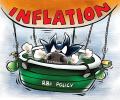
The Reserve Bank of India on Friday raised the retail inflation forecast for 2021-22 to 5.7 per cent due to supply side constraints, high crude oil and raw materials cost. The RBI in June had pegged the retail inflation estimate at 5.1 per cent for the current financial year. The RBI has the mandate to keep inflation in a band of 2-4 per cent, with a tolerance level of 2 per cent on either side.

Finance Minister Nirmala Sitharaman on Monday said the government estimates fiscal deficit of 6.8 per cent of the gross domestic product (GDP) in the next financial year beginning April 1. However, the fiscal deficit in 2020-21 is estimated to soar up to 9.5 per cent due to rise in expenditure on account of the outbreak of COVID-19 and moderation in revenue during this fiscal year.

Ratings agency ICRA on Wednesday revised downwards growth forecast for the domestic passenger vehicles industry to 8-11 per cent in the ongoing fiscal from the earlier estimate of 14-17 per cent on account of the ongoing semiconductor shortage. Similarly, for the two-wheeler segment, it said the volumes are expected to contract by 1-4 per cent in FY2022 against an earlier prediction of 6-8 per cent growth as affordability and demand sentiments of target clientele was hit sharply by the second wave of COVID-19 pandemic. With around 5 lakh units of production lost by various automakers in the passenger vehicles segment due to the semiconductor shortage, ICRA said the earnings loss for the OEMs (Original Equipment Manufacturers) could be around Rs 1,800 crore to Rs 2,000 crore for the ongoing fiscal.

Having seen a rapid growth in demand for frontline workers in FY22 with the economy opening up, the growth seems to have muted in FY23 due to macroeconomic challenges. According to BetterPlace's Frontline Index Report, total demand for frontline jobs decreased by 17.5 per cent. In FY23, 6.6 million frontline jobs were created in India as compared to 8 million in FY22.

The Indian economy can contract by 7.7 per cent in current financial year ending on March 31 and the growth could be 11 per cent in the next financial year, according to the Economic Survey tabled in Parliament by Finance Minister Nirmala Sitharaman. The contraction in FY21 is mainly due to coronavirus (Covid-19) pandemic and the visible damage caused by the subsequent countrywide lockdown to contain it. The survey unveiled two days before the Union Budget is broadly in line with forecasts by the Reserve Bank of India (RBI) which has said it expected the country's GDP to contract by 7.5 per cent in the year ending March 31.

S&P Global Ratings on Tuesday kept India's economic growth forecast in the fiscal year to March 2022 unchanged at 9.5 per cent but raised its predictions for the subsequent year on broadening out of the recovery. The Indian economy had shrunk by 7.3 per cent in 2020-21 fiscal (April 2020 to March 2021) as pandemic induced restrictions battered business activity. The gradual lifting of the restrictions has helped the economy to rebound from pandemic lows.

Largest software exporter TCS will be hiring more than 40,000 freshers from campuses in the country in the financial year 2021-22 , a top executive said on Friday. The company, the largest employer in the private sector with a base of over 5 lakh employees, had hired 40,000 graduates from campuses last year and will do better on that number, its chief of global human resources Milind Lakkad told reporters in Mumbai. He said the COVID pandemic-related restrictions do not pose any difficulties in hiring and added that last year, a total of 3.60 lakh freshers had appeared for an entrance test virtually.

'India's top companies currently lack the organisational wherewithal to hire and train 2 million interns annually, given their current scale of operations and existing employee base.'

The Indian IT industry will stage a "strong recovery" in 2021-22 with a revenue growth of up to 11 per cent, ratings agency Crisil said on Wednesday. The recovery will be led by increasing outsourcing and accelerating digital transformation services mainly in sectors such as banking, financial services and insurance (BFSI), healthcare, retail and manufacturing, it said. As per Nasscom, the IT services industry grew 2.7 per cent to $99 billion in 2020-21.

India's collection from tax on personal and corporate income jumped over 48 per cent in the current fiscal after a 41 per cent surge in advance tax payments, mirroring sustained economic recovery in a year that witnessed two waves of coronavirus infections. Net collections of direct taxes until March 16, 2022, in the fiscal year that started on April 1, 2021, stood at Rs 13.63 lakh crore compared to Rs 9.18 lakh crore in the same period a year back, an official statement said. The net collections in direct taxes, which is made up of income tax on individual income, corporation tax on profits of companies, property tax, inheritance tax and gift tax, in the current fiscal is 35 per cent higher than the collection of Rs 9.56 lakh crore in the pre-pandemic year of 2019-20 (April 2019 to March 2020).

India's economy is moving towards a higher growth trajectory and is likely to grow at around 10 per cent in 2021-22, Economic Advisory Council to the Prime Minister (EAC-PM) chairman Bibek Debroy said on Wednesday. "I am confident that we are on a path towards a higher growth trajectory, higher poverty reduction, higher employment, and a prosperous, more developed and better governed India. "I think it is, more or less, agreed that the real rate of growth this year (FY2022) is going to be around 10 per cent," Debroy said at an SBI event. At the beginning of FY2021-22, the forecasts for real growth were in the 8.5-12.5 per cent range, he noted.

S&P Global Ratings on Thursday cut India's growth forecast for the current fiscal to 9.5 per cent, from 11 per cent earlier, and warned of risk to the outlook from further waves of COVID pandemic. The agency lowered the growth outlook saying that a severe second COVID-19 outbreak in April and May led to lockdowns imposed by states and sharp contraction in economic activity. "We forecast growth of 9.5 per cent this fiscal year from our March forecast of 11 per cent," S&P said.

India's gross domestic product (GDP) growth slowed to 4.1 per cent in January-March 2022 period, while for the full year 2021-22 the growth stood at 8.7 per cent, according to the government data released on Tuesday. GDP at constant (2011-12) prices in Q4 2021-22 is estimated at Rs 40.78 lakh crore, as against Rs 39.18 lakh crore in Q4 2020-21, showing a growth of 4.1 per cent, as per the National Statistical Office (NSO) data. India's GDP growth has slowed for the third straight quarter.

Flow of money into non-resident Indian (NRI) deposits moderated sharply to $3.23 billion in April 2021-March 2022 from $7.36 billion in the same period of the previous year. Outstanding deposits have also gone down to $139.02 billion at the end of March 2022. This compares to $141.89 billion a year ago, according to Reserve Bank of India (RBI) data.

Temasek is nearing a deal to acquire a 10% per cent stake in Haldiram Snacks Foods, valued at $10 billion.

Honda Cars India (HCIL) net profit dropped by 52.8 per cent year-on-year (Y-o-Y) to Rs 661.4 crore in 2023-24 (FY24), primarily due to deferred tax of Rs 359.8 crore, according to the annual results submitted to the Registrar of Companies (RoC) and reviewed by Business Standard. In FY24, the company's production increased by 16 per cent Y-o-Y to 134,807 units.

IndusInd Bank, Kotak Bank, ICICI Bank, Sun Pharma, Bajaj Finance and Ultratech Cement were prominent gainers. NSE Nifty rose 176.65 points to 14,867.35.


The country's exports in March 2022 rose 19.76 per cent to $42.22 billion on account of healthy performance by sectors such as petroleum products, engineering, and leather, even as trade deficit during the month widened to $18.51 billion. In March 2021, exports stood at $35.26 billion, according to a commerce ministry data released on Wednesday. Last month, imports grew 24.21 per cent to $60.74 billion, it showed. Trade deficit stood at $13.64 billion in March 2021.
