
Sun Pharmaceutical Industries reported a 34 per cent year-on-year (Y-o-Y) jump in net profit to Rs 2,654.6 crore in Q4FY24.

If this turns into reality, India's gross domestic product (GDP) growth will be the lowest since 2012-13, which could severely hit job creation and income growth in the near term.

The Reserve Bank of India's (RBI's) latest order on unsecured loans is set to hit the banking sector's growth in the near-term, cautioned analysts, as they see banks slowing down on aggressive retail lending. Besides, cost of funds for non-banking finance companies (NBFC) is expected to inch up as banks will pass on higher capital charge to NBFCs. "We believe the fallout of the RBI action will be mainly on growth, given the rising dependence on unsecured retail loans and lending to NBFCs for growth.

What is digital house arrest? It is a tactic cybercriminals use to confine victims to their homes and scam them, explains Tamal Bandyopadhyay.

Transactions were allegedly not reported correctly in the tax returns for FY20.

As air travel gathered steam in financial year 2021-22 (FY22) after being restricted the previous year, fewer passengers were affected by flight cancellations. Directorate General of Civil Aviation (DGCA) figures show that there were 40 per cent fewer flyers in FY22 than in FY20, but 60 per cent fewer passengers were impacted by cancellations, and 80 per cent fewer passengers were denied boarding. FY20 was the last financial year when India's booming aviation industry carried out full-scale operations before being completely grounded for a couple of months due to the Covid-19 pandemic.

Several critics including some rating agencies have doubted prospects of meeting this ambitious fiscal deficit target.
The government has utilised 'escape clause' under the FRBM Act which provides it leeway for relaxation of fiscal deficit roadmap during time of stress.

In India, economic activity slowed substantially in 2019, with the deceleration most pronounced in the manufacturing and agriculture sectors, whereas government-related services sub-sectors received significant support from public spending, the Bank said.

A cocktail of heatwave and upcoming cricketing events is expected to usher in the peak season for the country's largest beer maker, United Breweries. The beer maker, which has gained share in some key markets, will be a major beneficiary as April to July is an important period contributing to 40-45 per cent of its annual beer volumes. Going ahead, the T20 Cricket World Cup in June and the ongoing IPL will have a positive impact on volumes and should be able to offset the negative impact of elections on sales, experts believe.
State-owned Bharat Sanchar Nigam Ltd (BSNL) said on Tuesday that as many as 78,569 employees have opted for VRS, and added that it expects to save Rs 1,300 crore in wage bills this fiscal after the scheme becomes effective in January.

As the total number of bank frauds increased from 6,800 in FY19 to more than 13,500 in FY23, the share of private banks in the occurrence went from 34 per cent to 66 per cent.

If you think that revenue officials are going berserk, acting on their own, while the government chants the mantra of 'ease of doing business', you would be wrong. These moves appear to have full official backing, points out Debashis Basu.

Imports too contracted by 28.72 per cent to $31.16 billion. Dip in exports and imports narrowed the trade deficit -- the difference between imports and exports -- in March to $9.76 billion, the lowest in the last 13 months.

Avenue Supermarts, the operator of DMart retail chain, reported good results for the July-September quarter (Q2FY24) with strong earnings before interest before interest, taxes and depreciation (Ebitda) and profit before tax (PBT) growth, but lower PAT due to higher tax incidence. The operating margin improved, and like-to-like store sales growth was strong. Average bill value also increased though this may be a seasonal effect to some extent. Analysts are assuming this means the slowdown in retail may have bottomed out.

ITC was the top gainer in the Sensex pack, rallying over 7 per cent, followed by Reliance Industries, ONGC, Tata Steel, Tech Mahindra, Sun Pharma and SBI. On the other hand, IndusInd Bank plunged nearly 15 per cent. Maruti, Bajaj Finance and Titan were the other laggards.

In the longer-term, analysts expect IHCL to see revenue CAGR of 15 per cent between FY23 to FY25 and Ebitda CAGR of 20 per cent in the same period. Analysts are seeing targets of around Rs 375-Rs 380 for the stock, which is a significant upside from the current Rs 313.

In view of the economic shock caused by the COVID-19 pandemic, Reserve Bank of India (RBI) on Friday asked scheduled commercial banks and co-operative banks not to make any dividends for the financial year ended March 2020. In view of the ongoing stress and the heightened uncertainty on account of the pandemic, RBI said it is imperative that banks continue to conserve capital to support the economy and absorb losses, if any. The decision is based on review of the September quarter financial performance of banks.

Family philanthropy has proven resilient throughout the pandemic and grew to nearly Rs 12,000 crore in fiscal year 2020, accounting for almost two-thirds of the rise in private sector funding since FY19, says a report. According to the India Philanthropy Report 2021, co-created by Bain and Company and Dasra, funding from family philanthropy has tripled its corpus, growing to nearly Rs 12,000 crore in FY 2020. As per the report, in FY 2020, private-sector funding which stems from four sources including foreign, corporate, retail, and high-net-worth individuals (HNIs) or families totalled about Rs 64,000 crore and 20 per cent of this came from family philanthropy. While foreign contributions account for a quarter of all funding, domestic corporation donations also known as Corporate Social Responsibility (CSR) account for 28 per cent and retail investors account for another 28 per cent.

A pick-up in farmer income could have a cascading impact on the rural economy, though agriculture is becoming a smaller part of India's overall rural incomes.

Uttarakhand saw the sharpest decline (of 11 per cent) in the "total persons engaged" in manufacturing in the worst-hit pandemic year of 2020-21 as industrial units shut shop, according to the latest Annual Survey of Industries (ASI) data, released by the Ministry of Statistics and Programme Implementation (MoSPI). This was followed by the decline in the workforce in states such as Jharkhand (8.9 per cent), West Bengal (8.3 per cent), Kerala (8 per cent), and Karnataka (7.8 per cent). The "total persons engaged" in an enterprise is defined as the sum of directly employed workers, supervisory or managerial workers, and the unpaid family members who might be engaged in the enterprise.

The net financial savings of the household sector has moderated to 5.1% of GDP in FY23 from 7.6 per cent in FY20, as households shifted their savings to physical assets amid low interest rates during the pandemic, according to State Bank of India's (SBI) Research report.
The rise in the fiscal deficit, which is a reflection of the government's borrowing, was mainly on account of subdued tax collection. The revenue deficit also rose to 3.27 per cent, up from the revised estimate of 2.4 per cent of the GDP.

Falling incomes and longer winter to translate into lower demand for at least some months.

While there has been a rash of growth estimate cuts, including a 0.70 percentage point reduction by the RBI last month to 6.1 per cent, the Japanese brokerage's estimate is so far the lowest.

While the five years of the Modi government have indeed seen a healthy increase in PSUs' outlay and the Budgetary support for them, the next year's numbers reveal the squeeze in the government's own resources even though it is expecting a much higher dividend income from the PSUs. These do not augur well for the PSUs in 2019-20 and the years ahead, unless these numbers are revisited and, hopefully, revised in the full Budget that will be presented later in July this year, says A K Bhattacharya.
While the five years of the Modi government have indeed seen a healthy increase in PSUs' outlay and the Budgetary support for them, the next year's numbers reveal the squeeze in the government's own resources even though it is expecting a much higher dividend income from the PSUs. These do not augur well for the PSUs in 2019-20 and the years ahead, unless these numbers are revisited and, hopefully, revised in the full Budget that will be presented later in July this year, says A K Bhattacharya.

The fund used to fight the coronavirus pandemic will be spent from CSR funds.

The mutual fund industry's assets under management (AUM) have likely breached the Rs 50 trillion mark following a rally in domestic equities this month. The industry's average AUM stood at almost Rs 48 trillion at the end of October. In November, the Nifty50 index has gained about 4 per cent so far, while smallcap and midcap indices have rallied close to 8 per cent.

Bharti Airtel has quietly narrowed its adjusted gross revenue (AGR) market share gap with Reliance Jio, the country's largest player in the game, in the last three years. Despite Jio's aggressive entry into 4G and now into 5G, Airtel's gap with Jio, which was 6.4 percentage points in Q1 of FY21 and went up to 7.2 percentage points in Q1 of FY22, has fallen to only 4.4 percentage points in Q1 of FY24. Currently, Reliance Jio's AGR market share is 41.6 per cent while Airtel's is at 37.2 per cent.

Over the past year, the National Stock Exchange Nifty FMCG Index, which tracks the market capitalisation of the top 15 companies in the fast-moving consumer goods (FMCG) sector, has surged by 17.3 per cent. In contrast, the Nifty50, a broader market index, has witnessed an 8.8 per cent increase during the same period. The FMCG stocks have also been rally leaders in the current calendar year.

Beside manufacturing, deceleration was also witnessed in sectors like agriculture, construction and electricity, gas and water supply.

In times of global challenges, G-20 presidency gives an opportunity to strengthen India's role in the global order, she added. The government is implementing scheme to supply free foodgrains to poor under Pradhan Mantri Garib Kalyan Ann Yojana (PMGKAY) with expenditure of Rs 2 lakh crore from January 1, the finance minister said.
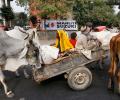
Maruti Suzuki says it has sold at least one car in 418,000 villages.

Artificial Intelligence-first business strategy adopted by Infosys is working well for the company despite unresolved ethical and IPR issues around the technology, Infosys chairman Nandan Nilekani said on Wednesday. In his address at Infosys' 42nd Annual General Meeting, Nilekani said the company can be more efficient while nurturing readiness for growth, given its performance in challenging scenarios created by inflation, interest rates, geopolitics, demand volatility and supply chain dislocations. "Several practical, ethical and intellectual property-related issues, when it comes to AI remain unresolved.

PVR-Inox is in an inherently fickle business. If there is a string of flops, the box office collections will be weak. Conversely, Q2FY24, which witnessed several hits, has brought about an upside in revenues. However, the merger has led to market share gains and synergies that helped bring breakeven down to approximately 20 per cent occupancy.
The Reserve Bank of India (RBI) on Friday said it expects the economy to record positive growth in the second half of the current financial year.

Automotive retail sales saw a 14 per cent rise in March on a year-on-year (YoY) basis, according to data released by the Federation of Automobile Dealers Associations (FADA). For the whole of financial year 2022-23 (FY23), sales grew 21 per cent YoY. For both March and the financial year, all categories, except for tractors, and including two-wheelers, three-wheelers, passenger vehicles (PVs), and commercial vehicles (CVs), posted double-digit growth. However, the total retail sales of 22.1 million for the financial year were still 12 per cent lower than the pre-Covid (FY20) level of 25 million, owing to an 18 per cent dip in the two-wheeler segment.

Edtech major Byju's is learnt to have closed $250 million fundraising from Davidson Kempner Capital and is in the process to close another funding round of $750 million by the end of this month, sources aware of the development said on Friday. The company has raised $250 million at a flat valuation of $22 billion, sources said. "Byju's has successfully closed a $250 million fundraising from Davidson Kempner Capital Management.
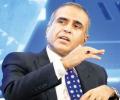
Mittal's salary in 2019-20 was Rs 26.97 crore, unchanged from the previous fiscal year. However the value of perquisites was Rs 99.8 lakh, down from Rs 1.87 crore a year back. His retirement benefits were unchanged at Rs 2.15 crore.
