
Leading private banks in India, including HDFC Bank, ICICI Bank, and Axis Bank, experienced a decline in net interest margins (NIMs) during the second quarter of the financial year due to significant deposit mobilisation under the Foreign Currency Non-Resident (Bank), or FCNR (B), scheme. However, banks anticipate a recovery in margins in the coming quarters as these funds are deployed and the interest-rate cycle supports lending yields.

Indian benchmark indices Sensex and Nifty closed higher for the second consecutive day, primarily driven by robust buying in IT stocks following strong quarterly results and positive global trends. Tech Mahindra notably surged over 8% after reporting a significant jump in net profit.

A new report by TeamLease Digital highlights a significant AI-ready talent gap in India's technology industry, with shortages of 53-60 per cent in Generative AI and cloud skills. The report indicates that only 16 per cent of IT professionals possess AI skills, leading to rising salary premiums for AI-core roles and a projected demand for over 10 lakh GenAI roles by 2026.

A new EY India report highlights how young professionals, women wealth creators, entrepreneurs, ESOP beneficiaries, and digitally active consumers from Tier-2 and Tier-3 cities are fundamentally changing India's wealth ecosystem. This shift is evidenced by increased participation of young and women investors, a rise in disciplined investing via SIPs, and the crucial role of Digital Public Infrastructure in democratizing access to long-term wealth creation. The report predicts over 100 million new investors by 2035.

Suzuki Motor Corporation is set to revolutionise its operations by halving vehicle development times and significantly boosting efficiency by 2030, while committing to a diverse multi-powertrain strategy that includes BEVs, hybrids, and carbon-neutral fuels.

India's cement industry is on the brink of an oversupply situation as aggressive capacity expansion by major players is set to outpace demand growth over the next two financial years, potentially leading to pricing pressures and moderated utilisation rates.

Tewolde Gebremariam, Air India's CEO and MD-designate, has outlined passenger safety, operational reliability, and sustainable profitability as the airline's foremost priorities, emphasising a stronger safety-reporting culture and improved disruption recovery.

State-owned refiners Bharat Petroleum Corporation Ltd (BPCL) and Hindustan Petroleum Corporation Ltd (HPCL) have reported substantial losses for the first quarter of financial year 2026-27 (Q1FY27), primarily driven by a sharp increase in crude oil prices exacerbated by the ongoing West Asia crisis and suppressed marketing margins on petroleum products.

India's leading FMCG companies, including Hindustan Unilever and Dabur, reduced their permanent workforce in FY26, even as most firms in the sector, such as Tata Consumer Products and Marico, increased median employee remuneration, reflecting a mixed trend in staffing and compensation strategies.

'Banking is the only sector that can see double-digit growth in FY27.'

A two-day weekend would help employees recover physically and mentally. They would return better prepared for branch work that demands patience, judgment, and accuracy, asserts Tamal Bandyopadhyay.

A dozen companies, including major players like Jio Platforms and Zetwerk Manufacturing Business, are poised to launch Initial Public Offerings (IPOs) in October, continuing India's strong fundraising momentum in the primary market. These offerings span diverse sectors, reflecting sustained investor interest in businesses with robust growth prospects.

Digital services major Jio Platforms is anticipated to list on the stock exchange by the end of October, with an estimated enterprise valuation of USD 143-146 billion, making it India's largest public offer at around USD 3.8 billion.

Infosys has revised down the upper end of its revenue growth target for financial year 2027 (FY27) to 1.5-3 per cent, from the earlier 1.5-3.5 per cent, attributing the change to persistent macroeconomic uncertainty and a one-time client impact.

Indian stock markets witnessed a significant rebound, with the Sensex rallying 1,109 points and the Nifty closing above 22,720, driven by strong performances in IT and financial sectors, a recovering rupee, and Finance Minister Nirmala Sitharaman's comments on long-term capital gains (LTCG) tax.

UPI transactions saw a 27% volume increase and 20% value increase in the first half of the current fiscal year. Despite a slight moderation in September, the digital payment system is set to implement a 0.4% merchant discount rate on transactions over Rs 2,000, aiming for a sustainable revenue model. Small merchants and person-to-person payments remain exempt, and UPI's global presence continues to expand.

India remains one of the Hyundai Motor group's most important and strategic markets globally. The initiative positions India as a strategic core market for the group's growth, emerging market expansion, and next-generation automotive innovation.

Net SIP inflow is calculated by subtracting redemptions from gross SIP investments.

Sun Pharmaceutical Industries reported a 27 per cent year-on-year increase in consolidated net profit to 2,894.7 crore for Q1FY27, with revenue growing 10 per cent to 15,299.8 crore, driven by strong performance in India and innovative medicines.

Jio Platforms (JPL) is preparing a capex-light strategy to commercially launch 6G services in the early 2030s through software upgrades, rather than fresh infrastructure investments, according to Akash Ambani, managing director of JPL.

Divestment has emerged as a priority for the government following a moderation in direct tax collections.
GE Aerospace is set to significantly increase its supply chain spending in India, targeting USD 400 million by 2030, up from USD 200 million in 2025. This expansion reflects the company's commitment to India's burgeoning aviation market, driven by substantial aircraft orders and the strategic importance of its manufacturing and technology centres in Pune and Bengaluru.

India's government is set to release its draft National Steel Policy for public consultation, aiming for over 600 million tonnes of steelmaking capacity and 500 million tonnes of consumption by 2047. The policy will also introduce a ~5,000-crore scheme to incentivise small steel producers for carbon emission reduction and address challenges like raw material availability and technological dependence.

HCLTech CEO C Vijayakumar's total salary for the financial year 2025-26 surged by nearly 66.9 per cent to $18.13 million, primarily driven by long-term incentives and stock options, placing him at the top among his Indian IT sector peers.

Aditya Birla Group Chairman Kumar Mangalam Birla stated on Tuesday that investments in artificial intelligence should be driven by potential returns, not by a "fear of missing out." Speaking at the 2026 Bloomberg New Economy Forum, Birla indicated that his group would adopt AI more gradually than previously planned, moving away from an "AI arms race" mentality. He also discussed the varied applications of AI across different business sectors, the challenges of capital allocation, and the impact of geopolitical events on global companies.

The Reserve Bank of India (RBI) net purchased a record $18.65 billion in July, driven by inflows from its concessional swap facility, leading to a significant increase in India's foreign exchange reserves.

India's sedan market is experiencing a notable divergence: affordable entry-level sedans are gaining market share, while midsize sedans are seeing a significant decline as buyers increasingly opt for SUVs in higher price brackets.

The Indian coal ministry announced that 147 commercial coal blocks auctioned since 2020 are expected to attract approximately 55,000 crore in capital investment, generate 490,000 jobs, and contribute significantly to state revenues.

Global brokerage Jefferies forecasts a double-digit compound annual growth rate (CAGR) for India's defence spending, estimating a cumulative domestic opportunity of over $60 billion across four years, driven by geopolitical tensions and the government's indigenisation push.

The Goods and Services Tax (GST) Council has announced that Input Tax Credit (ITC) will now be available on health and life insurance policies provided by employers to their employees, a move expected to significantly reduce costs for businesses, especially MSMEs.

RBI Deputy Governor S C Murmu stated that the introduction of merchant discount rate (MDR) on UPI transactions is unlikely to cause a shift back to cash, despite some concerns, emphasising that MDR will help the payments ecosystem recover costs.

The Indian IPO market recorded its highest monthly fundraising in September, with 34 mainboard companies raising 39,309 crore, despite a significant decline in the Nifty 50 index.

L&T Finance reported a robust Q1FY27 with net profit growing 29% year-on-year to 900 crore, driven by strong asset growth and strategic initiatives including accelerating cross-selling, improving productivity, and fostering a technology-first, AI-led culture, alongside significant expansion in gold loans.

Holding-company discounts and losses at key unlisted ventures could weigh on Tata Sons' IPO valuation, though its diversified portfolio may still command a premium.

India's net direct tax collection has surged by 13 per cent to over Rs 12.12 lakh crore by September 17 in the current fiscal year, driven by a significant increase in advance tax payments from corporates, according to CBDT data.

A PL Capital report projects India's LPG subsidy bill to exceed Rs 1 lakh crore in FY27, creating a significant Rs 70,000 crore gap over the Union Budget's Rs 30,000 crore allocation, driven by the government and OMCs absorbing higher fuel and LPG price increases.
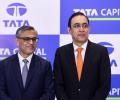
Tata Capital remains confident in its 23-25 per cent growth guidance, driven by strong momentum in Retail and SME segments, despite facing pressures from rising funding costs and potential impacts from new RBI regulations on revolving credit.

Citron, a brand under Stellantis, anticipates that three-fourths of its sales in India will originate from Tier-II, Tier-III, and smaller cities within the next five years, a significant increase from its current 55 per cent, as it expands its retail network beyond major urban centres.

HDFC Bank, India's largest private sector lender, reported a reduction of 3,343 employees in FY26, bringing its total workforce to 2,11,178, even as its balance sheet expanded by 12 per cent. The bank's MD and CEO, Sashidhar Jagdishan, attributed the headcount reduction to redeploying talent from back-end functions to customer-facing roles due to technology-led efficiencies. The annual report also addressed the challenging resignation of part-time chairman Atanu Chakraborty, which raised questions about the bank's governance standards.
A report by IIT-Bombay professors recommends reducing the Merchant Discount Rate (MDR) on UPI transactions from 0.40 per cent to 0.08 per cent. It suggests that banks should fund the UPI ecosystem using their net interest margins from CASA deposits, rather than relying on MDR. The report also addresses transaction costs, credit card MDR, and ATM withdrawal allowances, aiming to ensure UPI's long-term sustainability and public trust by proposing remuneration only from large merchants.
