
Continuing buying interest across the pack helped the Bank Nifty index improve its new high on Tuesday (May 30). The index of banking stocks ended Tuesday's session at 44,436, a gain of 124 points or 0.3 per cent. On Monday (May 29), Bank Nifty hit a new high after a gap of 166 days.

Draft Red Herring Prospectus (DRHP) filing continued to be robust in October, signifying the optimism in the initial public offer (IPO) market despite the recent turbulence in equities. In October, 17 companies filed their offer documents for IPOs. The rush in filings has made August-October 2023 the best three-month period for DRHP filings since July-September 2021.

Rising crude oil prices, traction in China equities and inflation concerns back home are casting a shadow on the Indian equity markets in the short term, believe analysts at Jefferies. They said this could see the markets remaining range-bound in the near term before the next leg up.

Notwithstanding concerns about lofty valuations, smallcaps recorded their most significant monthly gain in nearly three years in November. The National Stock Exchange Nifty Smallcap 100 finished the month with a 12 per cent gain, the most since February 2021 when it rose by 12.2 per cent. After declining by 4.1 per cent in the preceding month, the Nifty Midcap 100 rose by 10.4 per cent, the most since July 2022.

More than half a dozen companies will hit the market with their initial public offerings (IPOs) between now and the end of next week. The cumulative amount raised from these IPOs is expected to be around Rs 8,000 crore. Stationery products firm DOMS Industries and home financier India Shelter Finance's IPOs - of Rs 1,200 crore each - got off to a flying start on Wednesday (December 13), with the former garnering over six times the subscription and the latter getting 1.5 times subscribed.

The sharp rally in the broader markets has propelled India's market capitalisation (m-cap) to a new high. The combined m-cap of all BSE-listed firms rose to Rs 291.9 trillion in intraday trade on Thursday before settling lower at Rs 290.9 trillion. The previous record was on December 14, 2022, at Rs 291.3 trillion.
Eleven companies have launched their initial public offerings (IPOs) in December 2023, making this month the second-best December for public offerings since 1996. Collectively, they are raising Rs 8,182.7 crore this month. In December 2021, 11 companies raised Rs 9,534 crore. However, excluding December 2021, this month marks the best December for IPOs since 1996.

Following the sharp run in markets, valuations across the board have become elevated. The National Stock Exchange Nifty50 Index now trades at a 12-month trailing price-to-earnings (P/E) multiple of 24.3 times, 18 per cent higher than this year's low of 20.5 times. The valuation expansion in the broader markets has been sharper.

Domestic equity markets, which are at record high levels, will be driven by quarterly earnings, global trends and foreign fund movement, analysts said. The movement of rupee and global oil benchmark Brent crude will also be tracked by investors. "The direction of global stock markets, fluctuations in the rupee-to-dollar exchange rate, and movement in crude oil prices will all play a crucial role in influencing the overall market trend.

Among the Sensex firms, PowerGrid, IndusInd Bank, Larsen & Toubro, Nestle, HCL Tech, Axis Bank, Tata Motors, HDFC Bank, Tata Consultancy Services and HDFC were the major winners. Bajaj Finserv, NTPC, Reliance Industries and Kotak Mahindra Bank were the biggest laggards.

The ownership by domestic investors, individual as well as institutional, in companies listed on the National Stock Exchange (NSE) has breached the 25 per cent mark for the first time. The share stood at 25.72 per cent at the end of the March 2023 quarter, up from 24.44 per cent in the previous quarter, according to data from Prime Database. The share of foreign portfolio investors (FPIs), meanwhile, rose slightly to 20.56 per cent from 20.24 per cent as on December 31, 2022.

Global funds, according to Christopher Wood, global head of equity strategy at Jefferies, are now beginning to pay more attention to India with the market now offering 30 companies with a market capitalisation over $25 billion.

The Securities and Exchange Board of India's (Sebi's) investigation into the Hindenburg allegations is making slow progress when it comes to obtaining information from overseas regulators, particularly around ultimate beneficial ownerships of certain foreign portfolio investors (FPIs), said people in the know. "Establishing ultimate beneficial ownerships for FPIs is a very complex exercise. "Several jurisdictions allow omnibus structures where the end beneficiaries are not required to be captured or are based in some other geographies.
Six entities including four foreign portfolio investors (FPIs) are under lens for suspicious trading in Adani group shares prior to the release of the damning Hindenburg report, the Supreme Court-appointed expert committee has said. There was a build up of short positions in the Adani scips prior to the January 24 release of the Hindenburg report, and substantial profits were booked thereafter as stocks crashed, the 178-page report said. A "short" position is generally the sale of a stock one does not own.

An expert committee appointed by the Supreme Court said it cannot conclude any regulatory failure around Adani Group's stock rallies, and that Securities and Exchange Board of India (SEBI) has 'drawn a blank' in its probe into alleged violations in money flows from offshore entities into the conglomerate.

An expert committee appointed by the Supreme Court said it cannot conclude any regulatory failure around Adani Group's stock rallies, and that Sebi has "drawn a blank" in its probe into alleged violations in money flows from offshore entities into the conglomerate. But the six-member panel said there was an evidence of a build-up in short positions on Adani Group stocks ahead of the report of US-based short seller Hindenburg Research, and profiting from squaring off positions after prices crashed post-publication of the damning allegations. "At this stage, taking into account the explanations provided by Sebi, supported by empirical data, prima facie, it would not be possible for the committee to conclude that there has been a regulatory failure around the allegation of price manipulation," the panel said in the report submitted to the Supreme Court.

The value of foreign portfolio investors' (FPI) holdings in domestic equities reached $654 billion in three months ended December 2021, a drop of nearly 2 per cent from the preceding quarter, according to a Morningstar report. This was largely on the back of a massive sell-off by foreign investors and a correction in the Indian equity markets, especially in the large and mid-cap sectors. "At the end of the quarter ended December 2021, the value of FPI investments in Indian equities fell to $654 billion, which was lower than $667 billion recorded in the previous quarter, a fall of around 2 per cent," the report noted.
Illustration: Uttam Ghosh/Rediff.com After a brief respite at the year's start, FPIs have dumped shares worth more than $5.7 billion (Rs 42,596 crore), taking the cumulative net outflows since October to $10.5 billion (Rs 78,466 crore), and adding to the volatility on the bourses. The figure would have been a lot worse had it not been for net purchases to the tune of $5.7 billion in the primary market from October to date.

Among the Sensex firms, Power Grid, UltraTech Cement, Titan, Reliance Industries, Bajaj Finance, Mahindra & Mahindra, ICICI Bank, Tata Consultancy Services, Tech Mahindra, ITC and HDFC Bank were the major laggards. HCL Technologies, IndusInd Bank, Wipro, Nestle, Maruti, Larsen & Toubro and Asian Paints were among the gainers.

The annual decline works out to be 16.3 per cent in 2022-23 compared to inflows in 2021-22. The gross FDI inflows in 2021-22 were $81.97 billion, up 10 per cent over fiscal 2019-20. The previous year-on-year contraction in FDI was in 2012-13 when the inflows declined by 26 per cent to $34.298 billion.

Among the Sensex firms, Reliance Industries, Maruti, Sun Pharma, State Bank of India, UltraTech Cement, Infosys, Kotak Mahindra Bank, Hindustan Unilever, ITC and HDFC Bank were the biggest gainers. Shares of Reliance Industries climbed 1.54 per cent, the most among the 30-share BSE constituents. Power Grid, Axis Bank, Mahindra & Mahindra and Tata Motors were among the major laggards.

Foreign flows into Indian equities are expected to pause in the short to medium term, say analysts. The outlook is influenced by multiple factors, including rising oil prices, actions from global central banks, climbing bond yields, and the dollar index gaining prominence. "Valuations appear rich with the markets at record highs.

Among the main gainers were Jio Financial Services which jumped 4.99 per cent, Tata Steel (2.09 per cent), Maruti Suzuki (1.87 per cent), M&M (1.31 per cent) and Infosys (1.19 per cent).

P-notes are issued by registered Foreign Portfolio Investors (FPIs) to overseas investors who wish to be a part of the Indian stock market without registering themselves directly. They, however, need to go through a due diligence process. According to Securities and Exchange Board of India (Sebi) data, the value of P-note investments in Indian markets -- equity, debt, and hybrid securities -- stood at Rs 90,580 crore at April-end, compared to Rs 87,979 crore in March.

In the Sensex pack, Asian Paints, Larsen & Toubro, Titan, IndusInd Bank, Bharti Airtel, Power Grid, Bajaj Finserv, Infosys, HDFC Bank and HDFC were the major laggards. On the other hand, Axis Bank, Tata Motors, ITC, State Bank of India, Tata Steel and Sun Pharma were among the gainers.

Initial public offerings (IPOs) have attracted droves of retail investors to the stock market in CY22. But these applicants have lost money on 40 per cent of the fresh issues this year - a trend that may impact sentiment towards maiden share sales during the remaining part of the year. Of the 14 companies that have listed this year, five have closed below their issue price.

'To the believers of crypto regulations, I have only one question to ask, how will you regulate it?'

From the Sensex pack, Maruti, Axis Bank, Tata Consultancy Services, Nestle, Infosys, Mahindra & Mahindra, Tech Mahindra and Bharti Airtel were the major laggards. Power Grid, Sun Pharma, HCL Technologies, Larsen & Toubro and UltraTech Cement were the gainers.
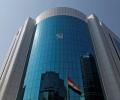
A global association for regulated funds that is leading efforts to shorten the settlement cycle for US equities has reached out to the Securities and Exchange Board of India (Sebi) with a plea to extend the T+1 implementation timeline by 18 months. The short transition period of four months does not provide foreign portfolio investors (FPIs), their services providers, and broker dealers sufficient time to make the necessary operational and compliance changes to accommodate a shorter settlement cycle, ICI Global said in its letter addressed to Sebi chairman Ajay Tyagi written a few days back. ICI Global carries out the international work of the Investment Company Institute (ICI), a global association for regulated funds, whose members manage assets of more than $42 trillion.

Among the Sensex firms, ITC, Tata Consultancy Services, Wipro, Asian Paints, HCL Technologies, HDFC, Kotak Mahindra Bank, Bajaj Finance, Infosys, Sun Pharma, Hindustan Unilever, Power Grid, Reliance Industries and HDFC Bank were the winners. HCL Technologies climbed 1 per cent after the company on Thursday posted a 10.85 per cent increase in consolidated net profit to Rs 3,983 crore for the fourth quarter of 2022-23. Tech Mahindra, Maruti, Tata Steel, UltraTech Cement, Tata Motors and ICICI Bank were among the laggards.
Investments in Indian capital through participatory notes (P-notes) rose to Rs 1.02 lakh crore till October-end, making it the highest level in 43 months.
Among the Sensex firms, Infosys, Tata Motors, HDFC Bank, Asian Paints, Tech Mahindra, HDFC, Tata Consultancy Services, Sun Pharma and ICICI Bank were the biggest winners. On the other hand, PowerGrid, NTPC, Nestle, UltraTech Cement, State Bank of India and ITC were among the laggards.

India's stock exchanges have decided to jointly introduce the T+1 settlement cycle in phases from February 25, beginning with the bottom 100 stocks by market capitalisation. From March 2022, on the last Friday (or the immediate next trading day) of every month, the next 500 stocks from the bottom will be subject to T+1 settlement. The phase-wise implementation is expected to give all market participants, including foreign portfolio investors (FPIs), ample time to shift to the shorter cycle. The settlement cycle represents the time period within which the stock exchanges have to settle security transactions.

The rally in PSBs, analysts feel, was more a knee-jerk reaction to the development, and the actual benefits will start to accrue once the addition takes place in 2024. "The actual benefit for banks from the inclusion in JP Morgan's EM Index will accrue from June 2024 onwards. "Until then, the larger fundamentals of the market will dictate the moves. "Once the initial euphoria subsides, bond markets will look to global cues which may trigger fresh selling," said Siddharth Khemka, head of retail research, Motilal Oswal Financial Services.

10 non-bank and non-finance stocks from the BSE500 Index universe that offer an optimal blend of low valuation, reasonably robust revenue and earnings growth in recent quarters, a strong balance sheet, and most importantly, positive cash flow from their operations.

IndusInd Bank was the biggest loser in the Sensex pack, shedding nearly 2 per cent, followed by Bharti Airtel, Reliance Industries, HDFC twins, SBI, HUL, Tata Motors, Nestle India and Axis Bank. On the other hand, Asian Paints, Tata Steel, Titan and L&T were among the gainers, rising up to 3.03 per cent.
The success of recent IPOs and the stability in the secondary market are propelling many firms and investment bankers to remove their IPO plans.

The Reserve Bank of India's interest rate decision, domestic macroeconomic data and global trends will dictate terms in the equity markets this week, analysts said. Trading activity of Foreign Portfolio Investors (FPIs) will also influence markets, they added. "The Indian market will be closely monitoring the Reserve Bank of India's Monetary Policy Committee (MPC) meeting scheduled for June 6-8, 2023. Aside from that, market participants will be keeping an eye on the progress of monsoon," said Pravesh Gour, Senior Technical Analyst, Swastika Investmart Ltd.

In the Sensex pack, Mahindra & Mahindra, Tata Steel, Tata Motors, Maruti, Larsen & Toubro, HDFC, HDFC Bank, Tech Mahindra and Bharti Airtel were the major laggards. Asian Paints, Bajaj Finserv, Power Grid, Reliance Industries, NTPC and UltraTech Cement were among the gainers.

Nestle, Infosys, ICICI Bank, Tata Motors, Tata Consultancy Services, HCL Technologies, Tech Mahindra and Axis Bank were the other major winners. Sun Pharma, Asian Paints, Bajaj Finance and Titan were the laggards.
 © 2026 Rediff.com - Advertise with us - Disclaimer - Privacy Policy - Sitemap - Feedback - About us - Terms of use - Grievances