
The Nifty 50 firms' contribution to the overall earnings of India Inc has steadily declined, reaching its lowest share in at least 21 quarters at 47.1 per cent in Q4FY26, down from 51.8 per cent a year earlier.

The Indian rupee depreciated 16 paise to settle at a fresh lifetime low of 96.86 against the US dollar, marking its ninth consecutive session of decline, driven by elevated global crude prices and a strong dollar.

Indian benchmark stock indices, Sensex and Nifty, experienced a significant decline for the third consecutive day, with the Sensex tumbling 1,092 points and Nifty closing below 24,550. This downturn was primarily driven by the India Meteorological Department's forecast of a below-normal southwest monsoon and ongoing geopolitical uncertainties surrounding the US-Iran ceasefire arrangement.

Indian mutual funds have significantly reduced their exposure to the information technology (IT) sector, with holdings now at an eight-year low of 6.7% in April 2026, driven by weak earnings growth, global demand slowdown, and concerns over AI-led disruption.

Foreign Portfolio Investors (FPIs) have withdrawn Rs 14,231 crore from Indian equities so far in May, extending the total outflow for 2026 to over Rs 2 lakh crore, driven by persistent global macroeconomic uncertainties including inflation, interest rates, and geopolitical risks.

Domestic Institutional Investors (DIIs) have significantly increased their holdings in Nifty 500 companies, reaching a record 20.9 per cent by the end of March, while Foreign Portfolio Investors (FPIs) reduced their ownership to an all-time low of 17.1 per cent, according to Motilal Oswal Financial Services.

Indian benchmark indices Sensex and Nifty experienced a significant slump in early trade, mirroring weak global trends, as escalating tensions in West Asia, particularly a drone attack on the UAE's Barakah nuclear facility, pushed crude oil prices higher. Track Sensex, Nifty50 movement and key market drivers for May 18, 2026.

The continued MF buying has pushed the equity holding of MFs to over Rs 50 trillion for the first time.

Indian benchmark equity indices, Sensex and Nifty, closed lower due to investor caution over rising bond yields, a weaker rupee, and fresh fuel price hikes, which have revived inflation concerns.

Indian equity benchmark indices Sensex and Nifty rebounded in early trade, driven by buying in blue-chip stocks and a positive trend in Asian markets, with domestic institutional investors providing crucial support.

'The real money in India over the coming period is likely to be made in small-cap stocks rather than in the large-cap benchmark names.'

Prime Minister Narendra Modi has urged states to balance the opportunities presented by artificial intelligence with the need to safeguard against social challenges like cyber fraud and drug abuse. He also warned of the risks posed by El Nino conditions, calling for stronger water conservation measures and emphasising the collective resolve towards a 'Viksit Bharat'.

In reality, no single philosophy can dominate every market cycle. That's why we've explained how these approaches work to help investors make informed and realistic decisions.

The post-Covid euphoria surrounding direct equity investing has ebbed in 2025. Individual investors have turned net sellers in the domestic equity market, pulling out about 8,461 crore so far this year - a sharp reversal from the record purchases seen in 2024, according to a report by the National Stock Exchange of India (NSE).

Indian stock markets are set to be influenced by developments in US-Iran negotiations, crude oil prices, and foreign investor activity in the upcoming holiday-shortened week, according to market analysts.

Investing in gold trumped most other asset classes in terms of compounded annualised returns over the long term, suggests a report by FundsIndia.

Indian stock markets concluded Tuesday's trading session lower, reversing intraday gains due to late-session selling in blue-chip stocks like HDFC Bank and Reliance Industries. The decline was primarily driven by the Indian rupee hitting a new record low against the US dollar and elevated global crude oil prices, compounded by geopolitical uncertainties.

TVS Venu Group has agreed to acquire a minority stake of up to 9.9 per cent in Jana Small Finance Bank, including a 4.9 per cent ownership by TVS Motor Company, through a combination of primary issuance of warrants and a secondary purchase.

Indian stock markets are expected to remain highly sensitive to geopolitical developments, particularly the US-Iran situation, and crude oil prices this week, with analysts also highlighting the influence of the rupee-dollar trend, foreign investor activity, and upcoming inflation data.

Yield-generating instruments like Infrastructure Investment Trusts (Invits), Real Estate Investment Trusts (Reits), and Non-Convertible Debentures (NCDs) are witnessing a surge in investor interest, contrasting with a notable slowdown in the equity primary market, which saw only one IPO in April.

Tulsi Gabbard has resigned from her position as Director of National Intelligence to support her husband, Abraham Williams, who has been diagnosed with a rare form of bone cancer. Her resignation will take effect on June 30, with Aaron Lukas set to take over as acting intelligence chief.

Rajesh Exports has vehemently denied allegations of inflated revenues and preferential share placement to LIC, labelling them 'speculative inferences' and affirming its commitment to addressing concerns raised by Sebi.

'The net inflows into MF schemes may also have been lower last month, with investors booking profit and taking a more measured approach amid elevated valuations.'

Markets face risk of a prolonged bear phase as oil shocks and geopolitical tensions test inflation, growth and investor confidence globally, points out Debashis Basu.

Indian stock markets saw a significant rebound, with the Sensex jumping nearly 790 points, primarily fuelled by strong buying interest in telecom, pharma, and private banking shares, despite a volatile trading session and a weakening rupee.

Two South African scientists of Indian origin, Professor Salim Abdool Karim and Professor Keertan Dheda, have been awarded the Order of Mapungubwe for their contributions to public health, particularly in HIV/AIDS, tuberculosis research, and pulmonology.

'Once the market decides it wants to go up, it goes up -- no amount of bad news can really hold it back.'

Indian companies recorded their highest profit margins in 21 quarters during Q4FY26, reaching 11.3 per cent, primarily due to significant savings from lower employee costs and reduced interest payments, which offset rising raw material prices.

Leading stock exchange BSE Ltd announced a 61 per cent increase in consolidated net profit to Rs 795.47 crore for the March quarter, driven by higher income, and reported its highest-ever performance in its 150-year history for the full financial year 2025-26.
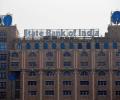
State Bank of India (SBI) reported a 6 per cent increase in standalone net profit to Rs 19,684 crore for the fourth quarter ended March 2026, driven by a significant decline in bad loans.

Nomura has increased its March 2027 target for the Nifty 50 to 25,900, driven by strong corporate earnings and attractive market valuations, even as risks from the West Asia conflict and high oil prices persist.

The Bank Nifty is currently trading at a 43.5 per cent discount to the Nifty 50, near its widest gap since 2015, reflecting investor pessimism despite the banking sector's strong earnings growth.

'You set up your SIPs and you do not touch them. Not during COVID, not during a war scare, not when your neighbour tells you the market is finished. You let the noise pass over you.' 'The beauty of this approach is that it does not require courage or conviction in the moment. It just requires inertia -- keep the SIP running and do not look at your portfolio too often.'

The combined market valuation of four of India's top-10 most valued firms, including State Bank of India, Bharti Airtel, Tata Consultancy Services, and Larsen & Toubro, eroded by Rs 1 lakh crore last week amidst a volatile and range-bound equity market.
Foreign portfolio investors withdrew over Rs 22,530 crore ($2.5 billion) from Indian equities so far this month amid rising US bond yields and a stronger dollar, continuing their selling streak from last year. This came following an outflow of Rs 1.66 lakh crore ($18.9 billion) recorded in 2025, triggered by volatile currency movements, global trade tensions and concerns over potential US tariffs and stretched market valuations.

Donald Trump agreed with Xi Jinping's assessment of the US as a 'declining nation,' but attributed the decline to the policies of the Biden administration.

State Bank of India Chairman C S Setty has expressed support for a 'pause' in policy rates by the Reserve Bank of India's monetary policy committee, believing it will help stabilise conditions and support economic growth. He also urged investors to look beyond short-term equity market movements and focus on India's structural transformation, driven by reforms and digital infrastructure.

India's mergers and acquisitions (M&A) market is projected to maintain an annual run-rate of approximately $200 billion, evenly split between domestic, inbound, and outbound transactions, despite global geopolitical turbulence, according to Rajesh Singhi, global co-head, M&A Advisory, Standard Chartered Bank.

OpenAI and Anthropic are not simply enabling new software capabilities, they are moving directly into enterprise execution, workflow ownership, and decision orchestration.
The Indian rupee rebounded 50 paise from its all-time closing low to settle at 96.36 against the US dollar, driven by retreating crude oil prices, signs of easing geopolitical friction, and likely central bank intervention.
