
The East India Company, revived by Indian businessman Sanjiv Mehta in 2010, has ceased operations and entered liquidation, marking the end of its modern incarnation.

'Facebook and Google no longer need to have infantry regiments and cavalry like the East India Company because they are inside everyone's phones listening to our conversations.'

India's services sector growth reached a five-month high in April, with the HSBC India Services PMI Business Activity Index rising to 58.8, primarily driven by robust domestic demand and a shift from international to local suppliers amidst the West Asia crisis.

India's manufacturing sector experienced a mild recovery in April, with the HSBC India Manufacturing Purchasing Managers' Index (PMI) rising to 54.7 from 53.9 in March. However, inflationary pressures intensified, with input costs increasing at the fastest pace since August 2022, largely attributed to the Middle East conflict.

Mahindra Group has acquired a minority stake in the East India Company, the global luxury brand owned by Indian-origin entrepreneur Sanjiv Mehta who relaunched the company here in August 2010.

In its latest edition, which will hit the stands on October 3, Panchjanya has carried a cover story that is highly critical of Amazon.

Indian refiners are negotiating for additional crude cargoes from the US, Russia, and West Africa to ensure adequate supplies amid Middle East tensions. Refineries are maintaining normal processing rates and deferring maintenance to build reserves. The move comes as conflict impacts tanker movements through the Strait of Hormuz, a key energy transit route.

Moody's Ratings has downgraded India's growth forecast for financial year 2026-27 (FY27) to 6 per cent from 6.8 per cent, attributing the revision to weaker consumption and industrial activity, elevated energy prices, and rising input costs stemming from the West Asia conflict.

Major paint companies in India, including Asian Paints, Berger Paints, Akzo Paints, and Kansai Nerolac, have announced price hikes ranging from 1% to 8% across various product lines, effective from mid-March to late April, in response to persistently high crude oil and gas prices.

Items to be stocked include furniture, chocolates, leather goods, fruit pickles and sushi.

Despite international crude oil rates crossing USD 100 per barrel due to Middle East tensions, the Indian government plans to maintain current petrol and diesel prices, ensuring uninterrupted fuel supply across the country.

Even if there is an early agreement on a cessation of hostilities in West Asia, the price shock will not go away easily, points out A K Bhattacharya.

Reliance Industries' digital arm, Jio Platforms, may see its initial public offering (IPO) delayed to the second half of fiscal 2027, according to CreditSights. The delay is primarily attributed to ongoing geopolitical tensions in the Middle East, which could impact market conditions and investor sentiment.

Indian stock markets are expected to remain highly sensitive to geopolitical developments, particularly the US-Iran situation, and crude oil prices this week, with analysts also highlighting the influence of the rupee-dollar trend, foreign investor activity, and upcoming inflation data.
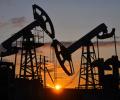
India's largest private refiner, Reliance Industries Ltd, successfully navigated a volatile energy market in the last quarter of FY26 by diversifying crude sourcing and demonstrating operational agility, particularly in response to geopolitical disruptions and cost fluctuations.

Families in Uttar Pradesh express anxiety over the safety of their relatives in the Middle East following a joint US-Israel military strike on Iran, which has triggered retaliatory actions and heightened regional tensions.

Kanwal Rekhi is a peaceful techie who ardently believes in competitive market economics and democracy, despite the trauma his family suffered during Partition and his narrow escape from violent mobs in 1984.

When everyone has footage and no one can verify it, the loudest voice wins, notes Prem Panicker who begins a daily blog on the War in the Middle East.

Dabur India's stock has fallen over 17 per cent since the start of the Iran war, driven by concerns over a weak monsoon, the West Asian crisis, and rising input costs, which are expected to impact the company's revenues and margins, particularly affecting its significant rural sales and international markets.

The All India Football Federation met with Genius Sports and Indian Super League club owners to discuss a major proposal regarding the league's commercial rights, focusing on a long-term vision for India's top-tier competition.
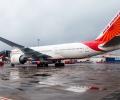
Air India group announces fuel surcharges on domestic and international flights due to rising Aviation Turbine Fuel (ATF) prices, following the government's decision to cap domestic ATF price hikes.

Indian refiners have access to only limited Iranian volumes compared with Russian oil, and even the barrels on offer come with 'too many hassles'.
India's private sector activity saw a significant recovery in April, driven primarily by robust growth in manufacturing output and sales, following a three-year low in March attributed to the West Asia conflict.

Indian airports are rapidly becoming a significant growth avenue for the country's retail sector, with brands across various consumer segments actively opening stores to tap into the increasing number of flyers and strong domestic tourism momentum.

'We are targeting a 2.5x to 3x increase in valuation by FY31.'

Around one full month of supply is firmly arranged with additional procurement being continuously finalised, and oil companies are successfully delivering over 5 million cylinders every day.

India's services sector growth slowed in March, reaching a 14-month low, according to the HSBC India Services PMI. The slowdown reflects weaker new business intakes and rising input costs, particularly in fuel, transport, and logistics.

India has refuted claims of payment issues hindering crude oil imports from Iran, clarifying that refiners have the flexibility to source oil from various global suppliers. The Ministry of Petroleum and Natural Gas addressed reports of a tanker rerouting to China, emphasising standard industry practices and secured oil requirements.

Fast-moving consumer goods (FMCG) companies like Dabur India and Marico anticipate high single-digit growth in Q4FY26, driven by strong domestic demand in India, which is helping to offset the negative impact of geopolitical conflicts in West Asia on their international businesses.

If the oil infrastructure is attacked by the United States, the whole area could be flooded with oil, spilling into the Persian Gulf.

India should not stay on the margins of this initiative. There should be a serious debate about what would be in India's best interests asserts former foreign secretary Shyam Saran.

Andhra Pradesh Chief Minister N Chandrababu Naidu laid the foundation for a USD 15 billion Google Artificial Intelligence data centre near Visakhapatnam, calling it a 'growth engine for India' and Asia's biggest such facility.

India continues to face LPG supply challenges for the third consecutive week due to disruptions caused by the West Asia conflict, though panic buying is showing signs of easing. The government is prioritising domestic household supplies and encouraging alternative fuel sources.

Godrej Consumer Products Ltd (GCPL) delivered a robust Q4FY26 performance, with steady demand in India and signs of stabilisation in international markets, despite persistent inflationary pressures. The company expects to maintain profitability in FY27 through strategic cost management and pricing adjustments.

Suvendu Adhikari's journey from a key figure in the Trinamool Congress to a leading BJP challenger in West Bengal is a remarkable transformation. His victories, particularly against Mamata Banerjee, have positioned him as a potential chief minister, marking a significant shift in the state's political dynamics.
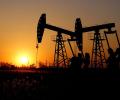
India possesses approximately 100 million barrels of commercial crude oil stocks, capable of covering 40-45 days of its requirements if flows through the Strait of Hormuz are disrupted, according to Kpler.

State-owned Indian Oil Corporation (IOC), Bharat Petroleum Corporation Ltd (BPCL), and Hindustan Petroleum Corporation Ltd (HPCL) are reportedly incurring losses of Rs 18 per litre on petrol and Rs 35 per litre on diesel, as they continue to absorb rising crude oil costs without increasing retail prices. This situation is leading to expectations of a fuel price hike after upcoming state elections.

Nayara Energy, a private fuel retailer in India, has increased petrol and diesel prices following a surge in global oil prices due to Middle East tensions. This move contrasts with state-owned retailers who continue to freeze prices.

West Asia conflict triggers sharp sell-off in Indian markets, with realty, banking and auto stocks leading losses amid energy shock fears.

Historically, India was a major buyer of Iranian crude, importing significant volumes of Iranian light and heavy grades due to strong refinery compatibility and favourable commercial terms.
 © 2026 Rediff.com - Advertise with us - Disclaimer - Privacy Policy - Sitemap - Feedback - About us - Terms of use - Grievances