
The Economic Intelligence Unit (EIU), on Friday said that the Union Budget presented by Finance Minister, Pranab Mukherjee, would allow the government to start exiting from its earlier-announced stimulus measures in a calibrated manner.
The EIU said in a report on Wednesday forecast that the real GDP grew by 1.6 per cent quarter-on-quarter in India, but noted that this uptick was largely owing to base effect.

India has one thing that China has - the potential to be of interest as a huge market in its own right.

India has moved down from 32nd place last year and remains classified among 'flawed democracies'.
While the US-Iran conflict leading to a spike in global oil prices and trade war between the US and the EU topped the chart with 25 per cent, other major risks to the global economy include coronavirus, debt burdens causing a recess across emerging markets and Hong Kong protests causing an exodus from Asia's biggest financial centre.

The Economist Intelligence Unit (EIU) ranked Singapore as the priciest ahead of Zurich, Hong Kong, Geneva and Paris.

Despite Mumbai considered the commercial capital of the country, its name has secured first position in the top ten most affordable cities of the world.

'India's manufacturing will take 10-15 years to catch up with China.'

Singapore retained its title as the world's most expensive city for the fourth consecutive year, while Hong Kong remained second, closely followed by Zurich at the 3rd place.
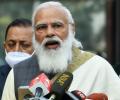
For those who think India's democracy is just fine and there has been no change in the last few years, perhaps it would be instructive to see what has happened on a few issues, observes Aakar Patel.
India's economic growth rate is expected to moderate to 7.8 per cent in 2008-09, mainly on account of a global slowdown, says the Economist Intelligence Unit (EIU), an arm of London-based magazine Economist.Despite moderation in growth, India would continue to remain the second-fastest growing economy in Asia, said senior economist and Asia Editor of the EIU Anjalika Bardalai while briefing reporters ahead of the 13th business round table with government officials.
Globally, corporate leaders have started pinning high hope on India.
Melbourne is considered to be the most liveable city in the world.
The inequality between the rich and the poor keeps wages and prices low.

India and China by virtue of their large pool of skilled IT employees enjoy a significant advantage among emerging markets but lack of IT infrastructure remains a dampener, blunting their competitive edge, a report by Economic Intelligence research said.

India ranks number one among all countries in respect of both the inflow and outflow of expatriate executives, according to a survey of global firms conducted by leading financial journal The Economist.
India is expected to be the world's fastest growing economy by 2018.

Karachi is the world's cheapest cities to live in.
A recent study by the Economist Intelligence Unit stated that the worst cities in the world are scattered around Africa and Asia.
A report published by Barclays Wealth, entitled Insights: The True Value of Wealth, reveals that more than a third (35 per cent) of respondents believe individuals need to have assets worth at least $10 million (5 million pounds) to be considered wealthy.
Prices of almost all industrial commodities, barring cotton, are likely to cool down in 2008, after handsome gains in 2007, when a supply glut is expected to supersede demand.
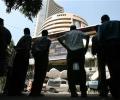
The 30-share Sensex ended down 224 points at 28,442 and the 50-share Nifty ended down 101 points at 8,606.

Singapore retains the title of the world's most expensive city.

Melbourne is the world's best city to live in.
