The government is likely to file draft papers for the mega initial public offering of LIC with market regulator Sebi by next week, while a portion of the issue would be reserved for anchor investors, a top official said on Wednesday.

Only 2.5 per cent of the equity in Jio Platforms will be offloaded through the OFS route -- meant for secondary share sale.
The Centre is unlikely to reduce its shareholding in Life Insurance Corporation of India (LIC) for at least 2 years following the insurer's listing because such a move could affect returns for investors participating in the mega initial public offering (IPO). The government's stance was communicated to prospective investors during roadshows after many of them sought clarity on the Centre's plan for lowering its shareholding in the insurer to meet the minimum public shareholding norms. To this, the Centre maintained its stand that it would not look at any equity dilution in the insurer for at least two years to avoid downward pressure on LIC's shares.

The government is planning to soon file the final papers for LIC IPO with market regulator Sebi, which will provide details about the price band, discount for policyholders and retail buyers, and the actual number of shares to be put on the block, an official said. The government is presently in the wait-and-watch mode because of the market volatility induced by the Russia-Ukraine war and will decide on the timing of the initial public offering (IPO) of Life Insurance Corporation (LIC). "We have got the approval of the DRHP and the next step would be to file the RHP, which will give details of the price band and the actual number of shares.
The government may have to rework the valuation of Life Insurance Corporation of India (LIC) for its initial public offering (IPO) if the listing is pushed beyond May, an official said. The current embedded value of LIC, pegged at Rs 5.4 trillion as of September 30 and for the six-month period ended September, will have to be re-evaluated if the issue is pushed beyond May 12, as approved by the Securities and Exchange Board of India (Sebi). This would impact the market value of LIC, that is currently being internally estimated at 3-4 times of the embedded value.

The government will launch the mega public offer of LIC by March and file draft papers with market regulator Sebi by the end of this month, an official said. Finance Minister Nirmala Sitharaman had last week reviewed the progress of the initial public offering (IPO) of Life Insurance Corporation (LIC) in a meeting with top officials of the ministry. The official said the September 2021 quarter financials of LIC are getting finalised as well as fund bifurcation is in progress.
The government has amended rules of the Foreign Exchange Management Act (FEMA), paving the way for up to 20 per cent foreign direct investment in the insurance behemoth LIC. The government is planning to dilute its stake in LIC through the the Initial Public Offering (IPO). LIC in February had filed the Draft Red Herring Prospectus (DRHP) before the markets regulator Sebi for the IPO.
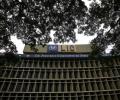
Sixteen merchant banks are in the fray to act as book running lead managers (BRLM) for the initial public offering of Life Insurance Corporation of India (LIC). These merchant banks will have to make a presentation before the Department of Investment and Public Asset Management (DIPAM) on August 24-25. The shortlisted banks are BNP Paribas, Citigroup Global Markets India, BofA Securities, Goldman Sachs (India) Securities, HSBC Securities and Capital Markets(India), J.P. Morgan India, Nomura Financial Advisory and Securities (India), Axis Capital, DAM Capital Advisors, HDFC Bank, ICICI Securities, IIFL Securities, JM Financial, Kotak Mahindra Capital, SBI Capital Market, and Yes Securities India.

Hyundai Motor India Ltd, the Indian arm of South Korean automaker Hyundai, has received capital markets regulator Sebi's approval to float an initial public offering (IPO), people familiar with the development said on Wednesday. This development marks a significant milestone for the Indian industry, as it is the first automaker initial share-sale in over two decades, following Japanese automaker Maruti Suzuki's listing in 2003.
The government is likely to cut the size of the initial public offering of LIC to 3.5 per cent to raise around Rs 21,000 crore from the issue which would hit the capital markets in the first week of the next month. The government in February had planned to sell a 5 per cent stake in Life Insurance Corporation (LIC). However, the ongoing market volatility due to the Russia-Ukraine war has made it lower the IPO size. At this price, LIC, which is 100 per cent government-owned, is valued at Rs 6 lakh crore.

It has been a slow 2022 thus far for the primary markets. In the last 8 months, only 16 companies have raised Rs 40,311 crore via the initial public offer (IPO) route, data from PRIME Database suggests. In comparison, 63 companies had raised a cumulative Rs 1.18 trillion via the IPO route in 2021. A large part of the funds raised in 2022 were on account of the two IPOs - Life Insurance Corporation of India (LIC) and logistics firm Delhivery - that raised a total of over Rs 26,000 crore between themselves.
The Securities and Exchange Board of India (Sebi) has cleared the draft red herring prospectus (DRHP) of the state-owned Life Insurance Corporation of India (LIC). According to investment banking sources, the so-called final observations were issued by the market regulator on Tuesday evening. Following the market regulator's nod to the IPO papers, the insurer can launch its share sale. However, LIC may not launch its IPO immediately given the current volatile market conditions.

Logistics services provider Delhivery is likely to launch its downsized initial public offering (IPO) this week, said people in the know. The Softbank-backed firm may trim its issue size from Rs 7,460 crore to Rs 5,500 crore to align with the volatile market conditions, sources said. Sources added the fresh issue component of the IPO could be reduced to Rs 4,500 crore and the OFS component to Rs 1,000 crore.
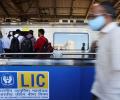
Life Insurance Corporation (LIC) has received the insurance regulator's nod for time till January-end 2023 to dispose of investments in pension, group and life annuity funds, which do not fall in the "approved investment" category. Had the Insurance Regulatory and Development Authority (Irdai) denied more time to transfer the investments to shareholders' fund at amortised cost, the loss that would have accrued in the profit and loss account (shareholders account) would have been Rs 5,365.83 crore as of September 2021, LIC said in its draft red herring prospectus (DRHP).
Initial public offering (IPO)-bound Life Insurance Corporation (LIC) of India's assets under management (AUM) increased to Rs 38 trillion as of September 2021, compared with Rs 37 trillion as of March 2021, said sources in the know. Its AUM is almost 3x the AUM of all the private life insurers in the country and over 15x more than the AUM of the second largest life insurer, SBI Life, as of September 2021. SBI Life's AUM was approximately Rs 2.4 trillion as of September 2021, said sources.
With the Russia-Ukraine war roiling financial markets globally, the government may defer the mega IPO of LIC and wait for an opportune time to get the maximum value of its holding in the state-owned insurance behemoth, sources said. "It's a full blown war now so we will have to assess the situation for going ahead with the LIC IPO," a government source said. Finance Minister Nirmala Sitharaman, too, had indicated review of the IPO in view of the evolving geopolitical situation.
Life Insurance Corp of India (LIC), which is aiming to launch its initial public offering (IPO) next month, is set to alter the pecking order of top listed companies in the country. Depending upon where the government prices the IPO, the stock could end up becoming India's most valuable company on the first day and even get fast-tracked into global benchmark indices given its sheer size. According to market sources, LIC's IPO is targeting to mop up Rs 63,000 crore and Rs 75,000 crore.
Taking a cue from Zomato's stellar initial public offering (IPO), through which it garnered a valuation of Rs 1 trillion, the government has asked its advisors and valuers to ascertain if the Life Insurance Corporation of India (LIC) should be valued at Rs 10 trillion or more. The government is looking to offload about 10 per cent stake in LIC through the IPO. At that valuation, the government stands to net at least Rs 1 trillion from LIC's proposed IPO, which will boost the Centre's efforts to meet its disinvestment target of Rs 1.75 trillion for the current financial year.
Life Insurance Corporation of India (LIC) has increased the size of its shareholders' fund to Rs 6,600 crore from Rs 100 crore in a bid to accommodate a larger shareholder base ahead of its public listing. The size of the fund has been enhanced by retaining two years' of dividend and issuing fresh capital, said an official. Increasing the size of the shareholders' fund will help boost the number of shares for allotment in the insurer's initial public offering (IPO). The corpus represents the amount of equity in a company that belongs to its shareholders.

The primary market will remain abuzz with more than half a dozen companies, including Hyundai Motor India, Swiggy, and NTPC Green Energy, lined up initial public offerings over the next two months to raise around Rs 60,000 crore, merchant bankers said. Apart from these three firms, Afcons Infrastructure, Waaree Energies, Niva Bupa Health Insurance, One Mobikwik Systems, and Garuda Construction are among the companies planning to launch initial public offerings (IPOs) during October-November, they added. Together, these firms are looking to raise Rs 60,000 crore through their IPOs.
Under the new model, the surplus distribution in the participating policyholders' fund has been modified to 90:10 in a phased manner, wherein 90 per cent will go to policyholders and 10 per cent to shareholders. Further, 100 per cent of the surplus generated out of the non-participating business will be available for distribution to all shareholders.
LIC identifies the problems well, but what the markets will watch is how nimble it is with the solutions.

The IPO is an offer for sale of 38 million shares by SBI, BOB, LIC, PNB and T Rowe Price. Barring T Rowe and PNB, the others are selling stake to comply with Sebi norms.

Companies, which missed out on listing earlier, are giving it another shot but with significantly-reduced issue sizes. In the recent past, companies such as TVS Supply Chain Solutions, Suraj Estate Developers, and ESAF Small Finance Bank have re-filed their draft red herring prospectuses (DRHPs) with the Securities and Exchange Board of India (Sebi). This came after they slashed their issue sizes by 20-60 per cent.

At the customary post-Budget media interactions, Finance Minister Nirmala Sitharaman and her topmost bureaucrats touched upon a number of issues. The minister said the government taxing income from digital virtual assets did not give them legitimacy and that issue was being dealt separately in the planned cryptocurrency Bill. She also expressed confidence that the Budget targets were achievable.

Initial public offerings (IPOs) by start-ups are bringing cheer to investors and investment bankers alike. After food delivery company Zomato, Nykaa has issued the fattest pay cheque to the managers of its share sale -- Rs 148 crore, or 2.8 per cent of its issue proceeds of Rs 5,300 crore. In absolute terms, this is the second-highest amount paid to investment bankers for handling an IPO, while in percentage terms, it is the highest for large IPOs (>$300 million) in the last one year, shows an analysis of the data provided by Prime Database, a primary market tracker.

The primary market is set for a bumper Rs 80,000-crore bonanza with 30 companies already filing IPO papers to raise Rs 55,000 crore, while around 10 more are lined up for this month itself, seeking to mop up another Rs 25,000 crore, say investment bankers. The market has been on a non-stop rally, hitting new records almost every week, on the back of an influx of investors -- a vast majority of them first-timers -- coupled with a flood of liquidity. Foreign funds alone had pumped in a record $35 billion into the market in FY21, while the trend has continued this fiscal as well. Domestic institutions led by LIC have also infused trillions of rupees, helping woo retail investors in troves -- the year saw over 20 million new investors coming to the market.

'The business continuity clause will mean the Tatas will have to keep running the airline for three years, and cannot exit the flying business.'
 © 2026 Rediff.com - Advertise with us - Disclaimer - Privacy Policy - Sitemap - Feedback - About us - Terms of use - Grievances