
The government said on Friday it is considering offloading 10 per cent of its equity stake in navratna public sector unit Bharat Heavy electricals Limited.

The government had last week hinted that it was open to a review of the 25 per cent public shareholding norm, but as of now, the rules remain in force.

Only strategic sales can serve the purpose of disinvestment, by freeing PSUs from govt control.
With hopes of raising funds through an initial public offer (IPO) or selling a stake to a strategic investor fading due to stiff opposition from the unions, the government is working on a proposal for a private placement of shares for Bharat Sanchar Nigam Ltd (BSNL), India's fifth-largest telecom company,

There is a strong hint that the proposed IPO will be of 11 per cent instead of the earlier plan of 15 per cent (10 per cent public, 2 per cent employees and 3 per cent land losers).
Public sector major NTPC's follow-on public offer (FPO) managed to scrape through today, but raised questions about the state of the primary markets and the government's disinvestment programme.
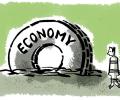
Moody's Investors Service on Friday projected India's growth at zero per cent for the current fiscal and said the negative outlook on sovereign rating reflects increasing risks that GDP growth will remain significantly lower than in the past. The outlook also partly shows weaker policy effectiveness to address economic and institutional issues, it noted in the update to its November 2019 rating forecast.

Buy these stocks on any correction as both the companies have strong long-term prospects

Coal ministry officials along with senior officials from Coal India and department of disinvestment would meet with capital market regulator Securities and Exchange Board of India this month to take forward the process of listing the public sector unit.

The Oil Ministry has approved part sale of government's stake in Oil and Natural Gas Corp as well as Indian Oil Crop, a move that could fetch about Rs 24,000 crore (Rs 240 billion) for the Centre this fiscal.

With the government planning to mop up Rs 24,000 crore (Rs 240 billion) through disinvestment this financial year, investors have once again become interested in public sector companies.

The Bharti group, which has just acquired a majority stake in the Bangladeshi mobile operator Warid Telecom, is on the lookout to acquire government-owned telcos in developing markets like Africa which are up for divestment.

The appointments committee of the Cabinet headed by Prime Minister Narendra Modi cleared Bhalla's appointment as OSD in the ministry with immediate effect.

The Cabinet Committee on Economic Affairs gave its nod to the 20 per cent follow-on offer by PowerGrid, an official statement said.
Discounts for retail investors may become a part of the government's disinvestment policy, instead of being offered on a case-to-case basis. The discount offered could be up to 10 per cent of the issue price.
Life Insurance Corporation of India, the country's largest institutional investor, is planning to pump in at least Rs 75,000 crore in equities during the next financial year.

He said any decision regarding divestment of BHEL has to be taken by the board of the company.

The minister said at a time when banks in the US and Europe needed government support for survival, banks in India were strong enough to sustain on their own.
The government will retain 51 per cent stake in all public sector units, finance secretary Ashok Chawla said. The government has proposed to mop up Rs 1,100 crore (Rs 11 billion) this fiscal from divestment of stake in PSUs.

Finance Minister Nirmala Sitharaman on Monday presented the Budget for 2021-22 in the Lok Sabha that is expected to provide relief to the pandemic-hit common man as well as focus more on driving economic recovery through higher spending on healthcare, infrastructure and defence amid rising tensions with neighbours, As India emerges from the COVID-19 crisis, the ninth Budget under the Modi government, including an interim one, is widely expected to focus on boosting spending on job creation and rural development, generous allocations for development schemes, putting more money in the hands of the average taxpayer and easing rules to attract foreign investments.
Asked if PSUs like NHPC and Oil India would get extension if they are unable to come out with the public issue within the stipulated time, he said Sebi's nod has one-year validity and the same rules would apply to them. As per the clearances given by Sebi for the draft shareholding prospectus, the two PSUs have time till September to launch their public issues and in case it is delayed beyond this point, they will have to start the process afresh.

The Finance Ministry on Thursday said it does not anticipate any backlash from PSU employees against divestment in state-run companies and the target of Rs 40,000 crore under this head next fiscal is 'modest' and achievable.

The major beneficiaries have been the ministries of roads and highways, railways and power

Taking into account all the increases, inflation will be around 0.4 per cent in the wholesale price index, says Pranab Mukherjee.
Recommending an end to all cesses and surcharges on taxes, and free pricing of fertiliser and fuel ahead of the Union Budget for 2009-10, the Economic Survey suggested on Thursday aggressive disinvestment and financial sector reforms to bring the economy back to high growth track.

The money, together with disinvestment proceeds, is crucial for Mukherjee to meet his fiscal deficit target of 5.5 per cent for 2010-11 from 6.7 per cent in 2009-10.

'The road ahead for the government's fiscal management will be full of many new challenges,' warns A K Bhattacharya.
With tax collections slowing down because of the global economic crisis, the government is looking at non-tax receipts like disinvestment to plug the widening fiscal deficit gap, which last fiscal crossed 6 per cent of the GDP. It can raise significant resources by selling a minority stake of 10 per cent in state-run firms. The Centre can earn at least Rs 37,000 crore by selling up to a 10 per cent stake in the top 10 PSUs in which it owns over 90 per cent.
The views of the trade unions who met the finance minister on Wednesday, run contrary to the demands of India Inc, which called for disinvestment of public sector enterprises to fund the widening fiscal deficit. They also suggested increasing corporate tax rate so that more money can be transferred from the rich to the poor.

QIP is a capital raising tool, whereby a listed company can issue equity shares, fully and partly convertible debentures, or any securities other than warrants that are convertible to equity shares to a Qualified Institutional Buyer.

The name of Mitra, a 1975 batch IAS officer from West Bengal cadre, was cleared by the appointments committee of the Cabinet headed by Prime Minister Manmohan Singh.

The trade unions would jointly carry out demonstrations, sit-ins and other forms of protests on October 28 to focus on the government's economic policies which were leading to job losses and hiking the prices of essential commodities.

Reforms under the Modi government will maintain a slow and tentative pace, constantly wary of political opposition. It may not be reform by stealth, but it is reform on the quiet, says A K Bhattacharya.
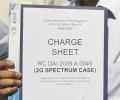
Former Trai chief lashes out on CBI, ministers in 2G scam

The divestment target remaining unchanged, from the 2019-20 interim Budget, this year means the Centre will now have to depend on non-tax revenue sources like dividends from the RBI, PSBs and PSUs, as there are real concerns of a tax revenue shortfall. The fiscal deficit target of 3.4% of GDP for 2019-20 is likely to be retained as well.

However, any progress on the deal depends upon Goyal giving up control of the company.

The Ministry of Finance may seek the Union Cabinet's approval for the proposed 10 per cent stake sale in state-owned Coal India Ltd by the end of this month, a senior Coal Ministry official said
The government got Rs 9,930 crore from its follow-on offer of NMDC shares, leaving it short by Rs 1,448 crore for its year's disinvestment target of Rs 25,000 crore. In addition, it got about Rs 2.5 crore by way of interest income on the issue money from banks.
Work on disinvesting government holdings may gather pace after the first week of August. Administrative ministries of around 15 Public Sector Undertakings have been asked to give feedback on the feasibility of coming out with initial public offers by then.

Steel minister Virbhadra Singh informed Lok Sabha in a written statement that the proposed disinvestment would be carried out in two tranches of 10 per cent each and would be a mix of diluting government stake was well as issuance of additional shares by the company.
