
The approval by the Drugs Controller General of India (DCGI) was given on the basis of recommendations submitted by a COVID-19 subject expert committee (SEC) of the Central Drugs Standard Control Organisation (CDSCO).

Currently, phase 2 and 3 clinical trials of the Oxford vaccine candidate is going on in the United Kingdom, phase 3 clinical trial in Brazil and phase 1 and 2 clinical trials in South Africa.

The Pune-based Gennova Biopharmaceuticals has submitted phase 2 data of mRNA vaccine and has also completed the recruitment of phase 3 data.
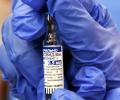
The government is hopeful of a speedy launch of single-dose COVID-19 vaccine Sputnik Light in India and all stakeholders, including the Russian manufacturer and its Indian partners, have been directed to fast-track the application and regulatory approval procedures for the jab to boost the country's vaccination drive, sources said.

'We seem to be in a situation where we can do little, and nothing needs to be done anyway.'
The vaccine candidate -- 'Covaxin' -- is being indigenously developed by the Bharat Biotech in collaboration with the Indian Council of Medical Research (ICMR).

'WHO issued an emergency use listing for Covovax, expanding the basket of WHO-validated vaccines against COVID-19. The vaccine is produced by the Serum Institute of India under licence from Novavax,' the world health body said in a tweet on Friday.
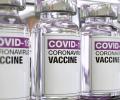
This is the world's first DNA-based vaccine against the coronavirus, and this three-dose vaccine when injected produces the spike protein of the SARS-CoV-2 virus and elicits an immune response, which plays a vital role in protection from the disease as well as viral clearance
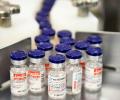
As per RDIF, Sputnik V has a number of key advantages, including that there are no strong allergies caused by Sputnik V.

India's first indigenously developed quadrivalent Human Papilloma Virus (HPV) vaccine for the prevention of cervical cancer will be launched in a few months and made available to the people in an affordable price range of Rs 200-400, Serum Institute of India CEO Adar Poonawalla said on Thursday.
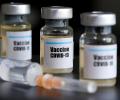
A 40-year-old man who was a volunteer in the third phase of the ''Covidshield'' vaccine trial in Chennai has alleged serious side effects, including a virtual neurological breakdown and impairment of cognitive functions.

Codeine-based formulations are under the scanner for misuse as a narcotic product.

An expert committee of the Central Drugs Standard Control Organisation (CDSCO) on Wednesday sought additional safety and efficacy data for COVID-19 vaccine candidates of Serum Institute and Bharat Biotech, after deliberating upon their applications seeking emergency use authorisation for the shots, official sources said.
'Pfizer India has submitted an application on December 4 to the DCGI seeking emergency use authorization for its COVID-19 vaccine in India'
As per the clinical trial protocol approved, 150 subjects with mild to moderate COVID-19 will be randomised in the study in a 1:1 ratio to Favipiravir with standard supportive care or standalone standard supportive care. Treatment duration is a maximum of 14 days and the total study duration will be a maximum for 28 days from randomisation.
India's apex drug regulator has granted permission for conducting the phase II/III clinical trial of Bharat Biotech's Covaxin COVID-19 vaccine in the age group of 2 to 18 years, the Union Health Ministry said on Thursday.

The phase 3 clinical trial will cover around 28,500 subjects, aged 18 years and above, and it will be conducted in 21 sites across ten states, including Delhi, Mumbai, Patna and Lucknow.
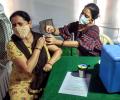
So far, no other vaccine has been approved globally for children below 12 years. Sohini Das reports.

They said after examining and analysing the adverse event reports, causal relationship and all related details shared by or to be shared by the WHO, the committee will advise and recommend further course of action to the Drugs Controller General of India (DCGI).
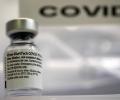
Pfizer sought to participate in the Subject Expert Committee consultations towards an emergency use authorisation for its Covid-19 vaccine. However, the company representatives have been unable to participate in the meetings because of extremely short notices of a few hours or less and time-zone limitations.

India's drug regulator has initiated a probe and sought further details from the WHO after the global health body issued an alert that cough syrups manufactured by an Indian firm could potentially be linked to the death of children in Gambia.
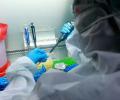
SII is the first indigenous company that has sought emergency approval for the vaccine developed along with global pharma giant AstraZeneca and Oxford University.

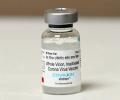
Vaccine major Serum Institute of India on Tuesday said the approval for the COVID-19 vaccine 'Covovax' would strengthen immunization initiatives across India and various lower and middle income countries across the world.
Healthcare and frontline workers and citizens above 60 years of age with comorbidities would be administered the third dose of the same vaccine they had been given before.

Once available, Sputnik V will be the third vaccine to be used in India against coronavirus.
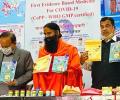
Deshmukh said on Twitter that it was "highly deplorable" that two senior Union ministers endorsed the drug.

If I follow US standards, I will have to shut almost all drug facilities: G N Singh
Bharat Biotech has completed the Phase 2/3 trials of COVID-19 vaccine, Covaxin for use in children under 18 years of age and is expected to submit the data by next week to the Drugs Controller General of India (DCGI), Chairman and Managing Director of Bharat Biotech International Ltd, Krishna Ella said

Poonawalla wished the country and Prime Minister Narendra Modi success for the vaccination programme.
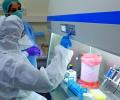
Since India is one of the largest vaccine producers in the world, it is the country's 'moral responsibility' to fast-track vaccine development process to break the chain of coronavirus transmission, ICMR Director General Dr Balram Bhargava said referring to the two vaccine candidates developed indigenously.
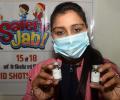
The company had in December said that the CDSCO had approved a 12-month shelf life for Covaxin, which was nine months earlier, Sohini Das reports.
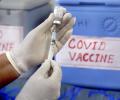
Paul noted that "three to four months from now, there will be other vaccines and the stockpile will be even bigger. "And more acceleration can be brought about in the vaccination programme," Paul added.
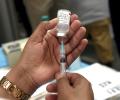
He explained, "Children between the age of 12 and 18 years, particularly those in the age group of 15 to 18 years, are very much like adults. Our research within the country also says that almost two-thirds of the deaths below 18 years which occurred due to COVID in India are within this age group. So, this decision was mainly taken to protect the adolescents."
According to sources close to ANI, "Bharat Biotech has informed Union health ministry that it will rectify the issues pointed out by WHO in 15 to 20 days." "World Health Organisation (WHO)'s suspension is not related to safety or efficacy issues but limited only to supply for United Nations agencies."

Avigan comes in a complete therapy pack of 122 tablets with a two-year shelf life.
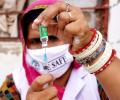
If things go according to plan, the vaccine would be available in the market by the end of this year.

The Drug Controller General of India (DCGI) has sought clarification from pharma majors Dr Reddy's Laboratories and Mumbai-based Piramal Healthcare, for allegedly sponsoring doctors for conferences.
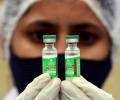
Serum Institute has the capacity to make 250 million doses of Covishield monthly.

Legal experts and official sources said the alleged submission of fake documents can also lead to criminal charges against Novartis.
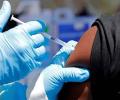
Vaccine development is a long process to ensure safety and efficacy through different stages and involves regulatory supervision every step of the way. Ruchika Chitravanshi takes you through this carefully drawn journey of vaccine development.
