
The Reserve Bank of India (RBI) is set to revise its directives for bank boards, aiming to alleviate operational burdens and enable them to concentrate on crucial policy and strategic decision-making, thereby enhancing corporate governance in the Indian banking sector.

'During the bank's board meeting, many directors asked him if there is a governance issue but he said there is none.'

The Reserve Bank of India (RBI) has issued a statement assuring the public of HDFC Bank's stability and sound financial position following the resignation of its chairman, Atanu Chakraborty, citing ethical concerns.
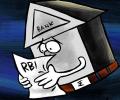
State Bank of India, HDFC Bank and ICICI Bank have again been named as Domestic Systemically Important Banks (D-SIBs) by the Reserve Bank of India. The Reserve Bank on Wednesday came out with the list of D-SIBs.

The RBI on Monday said state-owned SBI, along with private sector lenders ICICI Bank and HDFC Bank continue to be Domestic Systemically Important Banks (D-SIBs) or institutions which are 'too big to fail'. SIBs are perceived as banks that are 'too big to fail (TBTF)'. This perception of TBTF creates an expectation of government support for these lenders in times of distress.

The RBI on Tuesday said state-owned SBI, along with private sector lenders ICICI Bank and HDFC Bank continue to be Domestic Systemically Important Banks (D-SIBs) or institutions which are 'too big to fail'. SIBs are perceived as banks that are 'too big to fail (TBTF)'. This perception of TBTF creates an expectation of government support for these banks in times of distress. Due to this perception, these lenders enjoy certain advantages in the funding markets.
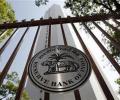
RBI said from data it had compiled as of March 31, 2013, four to six domestic banks would qualify under the D-SIB category.

Systemically important banks are subjected to higher levels of supervision to prevent disruption to financial services in the event of any failure.
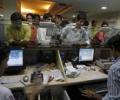
Capital adequacy and tighter regulation are just one step forward.
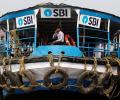
The Ministry of External Affairs (MEA) on March 17 had announced that State Bank of India (SBI) would extend a term loan of $1 billion to Sri Lanka, fully guaranteed by the Indian government, and this was part of India's financial aid to the troubled island nation. Ministry of External Affairs (MEA) spokesperson Arindam Bagchi was quoted saying by news agency PTI that the loan would be used for importing food, medicines, and other essential items. "India has always stood with the people of Sri Lanka and we will continue to extend all possible support at this juncture.

SIBs are perceived as ones that are 'Too Big To Fail'
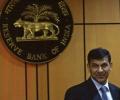
With the economy growing at its slowest rate in a decade, India's banking system is facing rising levels of stressed loans, with $100 billion, or about 10 percent of the total, categorised as bad or restructured.

Indian regulators have identified certain groups as 'financial conglomerates' and they are being monitored closely for any systemic risks they may pose.
 © 2026 Rediff.com - Advertise with us - Disclaimer - Privacy Policy - Sitemap - Feedback - About us - Terms of use - Grievances