
The Indian corporate sector demonstrated strong credit quality in the first half of FY27, driven by robust balance sheets and healthy liquidity, despite facing risks from elevated crude prices, inflation, and global interest rates.

Investors are set to monitor quarterly earnings, crude oil prices, the Jio Platforms initial public offering, and foreign investor activity in the upcoming holiday-shortened week, according to market analysts.
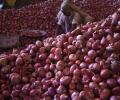
India's retail inflation surged to 5.54 per cent in September, primarily due to a significant increase in onion and other food prices, remaining just within the Reserve Bank of India's tolerance band. This marks the highest inflation since the new series with base year 2024 took effect in January.

India's cement industry is on the brink of an oversupply situation as aggressive capacity expansion by major players is set to outpace demand growth over the next two financial years, potentially leading to pricing pressures and moderated utilisation rates.

India's retail inflation, measured by the Consumer Price Index (CPI), rose to 4.45 per cent in July, up from 4.38 per cent in June, primarily due to higher food prices, particularly onions and ginger. This marks the second consecutive month the inflation rate has remained above the Reserve Bank's median target.
India's retail inflation rose to 4.38 per cent in June, driven primarily by costlier food items, pushing it above the Reserve Bank of India's median target of 4 per cent for the first time under the new series.
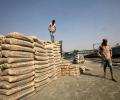
Indian cement manufacturers, despite a stable Q4FY26, are bracing for significant profitability pressures from Q1FY27 onwards due to escalating input costs, primarily driven by the West Asia conflict's impact on coal and petcoke prices.

India's economy in FY26 saw significant momentum from investment demand, with gross fixed capital formation (GFCF) accelerating to 8.2 per cent, while private final consumption expenditure (PFCE) also grew steadily, according to provisional estimates.

Painting a grim pictue of the retail real estate market, Crisil Research on Tuesday said retail rentals would further fall an average of six per cent in 2010 due to oversupply of mall spaces.

Ratings agency Crisil on Monday cut its FY14 growth forecast for India to six per cent from the earlier 6.4 per cent citing a variety of reasons, including the high lending rates, weaker pick-up in consumption and issues around mining and project clearances.

On the profitability front, Crisil foresees a 0.5 per cent basis points y-o-y jump in EBITDA (operating profit) margins in Q2 FY15.
Rating firm Crisil revised downwards its GDP growth forecast to 5.5 per cent this fiscal from its earlier estimate of 6 per cent, citing reduced likelihood of monetary easing going forward due to falling rupee.

The report mentioned that the government spends 2.2 per cent of the GDP on pension bill.

The imposition of safeguard duty, an uptick in exports, and an increase in input cost are driving steel prices higher. The latest round of price increase took place on Friday, with some steel mills increasing hot-rolled coil (HRC) prices by ~500-750 a tonne, according to price reporting and market intelligence firm BigMint. HRC is a benchmark for flat steel.

The Crisil study covered 600 companies excluding financial services and oil companies, representing 71 per cent of the overall market capitalisation of India Inc.

Supported by strong buoyancy in public sector capital expenditure (capex), growth in infrastructure investment is expected to accelerate in 2025-26 (FY26) compared to 2024-25 (FY25), according to the First Advance Estimates of gross domestic product (GDP) for FY26 released by the National Statistics Office (NSO) on Wednesday.
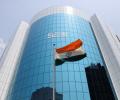
'Sebi's move to cap brokerage charges will help investors by lowering the overall cost of investments.'

With discretionary spending still under pressure, the information technology (IT) services industry continued to face an uncertain demand environment in the third quarter of 2025-26 (Q3FY26).

Retail inflation rose to a three-month high of 1.33 per cent in December 2025 mainly due to higher prices of kitchen essentials, including vegetables and protein-rich items.

According to the study spanning 11 key sectors, aggregate industrial investments would continue to grow despite the current economic slowdown amid expectations of a relatively muted GDP growth. The study stated that aggregate industrial investments would grow at a moderate pace over the next three years, with total investments projected at Rs 10,50,000 crore.

Top real estate developers reported healthy presales growth in the second quarter of FY26, aided by a steady pipeline of new project launches. While overall housing momentum across major Indian cities moderated during the quarter, listed players remained relatively insulated.

Rating agency Crisil said corporates, especially those in the auto, aviation, consumer durables and oil sectors, will be "severely impacted" by rupee depreciation due to large overseas debt and limited hedging.

According to the report, export-oriented sectors like IT services, pharmaceuticals and textiles will, in aggregate, report EBITDA margin expansion of nearly 100 bps, while margin is likely to decline by about 50 bps for other sectors during this period.

The Indian IT services sector is staring at a second consecutive year of muted revenue growth due to modest increase in tech spends in Europe and the US, a domestic rating agency said on Wednesday. Crisil Ratings said it expects the sector to grow at 5-7 per cent in FY25, after a growth of 6 per cent estimated to have been achieved in FY24. The overall industry size is pegged at $250 billion and it creates over 50 lakh direct jobs.
The Indian steel industry is faced with a paradox: Rising demand and falling prices. Demand continues to surge as user industries gather pace, with the World Steel Association projecting around 9 per cent annual growth for India over 2025 and 2026, the year domestic demand is projected to be almost 75 million tonnes (mt) higher than in 2020.

India's top cement producers delivered a solid July-September quarter (Q2) in 2025-26 (FY26), lifted by firmer prices, higher sales volumes, and a favourable base. Seasonal weakness and maintenance outages did dent sequential performance, but the overall picture remained positive - and the road ahead looks steady.

The imposition of a 100 per cent tariff by the US on imports of branded and patented pharmaceutical products starting October 1 may not significantly hurt Indian drug makers, with Sun Pharma being exposed to some headline risk but with limited earnings impact, according to analysts. Among Indian companies, only Sun Pharma has sizeable sales from patented drugs in the US (about 17 per cent of 2024-25 revenue), HSBC Global Investment Research said in a report.

India's top listed real estate developers - DLF, Lodha Group, Prestige Estates, and Oberoi Realty, excluding Godrej Properties - reported strong presales growth in the first quarter (Q1) of 2025-26 (FY26), even as earnings showed a mixed trend. According to Nomura, the top five developers - DLF, Lodha, Prestige, Oberoi, and Godrej - recorded a cumulative 59 per cent year-on-year (Y-o-Y) growth in presales.

Education loan growth is set to halve this fiscal (FY26) because disbursements for the US decelerate following a raft of policy changes there.

Crisil said a complete phase out of CST is necessary.

While demand for sub Rs 50-lakh affordable housing prevails, market players cite increased land rates, escalated construction costs and low margins as key prohibiting factors.
The Rs 2 a litre cut in petrol and Re 1 per litre reduction in diesel prices, announced last week, will increase the loss on auto fuel sales by Rs 300 crore (Rs 3 billion), Crisil Research has said.

Between fiscals 2009 and 2014, India's energy import bill surged at an average 14 per cent annually to $161 billion.

In its draft report, the research agency has recommended linking the valuation of coal reserves to be put up for bidding to international prices.

Amid FY23 Union Budget's focus on investments, leading domestic credit rating agency Crisil on Wednesday said that the capital expenditure is "not as high as it sounds". It, however, was quick to add that considering that governments usually tend to cut capex during a crisis, the government has maintained its focus on growth-spurring initiatives amid the pandemic. The research wing of the agency said, if one excludes the Rs 1 lakh crore of loans to states for capex included in the headline figure of Rs 7.50 lakh crore or 2.91 per cent, the actual spend in FY23, will go down to 2.58 per cent of GDP, which is barely at par with the revised estimate of FY22.

Petrol and diesel prices on Wednesday were hiked by 80 paise a litre each for the second day in a row since the ending of an over four-and-half month hiatus in rate revision. Petrol in Delhi will now cost Rs 97.01 per litre as against Rs 96.21 previously while diesel rate has gone up from Rs 87.47 per litre to Rs 88.27, according to a price notification of state fuel retailers.
MF assets remained unaffected by the January market crash, said research firm Crisil. Some fund houses even registered an increse in AUMs.

Only a limited set of investors should invest directly in corporate bonds.

Revenues from Bangladeshi patients have declined by 30% to 35% in 2024-2025. Bangladesh typically accounts for 70% to 75% of all medical visas issued by India.
