
Sri Lanka continues relief and rescue efforts with India's assistance after Cyclone Ditwah caused widespread devastation, killing over 190 people and affecting nearly a million.

Thousands of irate anti-government protesters in Sri Lanka on Saturday stormed into embattled President Rajapaksa's official residence in central Colombo's high-security Fort area after breaking the barricades, as they demanded his resignation over the island nation's worst economic crisis in recent memory.

Sri Lanka's Minister of State for Prisons Management Lohan Ratwatte tendered his resignation on Wednesday, days after he allegedly threatened to kill Tamil prisoners during his visit to the Anuradhapura prison.
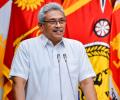
Speaker's media secretary Indunil Abeywardena said a resignation letter from President Rajapaksa has been received through the Sri Lanka high commission in Singapore.
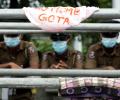
Sri Lankan police on Saturday fired tear gas and water cannons to disperse anti-government protestors here as the ongoing agitation demanding the resignation of President Gotabaya Rajapaksa over the worst economic crisis intensified as it entered its 50th day.

The attorney general instructed the authorities to charge them for their failure to prevent the Easter terror attacks.

Tensions remain high across Sri Lanka after the violence broke out following the death of a man from the mainly Buddhist Sinhalese majority last week.

The two brothers led a decisive campaign that helped end the island nation's three decade long civil war against the Liberation Tigers of Tamil Eelam.

The emergency was imposed because of the mass scale protests planned for April 3 against the current economic hardships faced by the people.

Lankan President Gotabaya Rajapaksa dissolved Parliament on March 2 and the general election was scheduled on April 25.

The residents near the dump had been protesting for months, demanding that the garbage dump be relocated. The authorities, however, claim that they had given enough warning to the slum dwellers to relocate themselves.
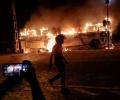
Sri Lanka has also imposed a police curfew in Western Province for six hours.

The Sri Lankan government on Sunday lifted the ban it had imposed on social media platforms such as WhatsApp, Twitter, Facebook and Instagram after declaring a nationwide public emergency and effecting a 36-hour curfew ahead of a planned anti-government rally over the worst economic crisis in the island nation.

Mahinda Rajapaksa, along with his wife and family, fled his official residence -- Temple Trees -- and took shelter at the naval base in Trincomalee.

The move is aimed at preventing masses from gathering in Colombo to protest the government's failure to provide relief to the public suffering from shortages of food, essentials, fuel and medicine amidst hours-long power cuts, the Colombo Page newspaper reported.
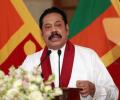
Rajapaksa was appointed as the premier on October 26 by President Maithripala Sirisena after sacking Ranil Wickremesinghe, plunging the nation into a constitutional crisis.
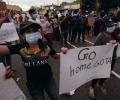
The government's poor handling of the economic crisis where people currently endure long hours of power outages and scarcity of essentials has angered the public which planned country-wide protests on Sunday.

All the ministers who participated in this meeting were of the opinion that as soon as there is an agreement to form an all-party government, they will hand over the responsibilities to that government, it said.

President Rajapaksa, through a special gazette last month, appointed the 13-member task force for the establishment of a 'One Country, One Law' concept in Sri Lanka and comprised members from the majority Sinhala and minority Muslim communities.

The Indian contingent of more than 300 navy personnel was assisting in the relief, with divers searching the brackish waters and medical teams seeing patients in makeshift tents set up at shelters.

India welcomed resolution of the political crisis in Sri Lanka and exuded confidence that relations between the two countries will continue to move on in an upward trajectory.

Sri Lanka's Acting President Ranil Wickremesinghe on Monday imposed emergency giving him sweeping powers ahead of the key election on July 20 to pick a new President as he urged the political parties to put aside differences and form an all-party government, with the Opposition dubbing his decision as an 'undemocratic draconian act'.

Forty suspects, including the driver of a van allegedly used by the suicide bombers, have been arrested in connection with the attacks which shook Sri Lanka.

The SJB has begun to collect signatures from MPs for the no-confidence motion, according to media reports.

Sirisena dissolved Parliament hours after a close aide of the President said that there will be no snap elections or a national referendum to end the current crises.
